Is THCA legal? The answer depends on where you live. On 14 July 2026 Sweden made THCA a narcotic, while in most other European countries it is not specifically regulated.
Raw Hemp is a Swedish company, and we have never sold THCA products. When the first THCA products appeared in Sweden, it was clear to us that a ban would follow. Here we explain what THCA is, why Sweden banned it and where it stands in other countries.
At a glance
- THCA is a natural cannabinoid in the cannabis plant, not a synthetic substance.
- THCA turns into THC when it is heated.
- Sweden classified THCA as a narcotic from 14 July 2026. The ban covers THCA products, while industrial hemp is exempt.
- There is no EU-wide ban on THCA, and the rules differ from country to country.
- Raw Hemp has never sold THCA products, because we knew a ban would come.
What is THCA?
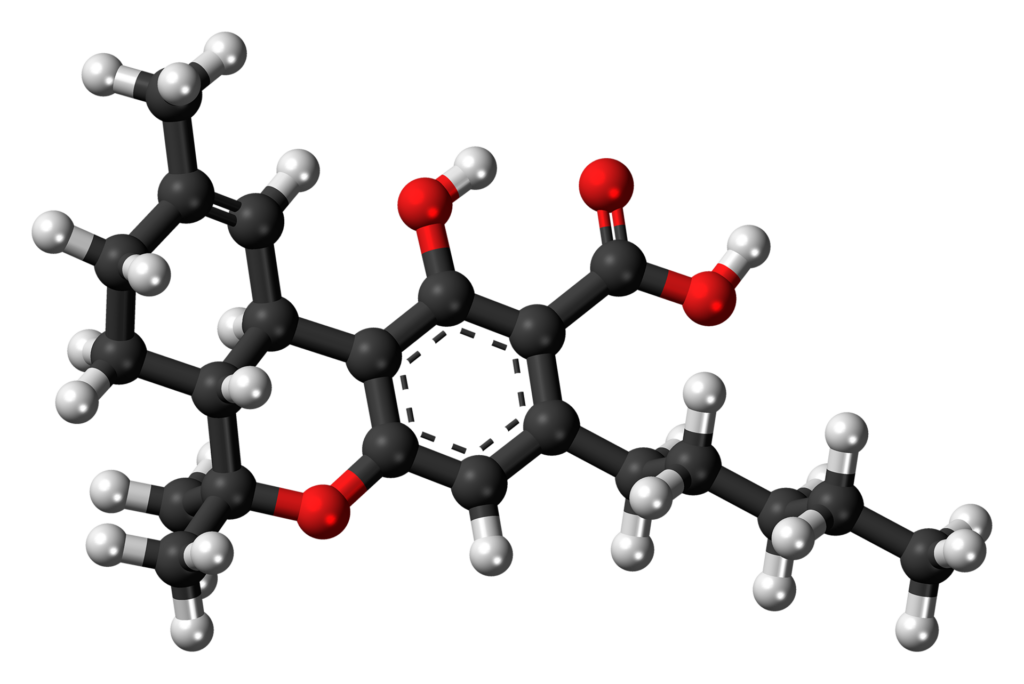
THCA, or tetrahydrocannabinolic acid, is the form THC takes in the living cannabis plant. THCA itself is not intoxicating. But when it is heated, for example when it is smoked, vaporised or baked into food, a carboxyl group splits off as carbon dioxide and THCA becomes THC. The process is called decarboxylation, and the same thing happens when CBDA turns into CBD.
THCA is therefore not a new or synthetic substance. It is one of the most common cannabinoids in the plant and has been there for as long as people have grown cannabis. That sets THCA apart from semi-synthetic cannabinoids such as HHC, which are made chemically in a lab.
Why Sweden banned THCA
On 22 May 2026 the Public Health Agency of Sweden proposed classifying 20 substances as narcotics or hazardous goods. On 11 June 2026 the Swedish government decided that 18 of them would become narcotics, and one of them was THCA, listed as delta-9-THCA-A. The change came into force on 14 July 2026 through the ordinance SFS 2026:1109.
The government’s reason was that THCA converts easily into THC, which is a narcotic in Sweden. According to the agency’s report, the products on the Swedish market included disposable vapes with 60% THCA, isolates with 99% THCA and hash with 40% THCA.
The ban covers THCA products. Industrial hemp, meaning hemp of varieties approved for EU farm subsidies, remains exempt in the Swedish narcotics ordinance, just as before.
Why we never sold THCA
THCA is a natural part of the cannabis plant, and for us the question was never about the substance itself but about Swedish law. Since THCA becomes THC when heated, and THC is a narcotic in Sweden, it was only a matter of time before the authorities acted.
We did not want our customers to be left with products that became illegal overnight, and we did not want to build our business on something we knew would not be allowed to stay. Instead we have stuck to CBD products from EU-certified industrial hemp, with lab reports that show what they contain.
THCA across Europe
There is no EU-wide ban on THCA. At EU level, hemp varieties grown for farm subsidies may contain at most 0.3% THC, and the EU limits for THC in food count THC and THCA together. Beyond that, it is up to each country to decide how THCA is treated.
Several countries have already acted or are on their way. Belgium has listed THCA as a narcotic, the United Kingdom has a proposal to do the same, and in Denmark the health authority is working on a ban. If you are unsure about the rules where you live, check with the national authority.
THCA in other countries
- Sweden: THCA has been a narcotic since 14 July 2026.
- Denmark: Not yet listed as a narcotic, but the Danish Health Authority is working on how to ban THCA.
- Germany: Cannabis is regulated by the Cannabis Act since April 2024. Industrial hemp is only exempt if use for intoxication is ruled out.
- Netherlands: THCA is not regulated separately. Cannabis falls under the Opium Act and is tolerated in coffeeshops.
- France: Hemp may contain at most 0.3% THC. There are no specific rules for THCA.
- Spain: CBD flowers are sold as collectibles, not for consumption. There are no specific rules for THCA.
- Poland: Since 2022 the limit for fibre hemp has applied to THC and THCA together, at 0.3%.
- Finland: The medicines agency considers hemp flowers for consumption to be illegal.
- Belgium: THCA is listed as a narcotic.
What this means for CBD products
Bans on THCA are aimed at THCA products. Our CBD flowers, oils and hash come from EU-certified hemp varieties grown for CBD, and our lab reports show their cannabinoid content.
Timeline
- February 2025: The Danish health minister says the Danish Health Authority is working on a ban on THCA.
- November 2025: The United States adopts restrictions on THCA.
- 22 May 2026: The Public Health Agency of Sweden proposes classifying THCA as a narcotic.
- 11 June 2026: The Swedish government decides on the classification.
- 14 July 2026: THCA becomes a narcotic in Sweden.
Is THCA legal?
It depends on the country. THCA has been a narcotic in Sweden since 14 July 2026 and is listed as a narcotic in Belgium, while there is no EU-wide ban. In many countries THCA is not specifically regulated, and several are working on new rules.
What is the difference between THCA and THC?
THCA is the form THC takes in the living plant and is not intoxicating in itself. When THCA is heated it turns into THC, the substance in cannabis that causes intoxication.
Is THCA synthetic?
No. THCA is a natural cannabinoid formed in the cannabis plant. That sets it apart from semi-synthetic cannabinoids such as HHC, which are made chemically in a lab.
Does Raw Hemp sell THCA?
No. We expected early on that THCA would be banned in Sweden and did not want to sell something that would soon become illegal. We sell CBD products from EU-certified industrial hemp.
Sources
- Swedish Code of Statutes. SFS 2026:1109.
- Government Offices of Sweden (2026). Regeringen narkotikaklassar 18 substanser.
- Public Health Agency of Sweden (2026). Report on delta-9-THCA-A.
- Folketinget (2025). Answer to question 201 on a ban on THCA in Denmark.
- Danish Medicines Agency. Produkter der indeholder cannabis.
- German Cannabis Act. KCanG § 1.
- French government (2022). Décision du Conseil d’État du 29 décembre 2022.
- WODR Poznań. Aspekty prawne uprawy konopi siewnych włóknistych w Polsce.
- Yle (2021). Fimea on hemp flowers.
- European Union. Commission Regulation (EU) 2023/915.
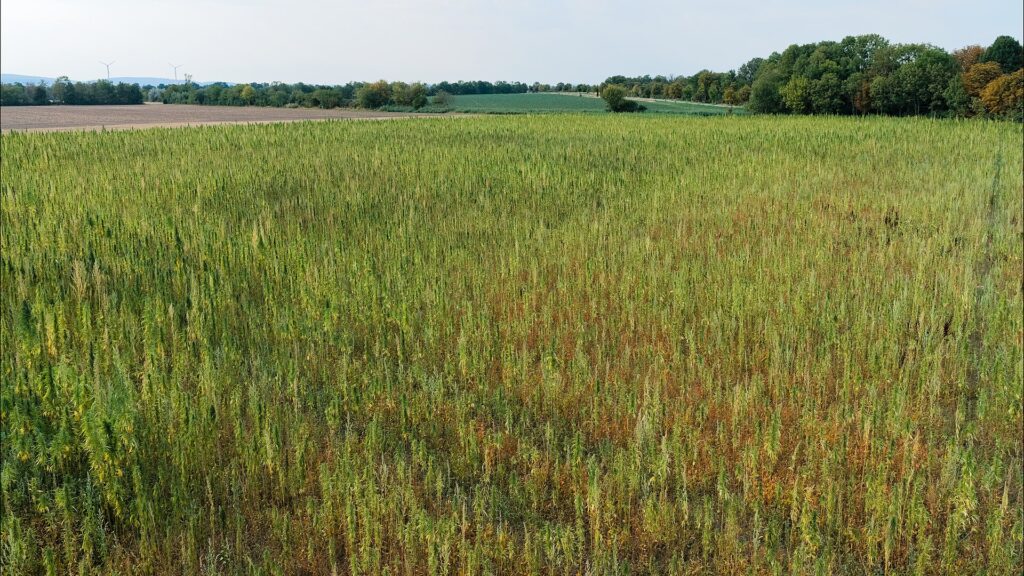
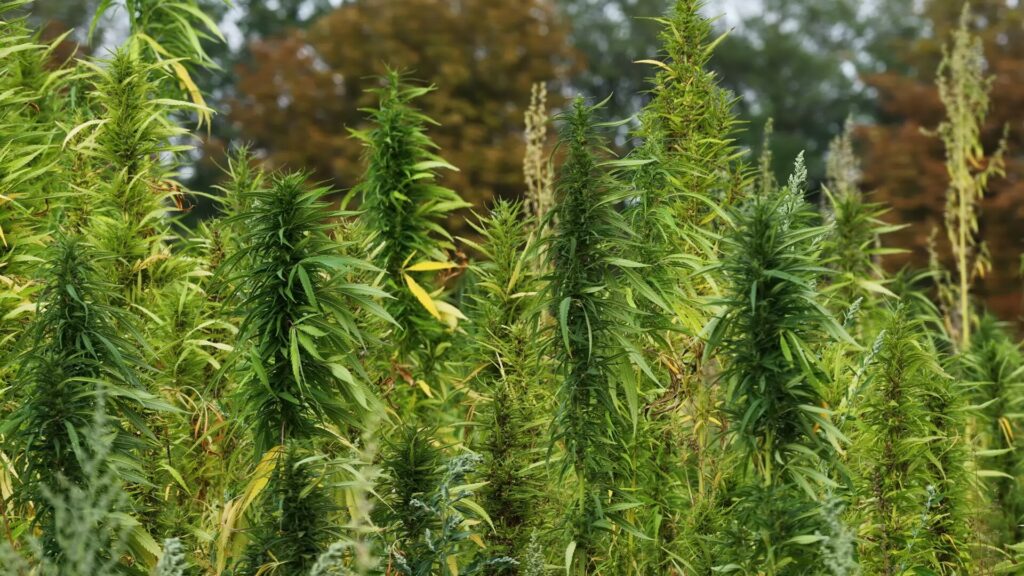
Header image: industrial hemp in Lower Austria. Photo: D-Kuru, CC BY-SA 4.0, via Wikimedia Commons.