Going on a trip and wondering whether your CBD oil can come along? The answer depends less on the airline and more on where you are going, where you change planes and what kind of product it is. In some countries CBD is an everyday shelf item, in others it counts as a narcotic. Here we go through the rules at airport security, which countries to be extra careful with and how to pack to avoid problems.
At a glance
- Airport security looks for dangerous items, not for CBD. Customs and police in the country you travel to decide whether the product is legal.
- The rules differ a lot between countries, even within the EU. Check both your destination and any countries where you change planes.
- In Hong Kong and Singapore, among others, CBD is banned and the penalties can be severe.
- Liquids in hand luggage may be no more than 100 ml per container and must be in a transparent bag of no more than one litre.
- A vape may only go in your hand luggage, never in checked baggage.
Airport security and customs are two different things
Many people mix up airport security and customs. Security is there to stop things that could be dangerous on board, such as sharp objects, large amounts of liquid and certain batteries. The staff look at the size of the container, not at whether the label says CBD.
Customs and police in the country you enter are a different matter. They check whether what you are carrying is legal under that country’s own laws. So it is the destination’s rules that decide whether you can bring CBD, not the airline.
The rules differ between countries
In 2020, the EU Court of Justice ruled that CBD extracted from the cannabis plant is not a narcotic under the 1961 UN Single Convention on Narcotic Drugs. This has made CBD products common in many European countries, but it does not mean the rules are the same everywhere. Countries set their own limits on how much THC a product may contain, and some treat different product types differently.
Also think about the countries where you change planes. If you have a layover in a country with stricter rules than both your home country and your destination, that country’s laws apply while you are there. This matters especially if you have to collect your baggage and check it in again.
Countries where you should not bring CBD
Some countries have very strict rules. Here are three examples where it is wise to leave CBD at home:
- Hong Kong. Since 1 February 2023, CBD has been classed as a dangerous drug. Possession can lead to up to seven years in prison, and importing it to life imprisonment.
- Singapore. Hemp and CBD products are treated as controlled drugs in the strictest class. This applies even to trace amounts, and importing, possessing or using them is prohibited.
- Japan. Since December 2024, very low limits apply to how much THC may remain in a product. For oils, the limit is 10 parts per million, so low that in practice only products entirely without THC meet it.
The list is not complete. Several countries in the Middle East and Asia have similar rules. Always check with the country’s authorities or embassy before you travel.
Think about the way home
CBD products you buy abroad may contain more THC than you think, and the labelling is not always accurate. A product that is legal where you bought it may not be legal in your home country. It is safer to buy at home, where you can check the product’s lab report, than to bring something unknown back with you.
CBD in your hand luggage
If you take CBD on the plane, the same rules apply as for other products:
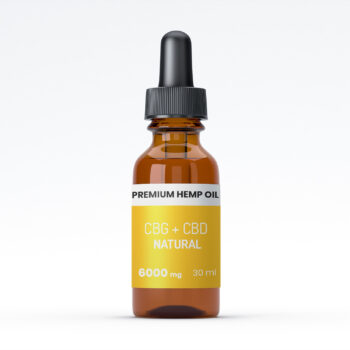
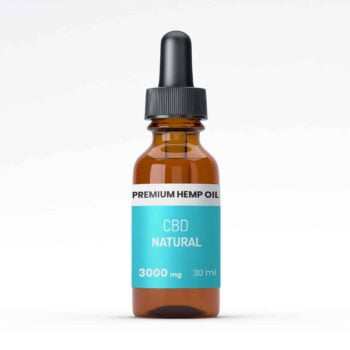
- Oil and other liquids. Each container may hold no more than 100 ml and must be in a transparent, resealable plastic bag of no more than one litre. Each passenger may carry one such bag. A standard 10 ml bottle of CBD oil is well within the limit.
- Vape. E-cigarettes must always be kept in your hand luggage and may not be packed in checked baggage. They may not be charged on board.
- Capsules, gummies and pouches. These do not count as liquids and have no special restrictions at security.
Some airports have introduced new scanners and changed the rules for liquids, so check what applies at the airport you are flying from.
Flowers and hash are the hardest to travel with
CBD flowers and CBD hash look and smell just like cannabis with THC. The difference only shows up in a lab test. Even in countries where the products are legal, they can therefore lead to questions, seizure or a wait for analysis. The safest option is not to take them across borders at all.
How to pack to avoid problems
- Original packaging. Keep the product in its unopened original packaging with clear labelling.
- Lab report. Bring a printout or a copy on your phone of the product’s certificate of analysis. Our lab reports are collected in one place.
- Small amounts. Only bring what you need for the trip. Larger amounts can raise suspicion of sale.
- Check the rules. Read up on your destination and any layovers with the country’s authorities before you leave.
If you want to know more about the legal side of hemp, read our article on whether hemp is legal. You will also find our CBD oils in our shop.
Can you take CBD oil on a plane?
At airport security, CBD oil is treated like any other liquid: no more than 100 ml per container in a transparent bag of no more than one litre. Whether you can bring it into the country you travel to depends on that country’s laws.
Can you take a CBD vape on a plane?
Yes, but only in your hand luggage. E-cigarettes may not be packed in checked baggage and may not be charged on board.
Which countries should you not bring CBD to?
Hong Kong and Singapore, among others, where CBD is treated as a controlled drug. Japan has very low limits for THC in CBD products. Always check your destination’s rules before you travel.
Does it matter where you change planes?
Yes. While you are in a country, that country’s laws apply, even if you are only changing planes. This matters especially if you have to collect your baggage and check it in again.
Can you bring CBD flowers on a trip?
It is not recommended. Flowers and hash cannot be told apart from cannabis with THC without a lab test and can be seized even where they are legal.
Sources
- EUDA (2020). Cannabidiol (CBD) is not considered a ‘narcotic drug’ under European law.
- Narcotics Division, Hong Kong. Cannabidiol (CBD).
- Central Narcotics Bureau, Singapore. FAQs about Hemp and CBD oil products.
- CannaReporter (2024). Japan: New THC residual limit confirmed.
- Your Europe. Luggage restrictions.
- EASA. Dangerous goods when flying.