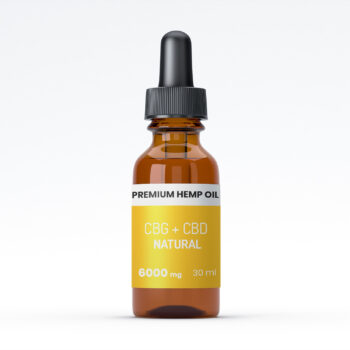
In autumn 2023 we started publishing extended lab reports for our CBD oils. Alongside the cannabinoid profile, we now also show tests for heavy metals, mycotoxins and residual solvents. Here we explain what is tested, which labs do the testing and where to find the reports.
At a glance
- The cannabinoid profile is tested by PharmaHemp Laboratories in Ljubljana, a lab accredited to ISO/IEC 17025.
- Heavy metals, mycotoxins and residual solvents are tested by the Italian lab Neotron, part of the Cotecna group.
- In the batches tested, both THC and every contaminant measured were below the labs’ limit of quantification.
- All reports are collected on our lab reports page.
Why we publish lab reports
You cannot judge a CBD oil by looking at it. The only way to know how much CBD a bottle contains, and that it is free from THC and contaminants, is to have an independent lab test it. That is why we publish the results openly, so you can check the figures yourself before you buy.
The cannabinoid profile
The cannabinoid tests are carried out by PharmaHemp Laboratories in Ljubljana, Slovenia. The lab is accredited by Slovenska akreditacija to ISO/IEC 17025 and measures around fifteen cannabinoids, including CBD, CBG, CBN, CBC and THC.
Results are given as a percentage by weight. When a cannabinoid is below the lab’s limit of quantification, in this case 0.03 per cent, the report shows < LOQ. That is how THC is reported for our oils. We explain the abbreviations in our guide on how to read a CBD lab report.
Heavy metals, mycotoxins and solvents
Contaminants are tested by Neotron in Modena, Italy, a food and environmental lab that is part of the Cotecna group. The tests cover three areas:
- Heavy metals. Cadmium, mercury and lead, measured by ICP-MS.
- Mycotoxins. Aflatoxins B1, B2, G1 and G2, measured by LC-MS/MS.
- Residual solvents. Around twenty solvents, including ethanol, isopropanol, acetone and hexane, measured by gas chromatography.
In the batch tested, every substance was below the lab’s limit of quantification. Hemp readily absorbs substances from the soil it grows in, which is why testing for heavy metals matters especially for hemp products.
What does ISO/IEC 17025 mean?
ISO/IEC 17025 is the international standard for testing and calibration laboratories. An accredited lab has been assessed by a national accreditation body, which checks that its methods are validated, its staff are competent and its results can be traced and repeated. In other words, it is the lab and its methods that are accredited, not the product itself.
How to find the lab reports
All current reports are collected on our lab reports page, sorted by product. When we change batch or bring in a new raw material, we publish the new analysis there.
Frequently asked questions about our lab reports
Are your CBD oils lab tested?
Yes. The cannabinoid profile is tested by PharmaHemp Laboratories, which is accredited to ISO/IEC 17025, and heavy metals, mycotoxins and solvents are tested by the Italian lab Neotron.
Do your CBD oils contain THC?
In our tests THC is below the lab’s limit of quantification, which the report shows as < LOQ.
What does < LOQ mean?
LOQ stands for limit of quantification. < LOQ means the level is so low that the lab cannot measure it reliably.
What does ISO/IEC 17025 mean?
It is the international standard for laboratories. An accredited lab has been assessed by an independent body that checks its methods and results hold up.
Where can I find the lab reports?
All reports are collected on our lab reports page, sorted by product.
Sources
- ISO/IEC 17025:2017. General requirements for the competence of testing and calibration laboratories. Geneva: ISO.
- Neotron S.p.A. (2022). Test reports no. 22G14575, 22G14578 and 22G14579: residual solvents, aflatoxins and metals by ICP. Modena.
- PharmaHemp Laboratories (2023). Certificate of Analysis no. 2023-11686: cannabinoid profile. Ljubljana.