

What CBD Flowers Do: Effects, Science, and What to Expect
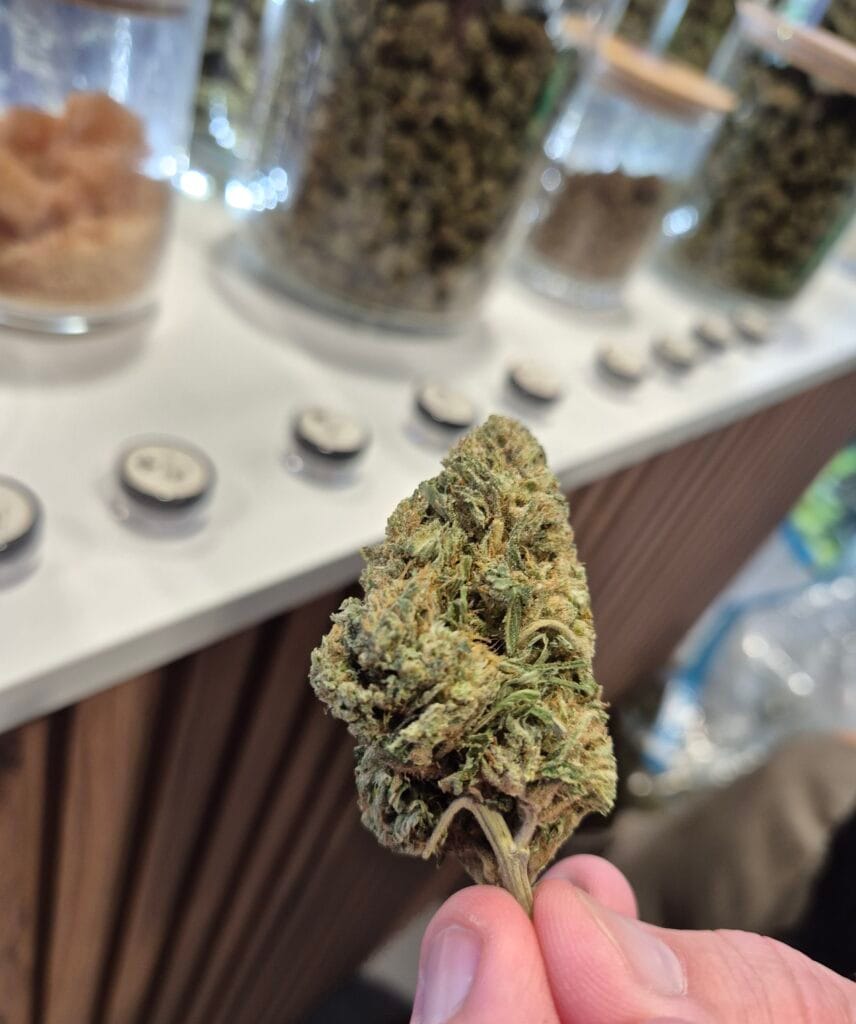
Open a bag of good CBD flower and the smell tells you something. That’s terpenes, the same aromatic compounds found in lavender, citrus peel, hops, and black pepper, and they don’t stay outside the body. They interact with the same receptor systems that CBD does. They’re a large part of why two strains with similar CBD percentages can feel noticeably different. And they’re what most extracted CBD products leave behind.
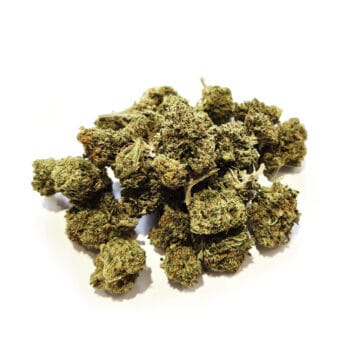
CBD flower is the plant before any of that processing. Cannabinoids, terpenes, flavonoids, everything intact. Understanding what those compounds do, and how they interact with each other and with the body, explains most of how CBD flowers work.
Your body already has a cannabinoid system
This is where a lot of CBD explanations lose people, but it’s worth staying with. Your body produces its own cannabinoids. The endocannabinoid system (ECS) is one of the largest receptor systems in the human body, found in every mammal, and it was partly discovered because researchers were trying to understand why plant cannabinoids have any effect on us at all.
The ECS regulates sleep, stress response, pain perception, appetite, and immune function. It works through two main receptor types. CB1 receptors are concentrated in the brain and central nervous system. CB2 receptors are found mostly in immune tissue. The body produces endocannabinoids — anandamide and 2-AG — that bind to these receptors and signal the system into action.
THC binds directly and strongly to CB1 receptors. CBD takes a different route. It doesn’t bind tightly to either receptor type. Instead, it modulates the system more indirectly – one mechanism under investigation is CBD’s ability to inhibit the enzyme FAAH, which breaks down anandamide. The result may be that anandamide stays in circulation longer, keeping the system in a calmer state.
What the research shows about CBD
CBD is not a cure for anything. The effects are real but quiet for most people, they vary considerably between individuals, and the research is not as settled as some packaging implies.
What the evidence supports:
Anxiety. A 2019 study in The Permanente Journal (Shannon et al.) followed 72 adults over three months. 79.2 percent reported reduced anxiety scores within the first month. The study wasn’t randomised or placebo-controlled, which limits what you can conclude from it. A more rigorous piece of evidence comes from Crippa et al. (2011, Journal of Psychopharmacology): participants with social anxiety disorder were given CBD or placebo before a simulated public speaking test. The CBD group showed significantly reduced anxiety, and brain imaging showed corresponding changes in activity in regions associated with anxiety processing, including the limbic and paralimbic areas. That kind of mechanistic evidence – showing not just that people report feeling less anxious but where in the brain something is happening – is harder to dismiss.
Sleep. The same Shannon study found 66.7 percent reported improved sleep scores. CBD likely helps sleep indirectly by reducing anxiety rather than acting as a direct sedative. Most people who report better sleep on CBD report feeling less wound up before bed, not knocked out.
Pain and inflammation. Preclinical evidence in animal studies is strong. Human clinical data is still limited. A 2018 review in Frontiers in Pharmacology (Vučković et al.) concluded the data is insufficient for clinical guidelines, while noting the direction of results is consistently positive.
Epilepsy. This is where the evidence is clearest. Epidiolex, a CBD-based medicine, received FDA approval in 2018 for two rare childhood epilepsy syndromes. A 2017 New England Journal of Medicine study showed CBD reduced seizure frequency in Dravet syndrome patients by a median of 38.9 percent compared to placebo. This is the benchmark that other CBD research is still working toward.
The honest summary: CBD works, but quietly for most people. It’s closer to the effect of a supplement that consistently takes the edge off than something you feel as a distinct event.
Terpenes and why the strain matters
Different CBD strains produce noticeably different experiences, and terpenes are a large part of why. Terpenes are the aromatic compounds that give the plant its smell, and they’re biologically active.
| Terpene | Smell | Properties | Also found in |
|---|---|---|---|
| Myrcene | Earthy, musky | Relaxing, heavier effect | Hops, mango |
| Limonene | Citrus, fresh | Uplifting, serotonergic | Citrus peel |
| Linalool | Lavender, floral | Anxiolytic, serotonergic | Lavender |
| Beta-caryophyllene | Peppery, spiced | Binds directly to CB2 receptors | Black pepper, cloves |
| Alpha-pinene | Pine, fresh | Cognitively clarifying, bronchodilatory | Pine needles, rosemary |
Choosing a strain based on its terpene profile rather than just CBD percentage is just as important.
Full spectrum or isolate
Full spectrum hemp flower preserves all the cannabinoids, terpenes, and flavonoids in the plant. CBD isolate is pure CBD, stripped of everything else. The argument for full spectrum is the entourage effect: the hypothesis that these compounds work better together than in isolation.
The scientific foundation for this is Ethan Russo’s 2011 review in the British Journal of Pharmacology, “Taming THC: potential cannabis synergy and phytocannabinoid-terpenoid entourage effects.” Russo mapped how specific terpenes interact with neurotransmitter systems and proposed that they modulate cannabinoid effects in ways that isolated CBD cannot replicate — linalool and limonene affecting serotonin receptors, beta-caryophyllene binding CB2, pinene potentially counteracting some of the short-term cognitive effects that occur during THC intoxication. The paper is still the most cited reference in the field.
Clinical evidence followed. A 2018 study in Frontiers in Neurology found epilepsy patients on a full spectrum extract needed lower doses and reported fewer side effects than those on isolated CBD. The researchers couldn’t say exactly which other compounds were responsible for the difference.
With flowers, you’re always working with full spectrum by default. The entourage effect is built in.
How to use CBD flowers
The two most common methods are vaporising and smoking. Vaporising at 180-200°C preserves more of the terpene profile and avoids the combustion byproducts that smoking introduces. Smoking is simpler and more familiar but burns at temperatures high enough to destroy the more volatile terpenes before they’re inhaled.
Inhalation absorbs significantly faster than oral consumption. Onset is a few minutes compared to an hour or more for an edible or oil. Bioavailability through inhalation runs around 30-50 percent, compared to 13-35 percent for sublingual oil. For effects that need to be felt quickly, inhalation makes more sense.
If you’re new to dry herb vaporisers, our dry herb vaporizer guide covers what to look for in a device.
What most people notice
Most people describe the effect of CBD flowers as a noticeable reduction in background tension. Not sedation, not intoxication. More like a lowered baseline. The mental noise quiets. Tight shoulders relax. It’s easier to concentrate on one thing.
Effects typically last two to three hours. Terpene profile, individual metabolism, and how much you use all affect the experience.
If nothing seems to happen in a first session, the most common reasons are grind that’s too coarse, temperature that’s too low, or draws that are too short. Finer grind, slower draw, 180°C minimum.
- €29,11 – €141,35Prisintervall: €29,11 till €141,35Betygsatt 5.00 av 5(2)
-
- 5 g
- 10 g
- 20 g
- 40 g
-
- €29,11 – €141,35Prisintervall: €29,11 till €141,35Betygsatt 4.50 av 5(4)
-
- 5 g
- 10 g
- 20 g
- 40 g
-
- €29,11 – €141,35Prisintervall: €29,11 till €141,35Betygsatt 5.00 av 5(1)
-
- 5 g
- 10 g
- 20 g
- 40 g
-
- €59,22Betygsatt 5.00 av 5(2)
-
- 20 g
-
FAQ
Is the effect psychoactive?
How long does it take to feel something?
With inhalation, a few minutes. With oil or an edible, usually 45 minutes to an hour. If you’re vaporising and not feeling anything, check your temperature setting and how fine your grind is.
What's the difference between strains?
Primarily terpene profile. CBD content varies between strains but the effect differences most people notice come from terpenes more than CBD percentage. A myrcene-heavy strain will feel different from a limonene-heavy one even at the same CBD content.
Can I use CBD flowers daily?
Yes. CBD has no known dependency risk and no documented toxicity at normal doses. The European Food Safety Authority considers 70mg of CBD per day safe for adults. Tolerance to CBD, in the sense of needing more over time to feel the same effect, has not been established in research.


