Terpenes are the aromatic compounds that give every cannabis strain its scent, from citrus and pine to earth and pepper. They are also volatile, which is why the aroma in a jar of CBD flowers can fade over time. This guide goes through how to use terpenes at home to refresh the aroma of your flowers, make your own room scent and flavour CBD distillate, and what to keep in mind to do it safely.
At a glance
- Terpenes are aromatic compounds found in many plants, including cannabis, citrus, pine and lavender.
- Monoterpenes such as limonene and myrcene evaporate and break down faster than heavier terpenes during storage.
- The safest method for flowers is indirect, where the terpenes never touch the buds.
- Pure terpenes are highly concentrated and should always be diluted.
- In a vape, terpenes should only be mixed with distillate, never with MCT oil or other carrier oils.
What are terpenes?
Terpenes are natural organic compounds that plants produce to attract pollinators and protect themselves against insects. In cannabis they are made together with the cannabinoids in the trichomes, the small resin glands on the flowers. Terpenes are the reason two strains with the same CBD content can smell completely different. We go through the chemistry in more detail in our article on what terpenes are.
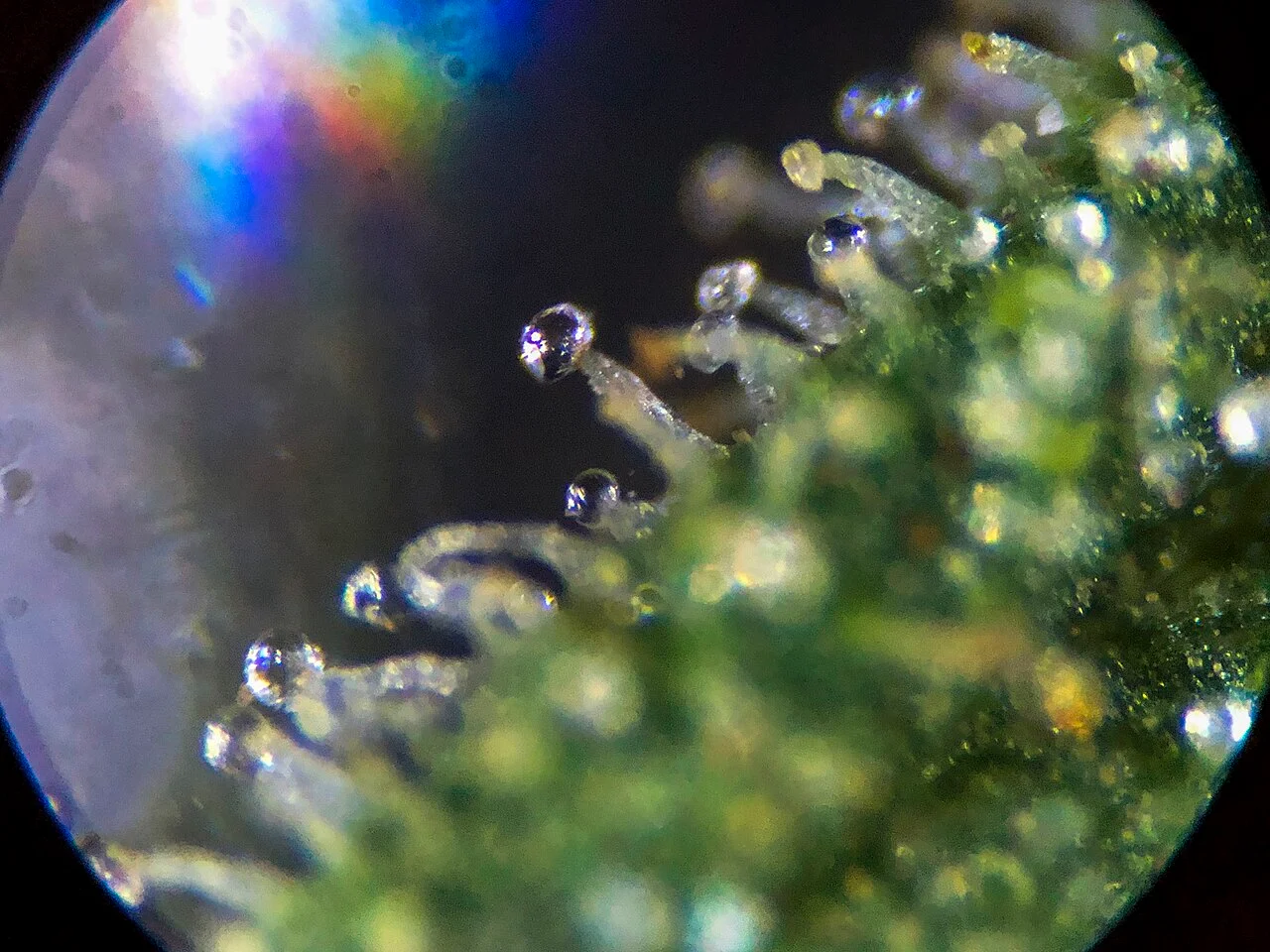
Some of the most common terpenes in cannabis and how they smell:
- Myrcene: earthy and musky, with notes of ripe fruit.
- Limonene: fresh citrus.
- Pinene: pine and forest.
- Linalool: floral, like lavender.
- Caryophyllene: spicy and peppery.
- Terpinolene: fresh and herbal, with floral and citrus notes.
Researchers have long discussed whether terpenes also interact with cannabinoids, in what is known as the entourage effect. In 2011 the neurologist Ethan Russo summarised how terpenes and cannabinoids may influence each other, and the theory is one reason many people prefer products with the full terpene profile of the plant. Read more about the different types of terpenes in our article on botanical and live terpenes.
Why the aroma fades
Terpenes are volatile. They evaporate at room temperature and are broken down by heat, light and oxygen. A study published in the journal Plants in 2024 found that monoterpenes such as limonene, myrcene and pinene broke down faster during four months of storage than the heavier sesquiterpenes such as caryophyllene. That is why a flower that smelled of fresh citrus when it was new can develop a more muted, earthy aroma over time.
Refresh the aroma of CBD flowers
If the aroma of your CBD flowers has faded, you can boost it with terpenes. We only recommend indirect infusion, where the terpenes release their aroma inside the jar without touching the flowers. If you drip terpenes straight onto the flowers, the aroma becomes uneven and the flowers can turn damp and sticky.
- Put the flowers in a small, airtight glass jar. A jar with about 10 grams of flowers works well.
- Put 1 to 2 drops of terpenes on a cotton ball or a piece of paper, and place it in a small open glass container.
- Stand the container in the jar so that the terpenes do not touch the flowers.
- Close the lid and leave the jar at room temperature for 24 to 48 hours.
- Remove the container and check the aroma. If you want a stronger aroma, you can repeat the process.
Choose a terpene profile that suits the character of the flower, for example a citrus profile for a strain that already has citrus notes.
How to store flowers so the aroma lasts
The easiest way to keep the terpenes is to store the flowers properly from the start. Use an airtight glass jar, keep it somewhere dark and cool, and do not open it more than necessary. Avoid plastic bags and warm places such as windowsills and spots near radiators. We explain how our own packaging protects the aroma in the article on our packaging.
Make your own room scent
Terpenes also work as a scent for your home. Mix a few drops with a neutral reed diffuser base and put the bottle with the reeds somewhere it cannot tip over. Start with a low concentration, since terpenes are very strong, and only increase it if the scent is too weak. Do not use pure terpenes directly on the skin.
Terpenes in CBD distillate
Many people who fill their own vape cartridges with CBD distillate add terpenes to get a clearer aroma and a smoother feel. Here it is especially important to get it right, since everything you mix in is heated and inhaled. You will find CBD distillate in our isolates and extracts category.
- Only mix terpenes with distillate. Never use MCT oil, other carrier oils or thickening agents in a vape.
- Use terpenes that are intended for use in vapes.
- Start low. Nordic Terpenes recommends starting at 3 percent and never going above 10 percent.
- Warm the distillate gently while mixing, and avoid high temperatures.
- Use a distillate that is legal where you live.
You can read more about the difference between isolate and distillate in our article on CBD isolate vs distillate, and about terpenes in vapes in the article on cannabis-derived terpenes.
Safety and health risks of terpenes
Terpenes occur naturally in food and plants, but in concentrated form they should be handled with care.
- Skin and eyes: Pure terpenes can irritate the skin. When limonene and linalool oxidise in contact with air, they form compounds that can cause allergies. In a Danish study of 6,719 patients patch tested for contact allergy, 1.6 percent reacted to oxidised limonene and 3.1 percent to oxidised linalool. Wear gloves and keep the bottle tightly closed.
- Heat: Researchers at Portland State University showed in 2017 that terpenes such as myrcene can form harmful substances such as methacrolein and benzene when heated to high temperatures. That is one reason to keep the temperature down and not overdo the terpenes in vapes.
- Oils in vapes: During the lung injury outbreak in the US in 2019, vitamin E acetate, a thickening agent, was found in the lung fluid of 48 of the 51 patients examined. Never add oils or thickening agents to a vape.
- Children and pets: Keep terpenes out of reach. Concentrated aromatic compounds can be harmful to both children and animals, especially cats.
Terpenes from Nordic Terpenes
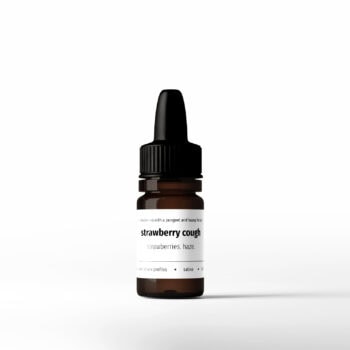
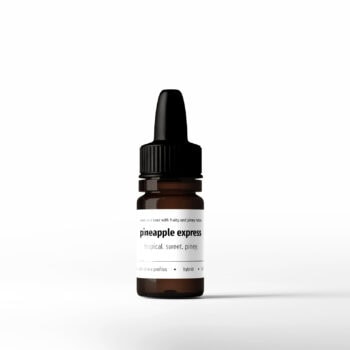
We sell terpenes from Nordic Terpenes, a Swedish company that recreates the terpene profiles of well-known cannabis strains such as Jack Herer, Blue Cheese and Wedding Cake. The bottles contain 5 ml and are free from cannabinoids. They are mainly made for vapes but can also be used to refresh the aroma of flowers.
Can you add terpenes to CBD flowers?
Yes. The safest method is indirect: put 1 to 2 drops on a cotton ball in a small container, place it in an airtight jar with the flowers and leave it for 24 to 48 hours without the terpenes touching the flowers.
How much terpenes should you add to distillate?
Nordic Terpenes recommends starting at 3 percent and never going above 10 percent. Only mix terpenes with distillate, never with MCT oil or other carrier oils.
Are there health risks with terpenes?
Pure terpenes are concentrated and can irritate the skin, and oxidised limonene and linalool can cause contact allergy. At high temperatures terpenes can form harmful substances. Always dilute them and keep the temperature down in vapes.
Do terpenes contain CBD or THC?
No. The terpenes from Nordic Terpenes are free from cannabinoids. They affect the aroma but contain neither CBD nor THC.
How should you store terpenes?
In the dark, at room temperature and with the lid tightly closed. That way they keep their aroma longest and oxidise more slowly.
Terpenes are concentrated substances and should always be diluted. How you use our products is your own responsibility.
Sources
- Russo EB (2011). Taming THC: potential cannabis synergy and phytocannabinoid-terpenoid entourage effects. British Journal of Pharmacology, 163(7), 1344–1364.
- Birenboim M et al. (2024). Improved Long-Term Preservation of Cannabis Inflorescence by Utilizing Integrated Pre-Harvest Hexanoic Acid Treatment and Optimal Post-Harvest Storage Conditions. Plants, 13(7), 992.
- Meehan-Atrash J, Luo W, Strongin RM (2017). Toxicant Formation in Dabbing: The Terpene Story. ACS Omega, 2(9), 6112–6117.
- Botvid S et al. (2026). Ten Years of Patch Testing to Hydroperoxides of Limonene and Linalool. Contact Dermatitis.
- Blount BC et al. (2020). Vitamin E Acetate in Bronchoalveolar-Lavage Fluid Associated with EVALI. New England Journal of Medicine, 382, 697–705.