CBD Isolate vs. Distillate: Which one should you actually choose?

If you’ve spent any time looking at CBD products, you’ve probably come across terms like “isolate” and “distillate” thrown around like everyone knows what they mean. Spoiler alert: most people don’t, and that’s completely fine. These products sound technical because, well, they are—but understanding the difference is easier than you might think.

Whether you’re interested in making your own CBD oils, creating custom vape blends, or just want to know what you’re actually buying, this guide breaks down everything you need to know about CBD isolate and distillate in simple terms.

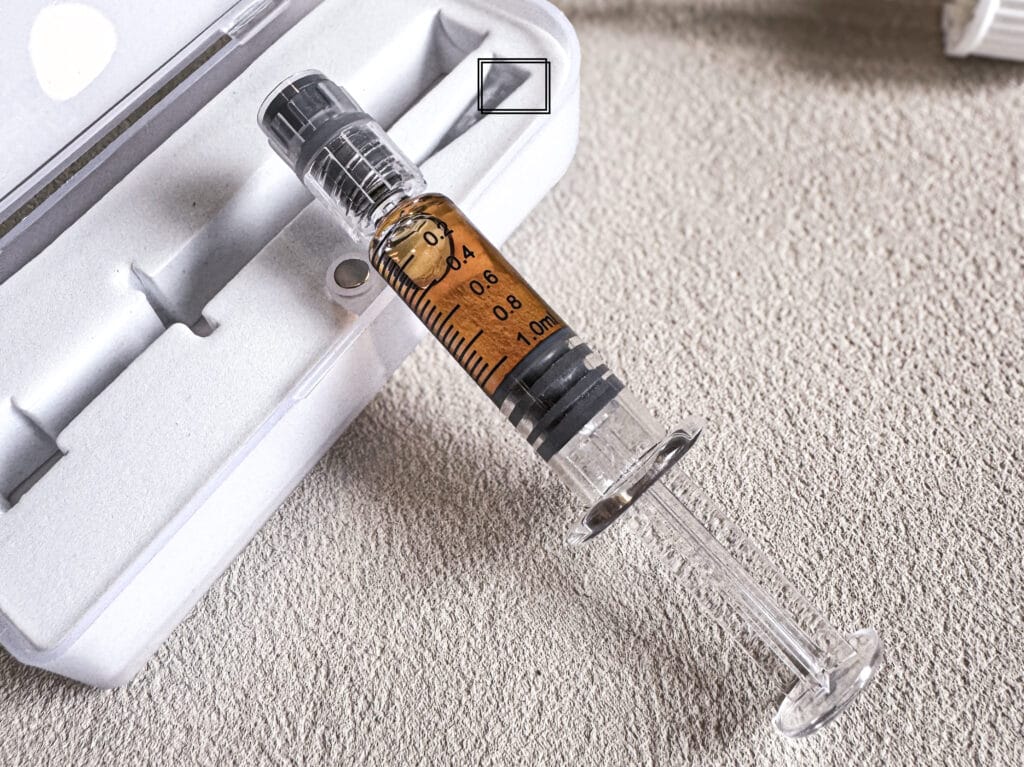
CBD Distillate in syringe

What Exactly Is CBD Isolate?

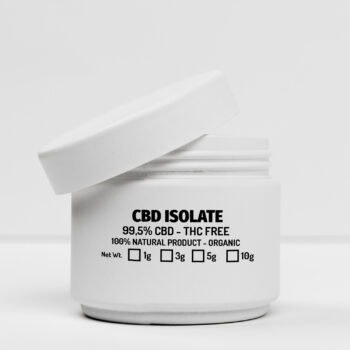
Think of CBD isolate as the purest form of cannabidiol you can get. It’s CBD in its most stripped-down state—no terpenes, no other cannabinoids, no plant matter. Just pure CBD, typically 99% or higher in concentration.

CBD isolate usually comes as a white, crystalline powder or sometimes in solid form. It has no smell, no taste, and no distinctive characteristics beyond being, well, CBD. This makes it incredibly versatile because you can add it to pretty much anything without changing the flavor or aroma.

How Is CBD Isolate Made?

The production process starts with extracting CBD from hemp plants using methods like CO2 extraction or ethanol extraction. From there, the extract goes through several refinement stages to remove everything except CBD. This includes a process called chromatography, which separates CBD molecules from all other cannabinoids and plant compounds.

What you end up with is crystalline CBD that’s been isolated (hence the name) from everything else the plant contains.

The Main Benefits of CBD Isolate

Purity and precision are the biggest draws here. When you use CBD isolate, you know exactly what you’re getting—pure cannabidiol with no surprises. This makes dosing straightforward and consistent.

No THC whatsoever. If you’re concerned about drug testing or simply want to avoid any trace of THC, isolate is your safest bet. Even broad-spectrum products can sometimes contain tiny amounts of THC, but isolate contains absolutely none.

Flavor-neutral and odorless. This is huge for people who want to add CBD to their daily routine without dealing with the earthy, hemp taste. You can mix CBD isolate into smoothies, coffee, homemade edibles, or skincare products without affecting the taste or smell.

Cost-effective. Generally speaking, CBD isolate tends to be more affordable than full-spectrum products because the production process, while technical, removes the need to preserve delicate terpenes and other cannabinoids.

What Can You Do With CBD Isolate?

DIY oil blends: Mix CBD isolate powder with a carrier oil like MCT oil, hemp seed oil, or coconut oil to create your own custom-strength CBD oil. This gives you complete control over potency and lets you experiment with different carrier oils to find what works best for you.

Dabbing: CBD isolate can be dabbed for fast-acting effects. Since it’s flavorless on its own, many people add terpenes to create specific flavor profiles and potentially enhance effects through the entourage effect.

Edibles and beverages: CBD isolate works great in oil-based edibles like brownies, gummies, or anything made with butter or oil. For beverages like coffee, tea, or smoothies, you’ll need water-soluble CBD isolate specifically—regular isolate only dissolves in fats and oils, not water. Water-soluble isolate is specially processed to mix into liquids without separation.

Topicals: Mix CBD isolate powder into lotions, balms, or massage oils for localized application. This is particularly popular for those interested in CBD for skin or targeted areas.

Important note: CBD isolate in powder form is not suitable for vaping as it doesn’t have the right consistency and properties for vaporization.

What Is CBD Distillate?

CBD distillate takes a different approach. Instead of isolating just CBD, distillate aims to create a highly concentrated cannabis extract while preserving some of the plant’s other beneficial compounds.

CBD distillate isn’t just one thing—it comes in different forms. You’ve got liquid distillate that flows like thick honey, and hard distillate that’s more solid and waxy at room temperature. Both types can range from light golden yellow to darker amber, depending on how they’re made and what quality hemp was used.

How Is CBD Distillate Made?

Like isolate, distillate production starts with extracting cannabinoids from hemp. But instead of stripping everything away, the distillation process uses carefully controlled heat and pressure to separate and concentrate desired compounds.

The process involves short-path distillation, where the extract is heated to specific temperatures that cause different compounds to vaporize at different rates. By controlling these temperatures precisely, manufacturers can collect concentrated CBD along with other cannabinoids like CBG, CBN, and CBC. Some terpenes may be retained, though many are lost during the extraction process due to heat.

The key difference: Distillate contains CBD plus other cannabinoids from the hemp plant. Isolate is pure CBD with everything else removed.

Types of CBD Distillate

Not all distillates are created equal. There are generally two types, and understanding the difference is crucial if you’re planning to use them:

Hard CBD distillate is more solid at room temperature, similar to thick honey or wax. This consistency makes it excellent for dabbing or for creating your own oils with precise control. When warmed slightly, it becomes easier to work with. However, hard distillate has a tendency to crystallize, which makes it unsuitable for vaping applications.

Liquid CBD distillate flows more easily and is specifically formulated to be crystal-resistant. This property makes it ideal for vape cartridges where crystallization would clog the device and ruin the vaping experience. Liquid distillate can be used directly in vapes or mixed into formulations without worrying about it solidifying.

The Advantages of CBD Distillate

Higher cannabinoid diversity. While distillate is predominantly CBD (usually 60-90%), it typically contains small amounts of other cannabinoids like CBG, CBN, and CBC. Some people believe these compounds work synergistically with CBD—a phenomenon called the entourage effect.

Terpene content. Depending on the production method, distillate can retain some natural terpenes from the hemp plant. Terpenes contribute to aroma and flavor, and may also offer their own potential benefits.

Versatile consistency. The viscous nature of distillate makes it easy to work with for various applications. It can be used as-is or incorporated into different products.

Full plant benefits. If you want more of the “whole plant” experience but still want high potency, distillate offers a middle ground between full-spectrum extracts and pure isolate.

What Can You Do With CBD Distillate?

The applications vary depending on which type of distillate you’re working with:

With hard CBD distillate:

Create custom oils: Mix hard distillate with carrier oils to make your own CBD tinctures with varying strengths. You can control exact amounts and create precise formulations tailored to your needs.

Dabbing: Hard distillate is excellent for dabbing using a dab rig for immediate effects. The presence of terpenes (if retained during production) can make the experience more flavorful than dabbing pure isolate.

Edibles: Hard distillate can be incorporated into homemade edibles. The main difference from isolate is that distillate may have a subtle hemp taste, whereas isolate is completely neutral.

With liquid CBD distillate:

DIY vape blends: This is where liquid distillate truly shines. Its crystal-resistant formula makes it perfect for creating your own vape cartridges without worrying about clogging. You can add terpenes for flavor and potentially enhanced effects, or use it as-is if terpenes are already present.

Custom formulations: Like hard distillate, liquid distillate can be used in oils and other products, though its primary advantage is in vaping applications where crystallization would otherwise be a problem.

CBD Isolate vs Distillate: Head-to-Head Comparison

Let’s break down the key differences in a way that actually helps you decide which one suits your needs:

Purity and Composition

Isolate: 99%+ pure CBD with absolutely nothing else. Zero THC, zero terpenes, zero other cannabinoids. It’s as pure as it gets.

Distillate: Typically 60-90% CBD with other cannabinoids and possibly terpenes. Highly concentrated, but not pure CBD.

THC Content

Isolate: 99%+ pure CBD with absolutely nothing else. Zero THC, zero terpenes, zero other cannabinoids. It’s as pure as it gets.

Distillate: Available in both THC-free and trace-THC versions. THC-free distillate has all THC removed while keeping other cannabinoids. Always check the lab reports to know what you’re getting.

Taste and Smell

Isolate: Completely tasteless and odorless. You can add it to anything without changing the flavor profile.

Distillate: May have a subtle earthy, hemp-like flavor and aroma, especially if terpenes are present. Not overwhelming, but noticeable.

The Entourage Effect

Here’s where things get interesting. Some research suggests that cannabinoids and terpenes work better together than in isolation—this is called the entourage effect.

Isolate: Provides CBD alone, so no entourage effect. You’re getting the benefits of pure cannabidiol and nothing else.

Distillate: Contains multiple cannabinoids and potentially terpenes, which could theoretically enhance overall effects through synergy. The science on this is still developing, but a lot of people say they like the “fuller” experience of distillate better.

Cost

Isolate: Generally more affordable, especially when bought in bulk. You’re paying for pure CBD without the complexity of preserving other compounds.

Distillate: Often costs a bit more due to the more complex production process and the preservation of additional compounds.

Versatility

Both are incredibly versatile, but in slightly different ways:

Isolate: Best when you want a neutral starting point. Perfect for creating precise formulations, adding to products without changing flavor, or for situations where you absolutely need zero THC.

Distillate: Better when you want a more complete cannabinoid profile or like working with something that already has natural terpenes in it.

Which One Is Better for Vaping?

his is one of the most common questions, and the answer is actually pretty clear-cut: liquid CBD distillate is your only real option for vaping.

Here’s why:

CBD isolate in powder form simply isn’t designed for vaping. While it’s incredibly versatile for oils, edibles, and dabbing, the powder consistency doesn’t work in vape devices.

Hard CBD distillate might seem like it could work since it’s already in concentrated form, but there’s a critical problem: it crystallizes. When used in a vape cartridge, hard distillate will eventually solidify and clog your device, making it unusable. This crystallization happens because of the high concentration of CBD and the temperature changes in vaping devices.

Liquid CBD distillate is specifically formulated to be crystal-resistant. This means it maintains its liquid consistency even when subjected to the temperature fluctuations of vaping. It won’t crystallize and clog your cartridge, making it the only reliable choice for vaping applications.

If you’re into making your own vape blends, liquid distillate is perfect because its consistency is already vape-ready. If it contains terpenes, you’ll get natural flavor right off the bat. If not, you can add your own botanical or live terpenes to create specific flavor profiles and potentially enhance effects through the entourage effect.

The crystal-resistant property of liquid distillate is what makes it work reliably in vape cartridges over time. You can fill a cartridge and use it gradually without worrying about it clogging or becoming unusable halfway through.

Making Your Own CBD Oil: Isolate vs Distillate

Both isolate and distillate are excellent starting points for creating custom
CBD oils at home. Here’s our complete guide to making CBD oil if you
want detailed step-by-step instructions.

Using CBD Isolate

The process is straightforward: measure out your desired amount of CBD isolate, gently heat your carrier oil (MCT oil is popular, but hemp seed oil and olive oil work too), and stir the isolate into the warm oil until fully dissolved.

The math is simple: Let’s say you want to make a 10% CBD oil in a 30ml bottle.

  • 10% of 30ml = 3ml should be pure CBD
  • 3ml of CBD isolate weighs approximately 3000mg (3 grams)
  • So you’d mix 3g of CBD isolate with about 27ml of carrier oil
  • This gives you roughly 30ml total with 3000mg CBD (100mg per ml)

Want it stronger? Add more isolate. Want it milder? Add less. You have complete control over the final concentration.

  • Common strengths:
    Light: 500-1000mg in 30ml (17-33mg/ml)
  • Medium: 1500-2000mg in 30ml (50-67mg/ml)
  • Strong: 2500-3000mg in 30ml (83-100mg/ml)

Using CBD Distillate

Working with distillate is a bit different because you’re not just getting CBD – you’re getting a full cannabinoid blend.

Example: Let’s say you want to make a 10% total cannabinoid oil (3000mg cannabinoids in 30ml total), using distillate that’s 80% total cannabinoids:

  • You need 3000mg of total cannabinoids
  • Your distillate is 80% cannabinoids (0.80)
  • 3000mg ÷ 0.80 = 3750mg (3.75 grams) of distillate needed
  • Mix this with approximately 26ml of carrier oil
  • This gives you roughly 30ml total with 3000mg total cannabinoids (not just CBD)

Hard distillate typically needs gentle heating to become workable, while liquid distillate mixes more easily. The resulting oil may have a slightly different color and potentially some hemp flavor compared to isolate-based oils.

**Why use distillate for oils?** The whole point is getting that full spectrum of cannabinoids working together. If you just wanted CBD, you’d use isolate. With distillate, you’re after the entourage effect—CBD, CBG, CBN, and other cannabinoids all in one blend.

What About CBG and CBN Isolates?

While we’ve been focusing on CBD, it’s worth mentioning that isolate isn’t just for cannabidiol. Other cannabinoids can also be isolated and used on their own.

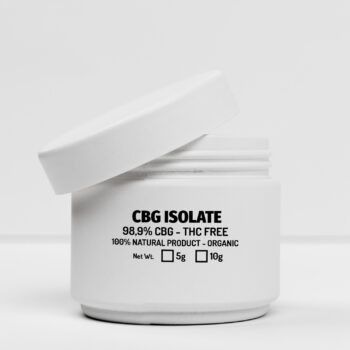
CBG isolate is becoming increasingly popular. CBG (cannabigerol) is sometimes called the “mother cannabinoid” because other cannabinoids are derived from it in the plant. People are exploring CBG for its potential benefits, which may differ from CBD.

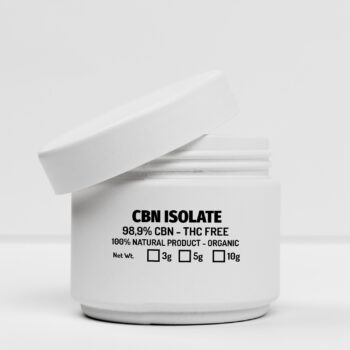
CBN isolate is another option worth knowing about. CBN (cannabinol) is particularly popular among those interested in sleep support, as it’s often associated with relaxation and restfulness. Like CBD isolate, CBN isolate is pure – just one cannabinoid with nothing else.

Both CBG and CBN isolates can be used in similar ways to CBD isolate: mixed into oils, added to vapes, incorporated into edibles, or used in topicals. And yes, they can be combined with CBD isolate or distillate if you want to create custom cannabinoid blends.

Making Your Decision: Which Should You Choose?

There’s no universal right answer here—it really comes down to what you’re trying to accomplish and what matters most to you.

Choose CBD isolate if you:

  • Want the purest, most concentrated CBD available
  • Need to avoid THC completely (for drug testing or just don’t want any THC)
  • Prefer a tasteless, odorless product
  • Want precise control over dosing
  • Plan to create your own CBD oils
  • Want to make edibles or add CBD to food and beverages
  • Are working on a tight budget and want maximum CBD per dollar

Choose hard CBD distillate if you:

  • Prefer a more complete cannabinoid profile
  • Want the potential benefits of the entourage effect
  • Are interested in dabbing with additional cannabinoids
  • Plan to create custom CBD oils with a fuller spectrum
  • Don’t mind trace amounts of THC (in legal, compliant products)
  • Are interested in the additional cannabinoids beyond just CBD

Choose liquid CBD distillate if you:

  • Want to create your own vape cartridges or vape blends
  • Need a crystal-resistant formula for vaping applications
  • Prefer a ready-to-vape consistency
  • Want the entourage effect in a vape-friendly format
  • Like the natural hemp flavor and aroma in your vapes
  • Are looking for the most versatile distillate option

The beauty of having options: A lot of people keep multiple types on hand for different situations. You might use isolate for your morning coffee (where you want zero taste), hard distillate for dabbing in the evening, and liquid distillate for vaping throughout the day.

Final Thoughts

Understanding the difference between CBD isolate and distillate empowers you to make informed choices about your CBD products. Whether you’re buying pre-made formulations or creating your own blends, knowing what these terms mean helps you select products that align with your goals.

Both isolate and distillate offer high potency and versatility. Isolate gives you purity and precision, while distillate provides a more complete cannabinoid experience. Neither is objectively “better”—they’re just different tools for different jobs.

If you’re new to working with these concentrated forms of CBD, start with small amounts and work your way up. Both isolate and distillate are potent, so a little goes a long way. And remember, you can always experiment with different forms and combinations to find what works best for you.

The world of CBD doesn’t have to be complicated. Armed with the knowledge of what isolate and distillate actually are, you’re ready to explore and find the perfect products for your needs.

FAQ - Common Questions About Vaporization

Can you vape CBD isolate?
No, CBD isolate in powder form isn’t suitable for vaping. The powder consistency doesn’t work in vape devices. If you want to vape, you need liquid CBD distillate, which is specifically formulated to be crystal-resistant and won’t clog your cartridge.

CBD isolate is 99%+ pure CBD with everything else removed—no THC, no terpenes, no other cannabinoids. Distillate contains CBD plus other cannabinoids like CBG and CBN, giving you a fuller cannabinoid profile. Think of isolate as pure CBD, and distillate as CBD plus the supporting cast.

It depends on what you’re after. Use isolate if you want pure CBD with no taste and precise dosing. Use distillate if you want the entourage effect with multiple cannabinoids working together. Both work great for making oils—isolate gives you clean CBD, distillate gives you a fuller spectrum experience.

It can go either way. Some distillates are completely THC-free (like broad-spectrum products), while others may contain trace amounts below 0.3%. Always check the lab reports that come with your distillate to know exactly what you’re getting. THC-free distillate is just as safe for drug testing as isolate.

CBD isolate is more concentrated in terms of pure CBD content (99%+ vs 60-90% in distillate). However, many people find distillate feels “stronger” because of the entourage effect—the way multiple cannabinoids work together. It’s not just about CBD percentage; it’s about how all the compounds interact.

Absolutely! Some people mix them to create custom blends. For example, you might use isolate as your base for precise CBD dosing, then add a bit of distillate or specific cannabinoid isolates (like CBN for sleep) to dial in the exact effect you want. This gives you complete control over your cannabinoid profile.

Keep both in a cool, dark place away from direct sunlight and heat. CBD isolate powder should be stored in an airtight container to prevent moisture absorption. Hard distillate can solidify more in cold temps, while liquid distillate stays workable. Both can last for months or even years when stored properly—just keep them sealed and away from heat.

CBD isolate is generally cheaper per gram because it’s simpler to produce. You’re paying for pure CBD without the complexity of preserving other cannabinoids. Distillate costs a bit more due to the more involved production process, but you’re getting additional cannabinoids along with the CBD. If you just want CBD, isolate gives you more bang for your buck. If you want the entourage effect, distillate is worth the extra cost.

Related posts

Rulla till toppen