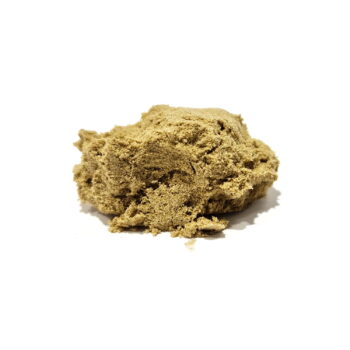
Moroccan hash has supplied Europe for longer than most people have followed the cannabis market. Pick up a pollen hash in a European CBD shop and the chances are it follows the same tradition: dry sifted, pressed, golden brown and with a spicy, earthy aroma.
The tradition comes from the Rif Mountains in northern Morocco. The sieving method is simple in principle but varies a great deal in practice, and the result can be anything from mediocre to excellent depending on how carefully the work is done.
At a glance
- Morocco is still the largest supplier of cannabis resin to the European market.
- Moroccan hash is made by sieving dried plants so the trichomes fall through, after which the powder (kif) is pressed.
- Since the 2010s, the old landrace has largely been replaced by hybrids that yield more resin.
- A 2021 law allows cultivation for medical and industrial use, but most cultivation is still illegal.
- Grades such as 00 and 000 are not standardised and say little about quality.
The Rif Mountains
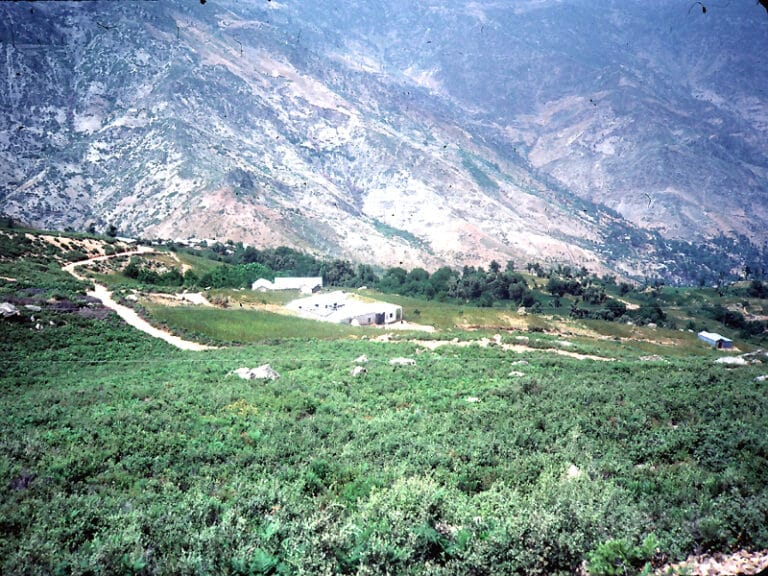
Moroccan cannabis cultivation is concentrated in the Rif Mountains in the north of the country, a hilly highland area around towns such as Ketama and Bab Berred. The altitude, plenty of sun, dry summers and cool nights create conditions that suit resinous cannabis plants.
Cannabis has been grown in the region for centuries. The traditional landrace, known locally as beldiya, is short and dense and was selected to produce resin rather than height or yield. The harvest takes place at the end of summer when the trichomes are mature. Too early and they are not fully developed, too late and they have started to degrade.
A lot has changed since the early 2000s. Researchers who carried out fieldwork in the Rif have shown how beldiya has largely been replaced by hybrids from Europe and elsewhere, which according to the EU drugs agency EUDA yield three to five times more hash per area grown. The hybrids also have a much higher THC content, and EUDA sees the shift as an important reason why the potency of cannabis resin seized in Europe has risen sharply since the early 2010s.
The farming families
Most of the people who grow and process cannabis in the Rif are Amazigh, the indigenous Berber people who have farmed the mountains for centuries. For many, cannabis is not a business decision but a necessity. The terrain is steep and rocky, rainfall is unreliable and few other crops earn enough to support a household. According to the Global Initiative, 400,000 or more people make a living directly or indirectly from the trade.
A typical family farms a few hectares and harvests once a year. This is followed by weeks of manual work in which the whole family takes part. Knowledge of when to harvest, how long to dry and which screens to use at each stage is passed down from generation to generation. The price is often set by buyers who travel up from the cities, and only a small share of what the hash eventually sells for in Europe stays with the farmers.
The 2021 law
For a long time, the Moroccan state took an ambiguous stance on cultivation in the Rif. It was illegal and occasionally cracked down on, but never seriously dismantled because so many families depended on it.
In 2021, Law 13-21 was passed, allowing cannabis cultivation for medical, pharmaceutical and industrial purposes. A new agency, ANRAC, issues licences and monitors the chain. In 2024 more than 3,300 licences were issued, and legal production covered around 2,700 hectares and more than 4,000 tonnes. The native beldiya variety has also been approved for legal cultivation, and in August 2024 King Mohammed VI pardoned more than 4,800 people who had been convicted or prosecuted for illegal cultivation.
Even so, the legal sector is small compared with the illegal one, which is estimated at 50,000 to 70,000 hectares. Recreational use is still prohibited in Morocco, and for most farmers daily life has not changed much. The fact that Moroccan hash cannot be bought legally for recreational use has consequences in Europe too, as we describe in our article on the Dutch wietexperiment.
How Moroccan hash is made
Drying
After harvest, whole plants are hung or laid out to dry. Drying is crucial, because sieving only works well on dry material. If the plant is damp, the trichomes clump together and stick instead of falling through the screens. Good airflow, shade and moderate temperatures preserve the terpenes, while forced drying with heat removes much of the aroma before sieving has even begun.
Sieving
Once the plants are dry, they are beaten or rubbed against fine screens, often fabric stretched over a bowl. The movement makes the brittle trichomes break off the leaves and stems, and they fall through the weave as a fine powder while the plant material stays on top.
Mesh size is the first quality factor. Coarser screens let more plant material through, and with it more chlorophyll and a coarser end product. Finer screens only let the smallest trichome heads pass and give a cleaner hash. The number of passes is the second factor. The first sieving gives the cleanest fraction, and each further pass gives more powder but with more and more plant material.
The collected powder is called kif. Unpressed, it is the same loose powder that collects in the bottom chamber of a grinder.
Pressing
The kif is then pressed into blocks or slabs. How this is done, by hand or by machine and with how much heat and time, determines the final texture and colour.
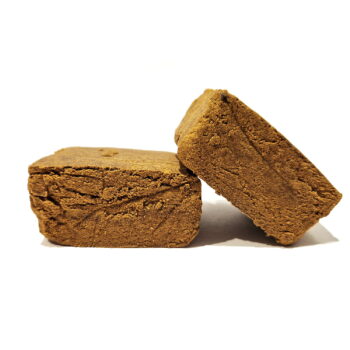
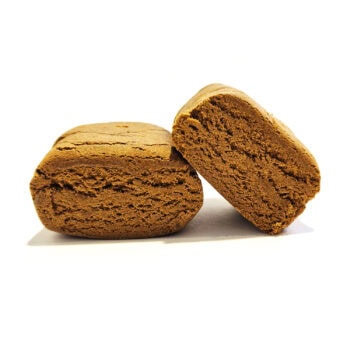
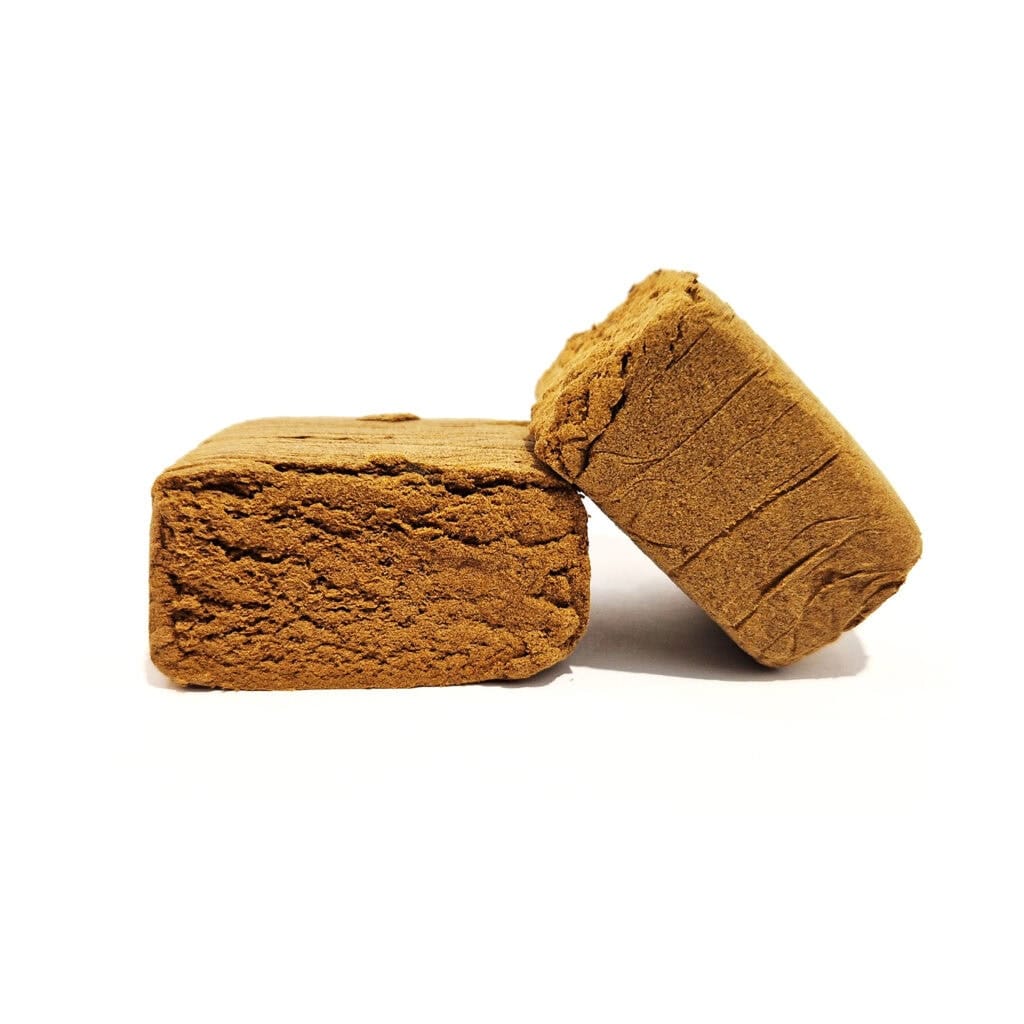
Pressing by hand at a low temperature is the traditional way. It gives a lighter, slightly crumbly hash in which the trichomes keep their shape. Machine pressing with heat is faster but can affect the terpenes if the temperature gets too high. Colour tells you a lot: good Moroccan hash is pale gold to olive green when pressure and temperature have been kept moderate. Dark brown or almost black hash has usually been pressed hard with heat.
What the grades mean
Moroccan hash is often sold with labels such as 0, 00 or 000 (triple zero). The idea is that each extra zero stands for finer sieving and a cleaner product.
In practice, the labels are not standardised. There is no system that guarantees what 000 means from one producer to the next, and the same label can mean a carefully double-sieved hash from one supplier and be a pure marketing choice from another. Treat them as background knowledge. A lab report and your own assessment of colour, aroma and texture tell you much more.
How to recognise good Moroccan-style hash
- Colour: pale to medium gold or olive green. The lighter end suggests a lower pressing temperature and better preserved terpenes. Very dark or black hash has usually been pressed too hard.
- Texture: it should crumble or snap rather than bend. A small piece warmed briefly between the fingers should become pliable without turning sticky or oily. If it is dry and floury all the way through, it is often old or poorly stored.
- Aroma: spicy, earthy and slightly floral. A flat, dusty or almost absent aroma suggests that the terpenes have broken down, from age, heat during pressing or poor storage.
Moroccan-style CBD hash
Pollen-style CBD hash is made the same way, but from industrial hemp bred for a high CBD content and very little THC. The plant is dried, the trichomes are sieved off and the kif is pressed into blocks.
The biggest difference comes from the raw material. Hemp strains grown for CBD have different terpene profiles from the plants of the Rif, and the aroma is often spicier and more herbal than the traditionally earthy Moroccan hash. Quality is still decided by the same things: the sieving, the pressing temperature and how the hash has been stored before it reaches you.
You can read more about the different types and how they differ in our guide to types of CBD hash, and you will find our range in the CBD hash category.
How is Moroccan hash made?
Dried cannabis plants are beaten or rubbed against fine screens so that the trichomes break off and fall through as a powder, kif. The powder is then pressed into blocks or slabs. CBD hash in the same style is made the same way from industrial hemp.
What does 000 (triple zero) mean on hash?
The label is meant to show that the hash has been sieved finely and several times. It is not standardised, so it is not a reliable guarantee of quality. Colour, aroma, texture and a lab report tell you more.
Why is good Moroccan hash golden rather than black?
The colour depends on the pressure and temperature used in pressing. Golden hash has been pressed at a lower temperature and keeps more of its terpenes. Dark or black hash has been pressed hard with heat, which fuses the trichomes and speeds up degradation.
Where in Morocco is cannabis grown?
Mainly in the Rif Mountains in northern Morocco, around towns such as Ketama and Bab Berred. It is a mountainous area where few other crops earn enough to support a family.
Is cannabis legal in Morocco?
Since 2021, cultivation has been allowed for medical, pharmaceutical and industrial purposes with a licence from the ANRAC agency. Recreational use is still prohibited, and most cultivation takes place outside the legal system.
Sources
- EUDA (2024). EU Drug Market: Cannabis. Production.
- EUDA. Changes in Europe’s cannabis resin market.
- Chouvy, P.-A. and Afsahi, K. (2014). Hashish revival in Morocco. International Journal of Drug Policy, 25, 416–423.
- Global Initiative Against Transnational Organized Crime. Morocco’s cannabis policy aims high, but faces resistance in its bid to formalize a deeply rooted informal economy.
- Middle East Eye (2024). Morocco pardons 4,800 jailed for cultivating cannabis.
- UNODC (2022). Recommended Methods for the Identification and Analysis of Cannabis and Cannabis Products.