The endocannabinoid system, often shortened to ECS, is a signalling system found throughout the body. It was first discovered in the late 1980s, when researchers were trying to understand why THC affects the brain. Since then it has been linked to everything from pain signals and appetite to memory and stress. Here we look at what the ECS is made of, how it was discovered, how its signals work and where research stands today.
At a glance
- The ECS consists of the body’s own cannabinoids (endocannabinoids), receptors that receive them and enzymes that break them down.
- The two best-known receptors are called CB1 and CB2. CB1 is found mainly in the nervous system, CB2 mainly in cells of the immune system.
- Endocannabinoids are made when they are needed and often act as a brake on other signals.
- THC works by binding to CB1. CBD works differently and binds only weakly to the receptors.
- Much of the research is based on animal and cell studies, and many claims about “boosting” the ECS lack support.
What is the endocannabinoid system?
The name comes from the cannabis plant, because substances from the plant are what led researchers to it. But the system exists in all vertebrates and works entirely without cannabis. It has three parts:
- Endocannabinoids. The body’s own signalling substances. The two most studied are anandamide and 2-AG (2-arachidonoylglycerol). Both are made from fatty substances in cell membranes.
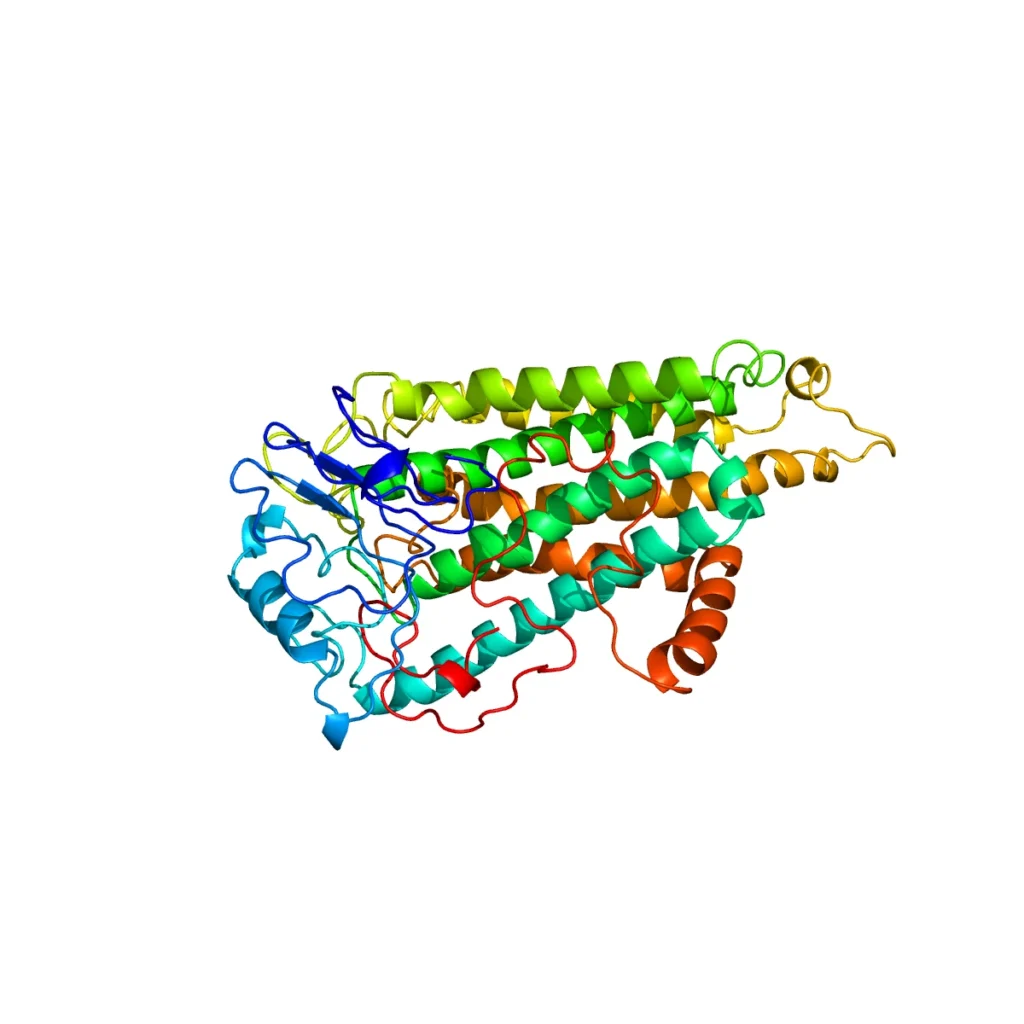
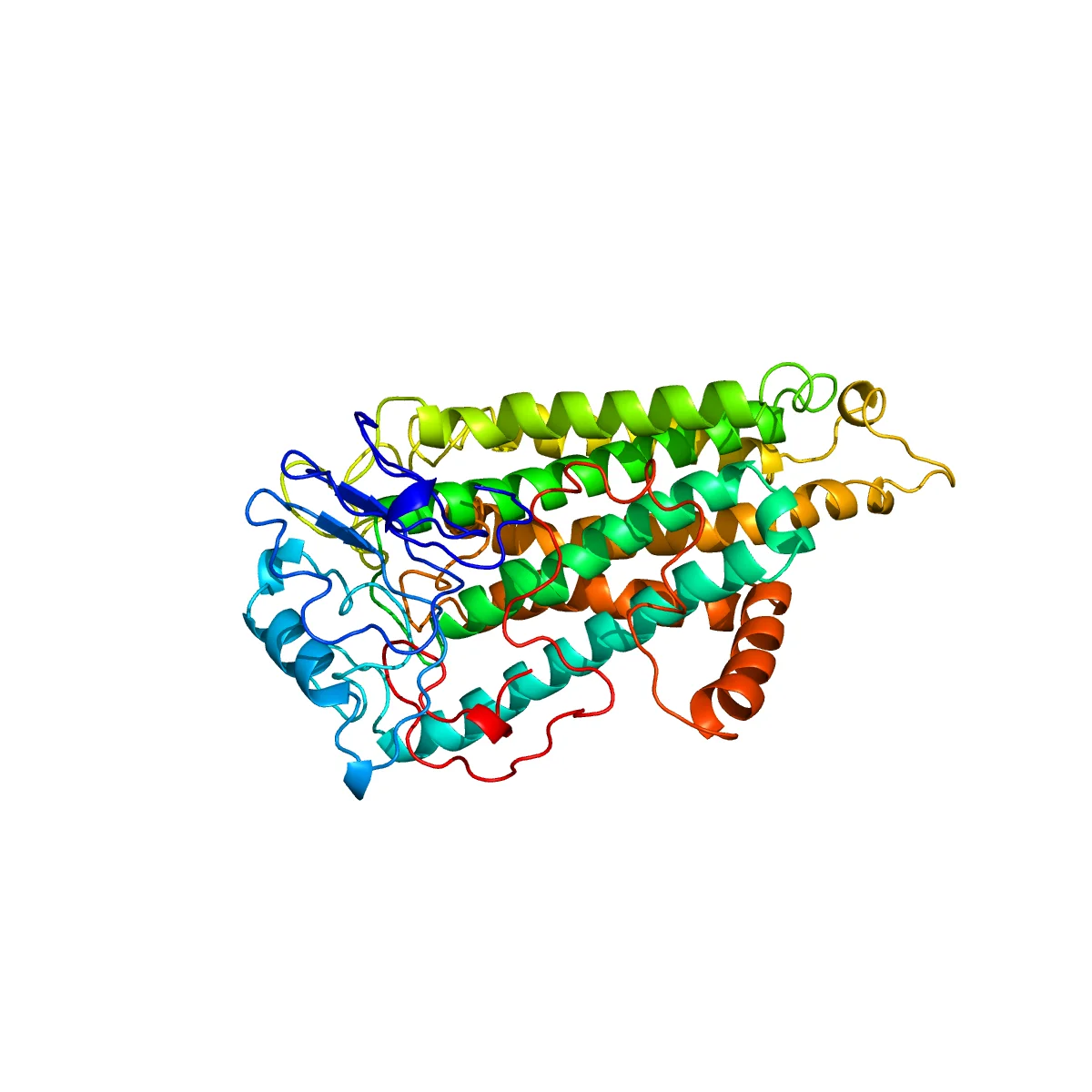
- Receptors. Receivers on the surface of cells. CB1 is one of the most common receptors of its kind in the brain, while CB2 sits mainly on immune cells.
- Enzymes. They build up and break down the endocannabinoids. FAAH mainly breaks down anandamide and MAGL mainly 2-AG, which keeps the signal short-lived.
How the system was discovered
The story starts with THC. In 1964, Raphael Mechoulam and Yehiel Gaoni in Israel managed to isolate and describe the substance. How it worked in the body was still unknown, however, and it took more than 20 years before the pieces fell into place:
- 1988. Researchers in the US showed that the rat brain has a specific receptor that cannabinoids bind to.
- 1990. The receptor, now called CB1, was cloned and could be studied in detail.
- 1992. The first endocannabinoid was found and named anandamide, after the Sanskrit word “ananda”, meaning bliss.
- 1993. A second receptor, CB2, was discovered in immune cells.
- 1995. Two research groups independently described the second major endocannabinoid, 2-AG.
The order is a little backwards. First the plant’s substance was found, then the receptor and last the body’s own substances. That is why the system carries the name of the cannabis plant.
How the signals work
Most signalling substances in the brain are made in advance and stored in small vesicles until they are needed. Endocannabinoids work differently. They are only made when a cell becomes active, and they travel backwards: from the cell receiving a signal to the cell that sent it.

When the endocannabinoid reaches CB1 on the sending cell, it reduces the amount of signalling substances released. You can think of it as a brake that kicks in when activity gets high. The endocannabinoid is then quickly broken down by the enzymes, and the brake is released.
CB2 works partly in other ways. The receptor is found mainly on immune cells, where it appears to help regulate how the cells move and which signalling substances they release.
What is the ECS involved in?
Because the receptors are found in so many places, the system has been linked to a long list of functions. Researchers have studied its role in, among other things:
- pain signals in the nervous system
- appetite and energy balance
- responses to stress
- memory and learning
- immune responses
It is important to separate a system being involved in something from being able to control it. Much of what we know comes from experiments on mice and rats or from cells in the lab, and the results cannot always be transferred to humans.
A clear example of how big a role the system plays in humans is the drug rimonabant. It blocked CB1 and was approved in the EU in 2006 as a treatment for obesity. Patients lost some weight, but the risk of low mood and anxiety increased. In 2008, the European Medicines Agency recommended that the authorisation be suspended. The case shows that CB1 is involved in both appetite and mood, and that interfering with the system can have unwanted consequences.
Exercise and endocannabinoids
One of the more talked-about findings concerns exercise. In a 2003 study, blood levels of anandamide rose in well-trained men after a longer session on a treadmill or bike. A 2012 study saw the same in humans and dogs after running at a moderate pace, but not in ferrets, which are not endurance animals.
The researchers have suggested that endocannabinoids may be part of the explanation for the so-called runner’s high. It is an interesting idea, but it is not settled, and other signalling substances in the body have also been discussed.
How THC and CBD affect the system
Cannabinoids from the cannabis plant are called phytocannabinoids. They affect the ECS in different ways:
- THC binds to CB1 and activates the receptor, much like anandamide does. That is why THC is intoxicating. The difference is that THC is not broken down as quickly and therefore affects the receptors for longer.
- CBD binds only weakly to CB1 and CB2. In cell studies, CBD has instead been shown to change how CB1 responds to other substances. CBD also acts on several other targets in the body that are not part of the ECS.
If you want to know more about how the two substances differ, read our article on CBD vs THC.
The entourage effect
The term entourage effect was coined in 1998 by Mechoulam’s research group. They saw that certain substances in the body, which do not bind to the receptors themselves, still enhanced the effect of 2-AG. The idea has since been carried over to the cannabis plant: that cannabinoids and terpenes together may affect the body differently than each substance does on its own.
It is one of the reasons many people prefer full-spectrum and broad-spectrum products over pure isolates. At the same time, research in this area is still ongoing, and exactly how the interplay works in humans has not been established.
What we do not know yet
Interest in the ECS has grown quickly, and online you will find many promises about how to “boost” or “balance” the system with supplements, foods or lifestyle. Most of this is based on animal studies or theories and has not been properly tested in humans.
There is also a hypothesis that some conditions could be caused by too little activity in the ECS. It is discussed among researchers but has not been confirmed, and there is currently no established way to measure how well someone’s endocannabinoid system works.
What is well established are the basics: that the system exists, what its main parts are and that it takes part in regulating many processes in the body.
This article is general information about research and not medical advice. If you have questions about your health or take medication, talk to a doctor or pharmacist.
What is the endocannabinoid system?
A signalling system in the body made up of endocannabinoids, receptors such as CB1 and CB2, and enzymes that build up and break down the signalling substances. It exists in all vertebrates.
When was the endocannabinoid system discovered?
The first receptor was described in 1988, and the first endocannabinoid, anandamide, was found in 1992. CB2 was discovered in 1993 and 2-AG in 1995.
What is the difference between CB1 and CB2?
CB1 is found mainly in the brain and nervous system and is the receptor THC acts through. CB2 is found mainly on cells of the immune system.
Does CBD affect the endocannabinoid system?
CBD binds only weakly to CB1 and CB2. In cell studies, CBD can change how CB1 responds to other substances, and it also acts on targets outside the ECS. How this plays out in humans is still being studied.
Can you boost your endocannabinoid system?
There are many such claims, but most are based on animal studies or theories. Studies have shown that exercise can temporarily raise anandamide levels, but there is no established way to measure or improve how the system works.
Sources
- Gaoni, Y. & Mechoulam, R. (1964). Isolation, Structure, and Partial Synthesis of an Active Constituent of Hashish. Journal of the American Chemical Society, 86, 1646–1647.
- Devane, W. A. et al. (1988). Determination and characterization of a cannabinoid receptor in rat brain. Molecular Pharmacology, 34, 605–613.
- Matsuda, L. A. et al. (1990). Structure of a cannabinoid receptor and functional expression of the cloned cDNA. Nature, 346, 561–564.
- Devane, W. A. et al. (1992). Isolation and structure of a brain constituent that binds to the cannabinoid receptor. Science, 258, 1946–1949.
- Munro, S. et al. (1993). Molecular characterization of a peripheral receptor for cannabinoids. Nature, 365, 61–65.
- Mechoulam, R. et al. (1995). Identification of an endogenous 2-monoglyceride, present in canine gut, that binds to cannabinoid receptors. Biochemical Pharmacology, 50, 83–90.
- Ben-Shabat, S. et al. (1998). An entourage effect: inactive endogenous fatty acid glycerol esters enhance 2-arachidonoyl-glycerol cannabinoid activity. European Journal of Pharmacology, 353, 23–31.
- Sparling, P. B. et al. (2003). Exercise activates the endocannabinoid system. NeuroReport, 14, 2209–2211.
- Christensen, R. et al. (2007). Efficacy and safety of the weight-loss drug rimonabant: a meta-analysis of randomised trials. The Lancet, 370, 1706–1713.
- EMA (2008). The European Medicines Agency recommends suspension of the marketing authorisation of Acomplia.
- Russo, E. B. (2011). Taming THC: potential cannabis synergy and phytocannabinoid-terpenoid entourage effects. British Journal of Pharmacology, 163, 1344–1364.
- Raichlen, D. A. et al. (2012). Wired to run: exercise-induced endocannabinoid signaling in humans and cursorial mammals with implications for the ‘runner’s high’. Journal of Experimental Biology, 215, 1331–1336.
- Laprairie, R. B. et al. (2015). Cannabidiol is a negative allosteric modulator of the cannabinoid CB1 receptor. British Journal of Pharmacology, 172, 4790–4805.
- Lu, H.-C. & Mackie, K. (2016). An Introduction to the Endogenous Cannabinoid System. Biological Psychiatry, 79, 516–525.
- Russo, E. B. (2016). Clinical Endocannabinoid Deficiency Reconsidered. Cannabis and Cannabinoid Research, 1, 154–165.