Hemp is best known for CBD and textiles, but the plant is also a building material with a long history. Its fibres are made into insulation similar to mineral wool, and the woody parts of the stalk mixed with lime become hempcrete. Here we explain how the materials work, what research says about their insulating performance and climate impact, and how hemp insulation is now being made in southern Sweden.
At a glance
- Hemp insulation is made from the fibres of industrial hemp and is used in walls, floors and roofs in the same way as mineral wool.
- Swedish hemp insulation has a lambda value of around 0.040 W/mK, slightly higher than mineral wool, which is offset by using thicker insulation.
- Hempcrete is a mix of the woody core of the hemp stalk and lime, and it can store carbon in the wall for the lifetime of the building.
- Ekolution in Staffanstorp, Sweden, has built a hemp insulation factory that can process the harvest from around 2,000 hectares of hemp.
- The EU grew 33,000 hectares of hemp in 2022, and France accounted for more than 60 percent of production.
What is hemp insulation?
The stalk of industrial hemp has two parts. On the outside are long, tough bast fibres, and inside is a woody core known as hemp hurd or shiv. When hemp is harvested and processed, the parts are separated: the fibres become insulation, while the hurd is used for products such as hempcrete.
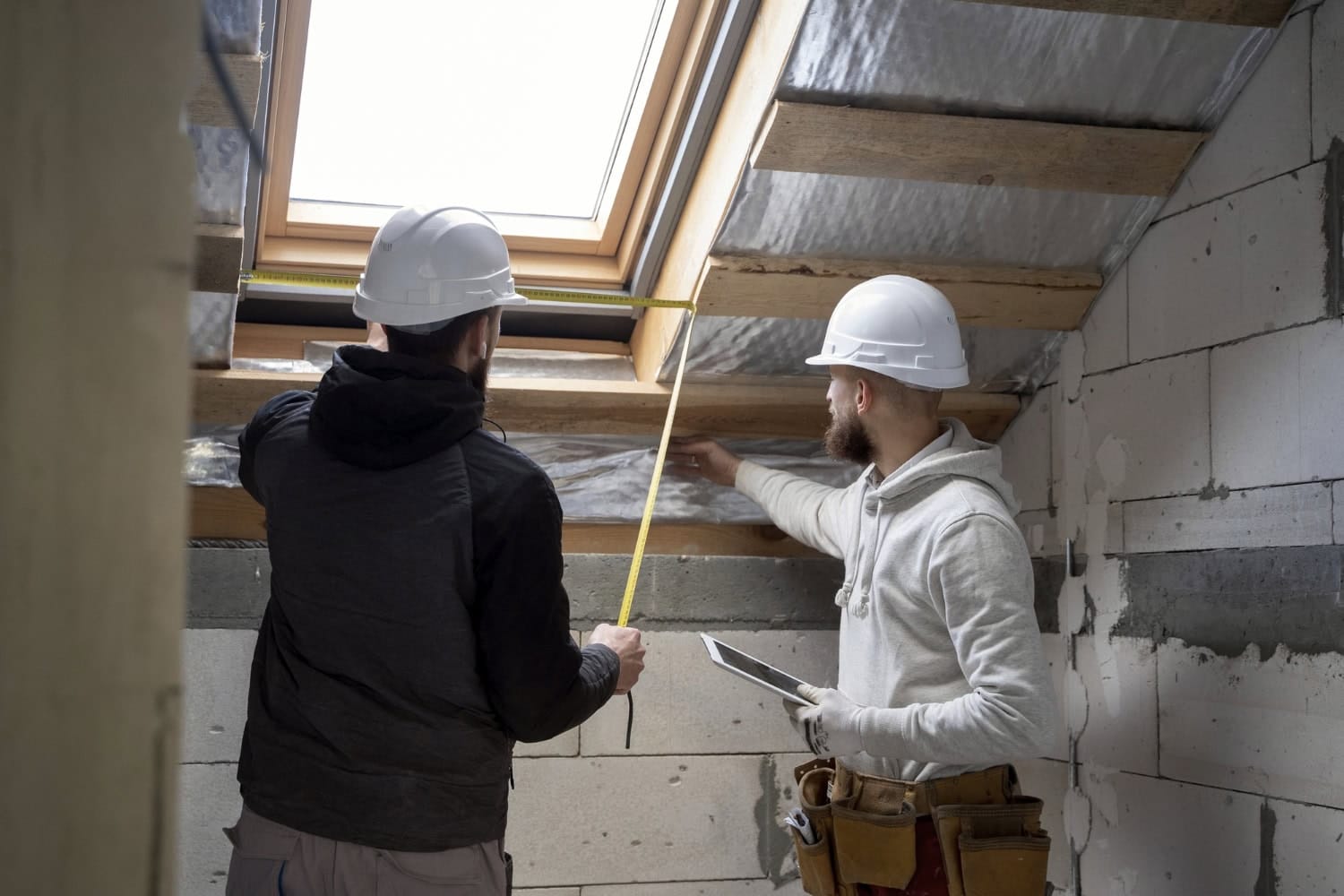
Hemp insulation is usually sold as batts or boards that fit between the studs in walls, roofs and floors. To keep their shape, the fibres are mixed with a binder, often 5 to 15 percent polyester fibres, and to meet fire requirements a fire retardant such as soda or salt is added. Hemp is also available as loose-fill insulation that is blown in, in which case no binder is needed.
Hempcrete
Hempcrete, also known as hemp-lime, is a mix of hemp hurd, a lime-based binder and water. It is cast or sprayed around a load-bearing timber frame, or formed into blocks that are laid like masonry. It does not carry significant loads itself, but it insulates, regulates moisture and creates a dense, stable wall.
The material has been used in France for several decades, and France is now Europe’s largest hemp grower. According to the European Commission, the EU grew 33,000 hectares of hemp in 2022, and France accounted for more than 60 percent of production. Building materials such as hempcrete and hemp wool are named among the most important uses.
How well does hemp insulate?
Insulating performance is measured as a lambda value, and the lower the value, the better the material insulates. Swedish hemp insulation from Ekolution has a lambda value of 0.040 W/mK. Mineral wool is often around 0.032 to 0.037 W/mK, so hemp insulates slightly less well per centimetre.
A 2025 study in the journal Materials measured hemp-based insulation samples in the laboratory and found values between 0.055 and 0.065 W/mK, while glass wool measured 0.032. The samples were not finished industrial products, but the conclusion still holds: the same insulating performance can be achieved with hemp by making the layer thicker. The same study calculated that each kilogram of hemp fibre stores a net 1.4 kilograms of carbon dioxide.
Hemp also has properties that mineral wool lacks. The fibres can absorb and release moisture, which evens out humidity in the wall, and the material has a high heat storage capacity. Ekolution’s boards have fire class D and, together with fire-rated boards, can reach EI120. According to the Swedish building conservation organisation Slöjd & Byggnadsvård, mice avoid the material, and its lifespan is estimated at 50 to 75 years if it is installed dry and correctly.
Hemp and the climate
Hemp grows quickly and absorbs carbon dioxide as it grows. According to Ekolution, one hectare of hemp binds 15 to 20 tonnes of carbon dioxide during a season of 100 to 150 days. Part of the carbon stays in the building material for as long as the house stands, which is why hemp products can have a negative carbon footprint. Ekolution’s environmental product declaration states a footprint of minus 69 kilograms of carbon dioxide equivalent per cubic metre of insulation.
Not all building with hemp is automatically carbon negative, though. A 2020 study in the Journal of Cleaner Production compared 36 different hempcrete recipes. The best mixes, with low density and natural hydraulic lime, stored around 16 kilograms of carbon dioxide per square metre of wall over the whole life cycle. Heavy mixes with Portland cement, on the other hand, resulted in net emissions. The choice of binder and the amount of material therefore determine how big the climate benefit is.
Hemp insulation made in Sweden
Hemp insulation is now also made in Sweden, where Raw Hemp is based. The company Ekolution has built a hemp insulation factory in Staffanstorp in the south of the country, described as one of the most advanced in Europe. The investment totalled 156 million Swedish kronor, of which 94.5 million came from the Swedish Environmental Protection Agency’s Klimatklivet programme. The factory can process the harvest from around 2,000 hectares of hemp, grown by local farmers under contract or as co-owners of the company.
In addition to insulation, Ekolution makes acoustic panels and facade boards from hemp. Growing the hemp close to the factory means short transport distances and a new market for local farmers. To learn more about how hemp is grown and which rules apply, read our article Growing hemp: from seed to harvest, and what the law says.
Pros and cons of hemp insulation
- Pro: a renewable material that absorbs carbon dioxide as it grows and can lower a building’s carbon footprint.
- Pro: moisture-buffering and heat-storing, which gives a more even indoor climate.
- Pro: can be reused or composted at the end of its life.
- Con: a slightly higher lambda value than mineral wool, so slightly thicker insulation is needed for the same result.
- Con: not yet as common in builders’ merchants as mineral wool, and the range of products is smaller.
What is hemp insulation made of?
Hemp insulation is made from the bast fibres in the stalk of industrial hemp. The fibres are often mixed with a binder and a fire retardant so they can be formed into boards.
Does hemp insulate as well as mineral wool?
Almost. Swedish hemp insulation has a lambda value of around 0.040 W/mK, while mineral wool is often around 0.032 to 0.037. The difference is offset with slightly thicker insulation.
What is hempcrete?
Hempcrete is a mix of hemp hurd, lime and water that is cast around a timber frame or formed into blocks. It insulates, regulates moisture and can store carbon in the wall.
Is hemp insulation carbon neutral?
Hemp absorbs carbon dioxide as it grows, and Ekolution states a footprint of minus 69 kilograms of carbon dioxide equivalent per cubic metre. How big the climate benefit is depends on the binder and the manufacturing process.
Where is hemp insulation made?
Hemp insulation is made in several European countries. In Sweden, Ekolution has built a factory in Staffanstorp that makes hemp insulation from hemp grown by local farmers.
Sources
- European Commission. Hemp.
- Fiedler, T. and Pedersen, J. (2025). Evaluating the Thermal Conductivity of Hemp-Based Insulation. Materials, 18(8), 1723.
- Arehart, J. H., Nelson, W. S. and Srubar, W. V. (2020). On the theoretical carbon storage and carbon sequestration potential of hempcrete. Journal of Cleaner Production, 266, 121846.
- Ekolution. Hemp fibre insulation.
- Grönt Samhällsbyggande (2024). Ekolution satsar på tillverkning av industrihampa i Sverige.
- Tidningen Näringslivet (2024). Snart öppnar Europas mest avancerade hampafabrik i Staffanstorp.
- Slöjd & Byggnadsvård. Hampaisolering.