Hemp is one of humanity’s oldest crops. It has given us rope, sailcloth, paper and food for thousands of years, and today it is spreading across European fields again. Between 2015 and 2022 the area of hemp grown for fibre in the EU rose by 60 per cent. Here we explain how hemp grows from seed to harvest, how it is farmed in practice and what the law says if you are thinking of growing it yourself.
At a glance
- Hemp is an annual plant that goes from seed to harvest in roughly four to five months.
- In the EU, only approved varieties may be grown, from certified seed and with no more than 0.3 per cent THC.
- In most countries only farmers may grow industrial hemp, and the authorities check the THC content before harvest.
- The rules on growing hemp or cannabis at home vary widely between countries.
From seed to plant
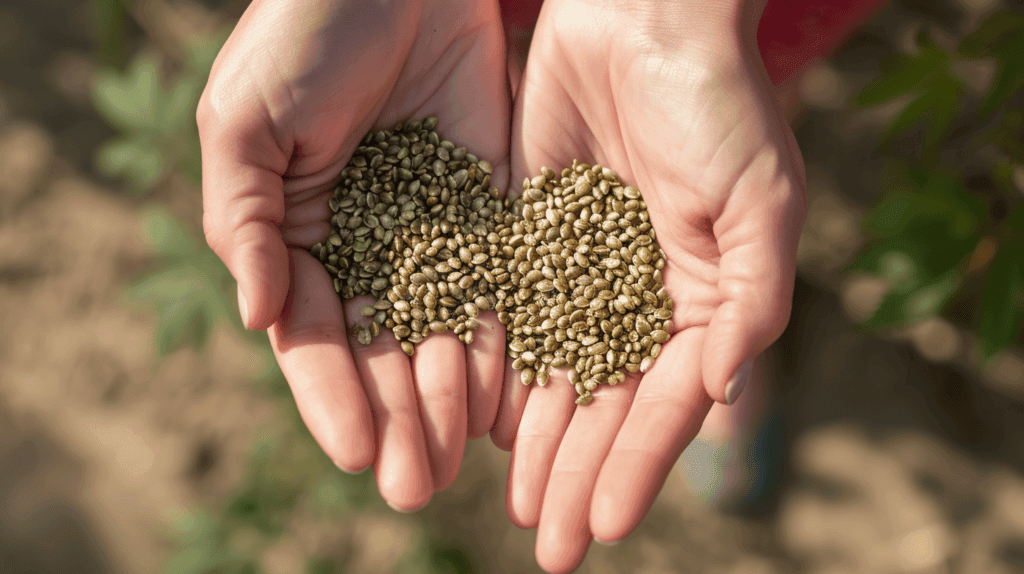
A hemp seed is really a small nut with a hard, marbled shell. Inside is the embryo and a store of fat and protein, the same nutrients that make hemp seeds popular as food. When the seed gets moisture and warmth it swells, the shell cracks and a root tip pushes out. Then the two seed leaves push up through the soil, followed shortly by the first true leaves with their familiar serrated leaflets.
Hemp germinates in fairly cool soil. According to growing advice from the Bavarian competence centre TFZ, a soil temperature of 5 to 10 degrees is enough, and the seed should be sown 3 to 4 centimetres deep. Sown too deep, it comes up unevenly; sown too shallow, it dries out or gets eaten by birds.
The hemp life cycle
After germination, hemp enters a period of rapid growth. The stem stretches towards the light, and during the long days of summer fibre hemp can grow several metres tall. This is when the plant builds the stem that provides fibre and the leaf mass that will power flowering.
Hemp is a short-day plant. It starts to flower when the nights become long enough, which is why day length matters more than the age of the plant. Varieties bred for northern latitudes flower early, and in northern Europe many varieties flower as early as July. After flowering the seeds form, and once they have ripened the crop is ready for harvest.
Male plants, female plants and monoecious varieties
Wild hemp is dioecious, meaning there are separate male and female plants. The males flower earlier, shed pollen and wither, while the females form the seeds. It is also the flower clusters of the female plants that contain the most cannabinoids and terpenes. Many of the varieties grown on European fields are monoecious instead, with male and female flowers on the same plant. This gives more even stands, where the plants grow to the same height and ripen at the same time, which makes harvesting easier.
How hemp is grown in the field
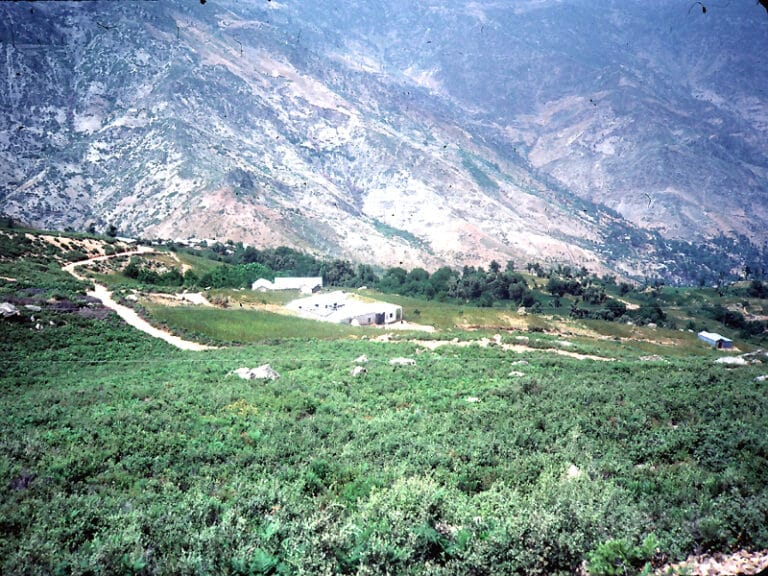
In northern Europe hemp is usually sown between mid-April and May, once the soil has warmed up. How densely it is sown depends on what you want to harvest. For fibre it is sown densely, 60 to 80 kilos of seed per hectare, so that the plants grow tall and slender with few branches. For seed, much less is needed, because each plant needs room to branch and set plenty of flowers.
Hemp needs a good supply of nitrogen but usually manages without chemical pesticides. A dense stand shades out most weeds, which makes the crop attractive to organic farmers. The big challenge is the harvest. The long, tough fibres easily wrap around machinery, and many growers have had to adapt their equipment.
When to harvest depends on what the crop will be used for. Fibre hemp is harvested around full bloom, while seed hemp is harvested once the seeds have ripened. Many countries also regulate the timing so that the THC content can be checked first. In Germany, for example, harvesting may only begin after clearance from the federal agriculture office BLE or an on-site inspection.
What is hemp used for?
Almost the whole plant can be used. The stem provides fibre for textiles, rope and insulation, and the woody core, the shiv, is mixed with lime to make the building material hempcrete. The seeds are pressed for oil or hulled and eaten. The flowers and leaves contain CBD and other cannabinoids together with terpenes, the aromatic compounds that give each variety its scent. That combination is what makes the flower interesting for CBD products, and it is also where the entourage effect comes in: the theory that the compounds in the plant reinforce and balance each other. Read more about the different compounds in Cannabinoids: everything you need to know.
Can you grow hemp at home?
It depends on where you live. In the EU, industrial hemp may only be grown from certified seed of approved varieties with no more than 0.3 per cent THC, and in most countries only farmers may grow it, often after notifying the authorities. Hemp seeds sold as food or bird seed are not certified seed, even if the plants would be low in THC.
Growing at home is a different matter. Some countries now allow adults to grow cannabis at home, including Malta, Luxembourg, the Czech Republic and Germany, where adults have been allowed to grow up to three plants since 2024. In other countries, a few plants on the balcony can count as illegal cultivation, even if they are low-THC hemp. Always check the rules where you live. You can read more about the German rules in Is cannabis legal in Germany?
Hemp is back on Europe’s fields
Interest in hemp among European farmers has grown quickly. According to the European Commission, the area of hemp grown for fibre in the EU rose from 20,540 hectares in 2015 to 33,020 hectares in 2022, while production almost doubled. France accounts for more than 60 per cent of EU production, followed by Germany and the Netherlands. Hemp also tends to fit well into crop rotations and usually leaves the soil in good condition for the next crop.
If you are curious about how finished hemp flowers look and smell, you can find them among our CBD flowers.
Frequently asked questions about growing hemp
Can you grow hemp at home?
It depends on the country. In most of the EU only farmers may grow industrial hemp, while some countries, including Germany, allow adults to grow a few cannabis plants at home.
Can you sow hemp seeds from bird seed or the supermarket?
No. Legal hemp cultivation requires certified seed of a variety approved in the EU.
How much THC may industrial hemp contain?
No more than 0.3 per cent. The limit has applied throughout the EU since 2023.
How long does it take to grow hemp?
Roughly four to five months from sowing to harvest, depending on the variety and whether it is grown for fibre or seed.
When does hemp flower?
Hemp is a short-day plant that starts to flower when the nights get longer. In northern Europe many varieties flower as early as July.
Sources
- European Commission. Hemp. Agriculture and rural development.
- Technologie- und Förderzentrum (TFZ) Bayern. Anbauhinweise Faserhanf.
- Technologie- und Förderzentrum (TFZ) Bayern. Anbauhinweise Körnerhanf.
- Technologie- und Förderzentrum (TFZ) Bayern. Rechtliche Regelungen zum Anbau von Nutzhanf.
- Salentijn, E. M. J. et al. (2019). The Complex Interactions Between Flowering Behavior and Fiber Quality in Hemp. Frontiers in Plant Science, 10, 614.