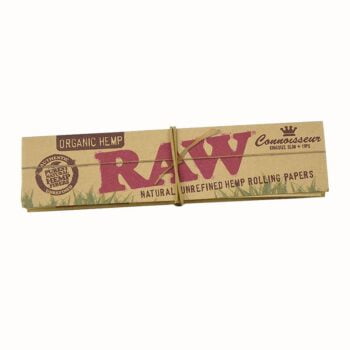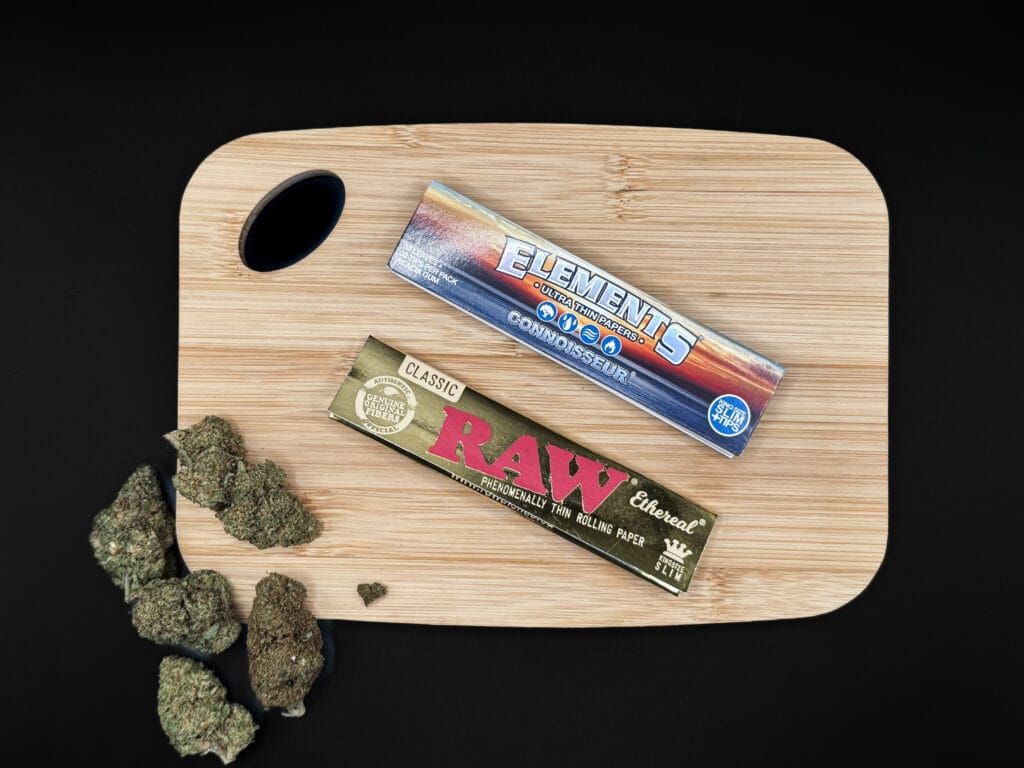
Many of the world’s rolling papers have one thing in common: a connection to a town most people have never heard of. Alcoy, or Alcoi as it is called in Valencian, lies among the mountains of the province of Alicante in south-eastern Spain. It is an industrial town of just over 60,000 people, and paper for rolling has been made here for more than 250 years. The brown RAW booklets are also made in the area around Alcoy today.
At a glance
- Alcoy in the province of Alicante has been a centre for rolling paper production since the 18th century.
- The rivers and water mills in the valley gave the town both power and clean water for papermaking.
- In 1815, one of the first businesses to make ready-made booklets of rolling paper started in Alcoy.
- In the early 20th century there were more than a thousand different brands of rolling paper booklets from the town.
- RAW was founded in 1995 by Josh Kesselman, and its booklets are still made in the Alcoy area.

Why Alcoy?
It was no coincidence that the paper industry grew up here. Papermaking needs large amounts of clean water, both to process the fibres and to drive the machines. Alcoy lies where several streams, including the Molinar, meet and form the river Serpis. Mills were built along the water early on, and the El Molinar district is named after them.
Papermaking has a long tradition in the Valencia region. The technique reached Spain in the Middle Ages, and there were paper mills in the region as early as the 12th century. For a long time, paper was made from fibres of hemp, linen and cotton, often from old textiles. When demand for thin paper for tobacco grew, Alcoy already had the skills, the water power and the industry it needed.
When tobacco began to be rolled in paper
Rolling tobacco in paper is a Spanish tradition. As early as the 17th and 18th centuries, people in Spain smoked so-called papelates, tobacco rolled in thin paper, and they appear in paintings by Francisco Goya, among others. The habit then spread to the rest of Europe. By around 1830 it had reached France, where it got the name cigarette, and in 1845 the French state tobacco monopoly began making cigarettes.
As the habit spread, demand grew for a paper made specifically for the purpose. In Alcoy, such paper began to be made in the 18th century. Pay-Pay, one of the oldest brands still around, states that the first rolling paper mill in Alcoy started in 1764. At the same time, the company openly writes that parts of its early history are based on folklore, which is common for such old industries.
The booklets that made it easy
At first, rolling paper was sold in larger sheets that you had to cut or fold yourself. In 1815, one of the first businesses to cut the paper and gather it into small booklets started in Alcoy. This made the paper much easier to use, and the booklet became the standard all over the world.
In the late 19th and early 20th centuries, the industry grew quickly. According to the newspaper Alicante Plaza, there were more than a thousand different brands of rolling paper booklets from Alcoy at its peak, and the booklet covers were often small works of art that are sought-after collectors’ items today. Several manufacturers eventually merged into Papeleras Reunidas, whose Bambú brand was sold around the world.
What makes a rolling paper a rolling paper
A rolling paper is not just a thin paper. It has to meet requirements that ordinary paper never has to.
- Thickness. Ordinary copy paper weighs around 80 grams per square metre. A rolling paper weighs only a fraction of that, and making paper so thin that it still holds together takes precision at every step.
- Even burn. The paper should burn at roughly the same rate as its contents. How tightly the fibres are packed, the porosity of the paper, controls how it burns.
- Bleached or unbleached. White paper has been bleached, while unbleached paper keeps the natural brown colour of the fibres. Many people prefer unbleached paper because it has been through fewer treatments.
- The gum strip. Quality manufacturers make the sticky strip that is moistened to seal the roll from natural gum from the acacia tree.
Competition, war and change
During the 20th century the industry changed. Competition from Catalonia became fierce. The Smoking brand, founded in 1924 in Capellades near Barcelona by the company Miquel y Costas, grew into one of the biggest players and took a large share of the market. The Spanish Civil War and the decades of isolation under Franco also made exporting harder.
Many of the factories in Alcoy closed over time, and Papeleras Reunidas shut down. But the know-how and some of the machinery remained in the area, and that would prove decisive for the next chapter.
RAW and the legacy of Alcoy
RAW was founded in 1995 by the American Josh Kesselman. His idea was an unbleached rolling paper without additives, and he went to Spain to find manufacturers with the right skills. According to High Times, he got in touch with a local papermaker who had restarted production using machines from the old Bambú factory. Kesselman’s family later bought the factory, in 2019, and RAW’s booklets are still finished in Spain.
The booklets are made in Benimarfull, a small village a few kilometres from Alcoy. According to the company, the hemp used is milled in southern France. A hallmark of RAW is the watermark in the paper, created by pressing the paper between metal rollers. According to RAW, the pattern helps the paper burn evenly.
You can find the RAW range on our page about RAW. The full selection is among our rolling papers.
Alcoy today
Today Alcoy is a modern industrial town where textiles, paper, food and metal are important industries. The paper industry is not as dominant as it was in its 19th-century heyday, but the tradition lives on in the area, and the brown booklets sold all over the world are the result of a story that began by the rivers of the Valencian mountains.
Where are RAW papers made?
RAW booklets are made in Spain, in Benimarfull in the province of Alicante, a few kilometres from Alcoy. According to the company, the hemp used is milled in southern France.
Why is Alcoy called the town of rolling paper?
Alcoy has made rolling paper since the 18th century. In 1815, one of the first businesses to make ready-made booklets started here, and in the early 20th century there were more than a thousand brands of rolling paper booklets from the town.
When was RAW founded?
RAW was founded in 1995 by Josh Kesselman. The brand is known for its unbleached paper and the watermark in the paper.
What is the difference between bleached and unbleached rolling paper?
Bleached paper has been treated to make it white, while unbleached paper keeps the natural brown colour of the fibres. Many people prefer unbleached paper because it has been through fewer treatments.
Does Smoking come from Alcoy?
No. Smoking was founded in 1924 in Capellades near Barcelona by Miquel y Costas. The brand became a major competitor to the manufacturers in Alcoy.
Sources
- Alicante Plaza. Libritos de papel de fumar: embalaje de una época.
- Nueva Tribuna (2021). La curiosa historia del papel de liar.
- Collectors Weekly. The unfiltered history of rolling papers.
- High Times. Give it to you RAW: the true story of Josh Kesselman, RAW papers and the Spanish factory.
- Wikipedia. RAW (rolling papers).
- Wikipedia. Smoking (rolling paper).
- Wikipedia. Cigarette.
- Wikipedia. Alcoy.
- Pay-Pay. Sobre nosotros (paypaypaper.com).