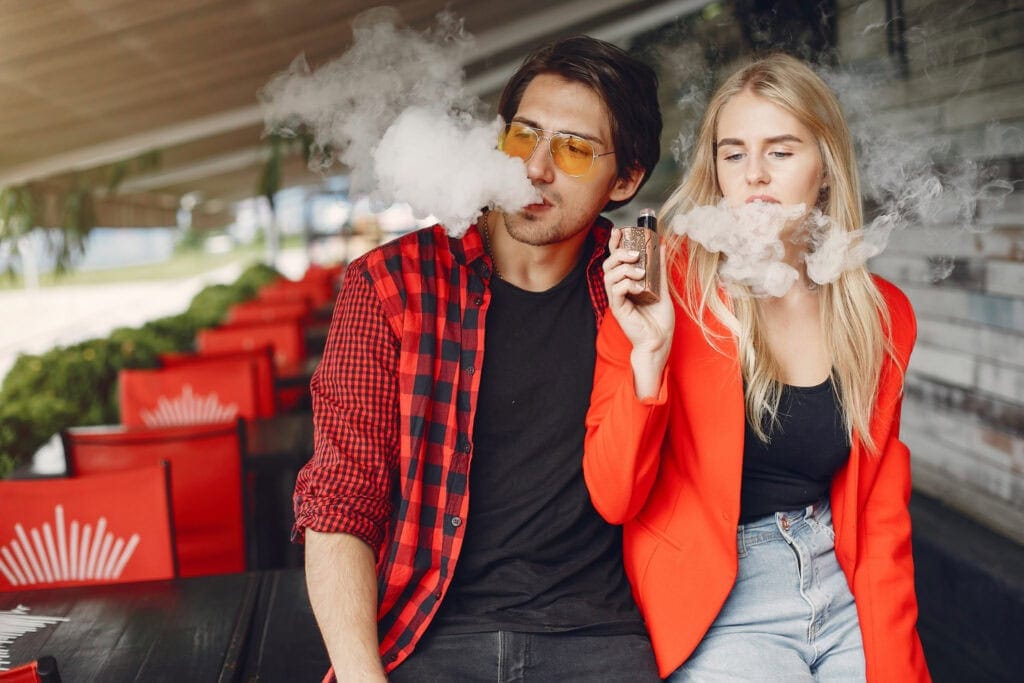
A CBD vape turns a concentrate of CBD and terpenes into vapour that you inhale, with no nicotine and no combustion. Interest has grown quickly across Europe, but the rules are still complicated and quality varies a lot between products. Here we explain what the law says, how inhaled CBD works and what to look for when you choose a CBD vape.
At a glance
- CBD is not a narcotic, but THC is. The rules on THC in finished products vary between European countries.
- When inhaled, CBD is absorbed through the lungs, and blood levels peak within minutes.
- In many countries, e-cigarettes without nicotine are covered by the same rules as those with nicotine, including an age limit of 18.
- Choose a vape with a lab report, no thinning agents and a coil from a well-known manufacturer.
What is a CBD vape?
A CBD vape consists of a battery and a cartridge or tank with CBD concentrate. When you inhale, a coil, usually made of ceramic, heats the concentrate until it turns into vapour. There are three common types:
- Disposable vape. The battery and cartridge are built together and thrown away when the concentrate runs out.
- 510 cartridge. A replaceable cartridge that screws onto a separate battery. 510 is the thread standard used by most batteries.
- Pod. A cartridge that clicks into a battery made for a specific brand.
The concentrate is usually CBD distillate or CBD isolate mixed with terpenes, the aromatic compounds that give cannabis its smell and taste. The terpenes can be botanical, meaning they are extracted from other plants, or come from the cannabis plant itself. We explain the difference in Botanical terpenes vs live terpenes.
How does inhaled CBD work?
When you inhale CBD, it is absorbed through the lungs and passes straight into the bloodstream without first going through the liver. In the only study that has measured the absolute bioavailability of inhaled CBD in humans, an average of 31 per cent of the dose reached the blood, and levels peaked within minutes. When CBD is taken by mouth, the share is considerably lower and the effect comes later. Read more in CBD bioavailability.
Many people use a CBD vape to unwind, for example in the evening before going to sleep. The experience differs from person to person and depends on the dose, the product and habit. CBD does not get you high, unlike THC. We explain the difference in CBD vs THC: what is the difference?
Why the terpenes matter
Terpenes and small amounts of other cannabinoids such as CBG and CBN contribute more than flavour. The theory of the entourage effect holds that the compounds in the cannabis plant reinforce and balance each other, so that the whole works differently from a single compound. Research in this area is still young, but it is one of the reasons many people prefer vapes with cannabis-derived terpenes to pure CBD with added flavouring. Read more about the different compounds in Cannabinoids: everything you need to know.
Is CBD vape legal?
In most of Europe, yes. CBD is not a controlled substance, and in the 2020 Kanavape case the Court of Justice of the European Union ruled that CBD is not a narcotic drug under the UN drug conventions. The case concerned e-cigarettes with CBD oil from the Czech Republic that France had banned, and the court found that the ban conflicted with the free movement of goods within the EU.
THC is treated differently. Farmers in the EU may grow industrial hemp with up to 0.3 per cent THC, but the rules for finished products vary from country to country. Some countries allow small traces of THC, while others allow none at all. A CBD vape should therefore always come with a lab report showing its THC content. You can find a country-by-country overview in Is CBD oil legal in Europe?
Vaping rules apply too. The EU Tobacco Products Directive only covers e-liquids that contain nicotine, but many countries apply their e-cigarette rules to nicotine-free products as well, including age limits and in some cases flavour bans. Several countries, including France and Belgium, have also banned disposable vapes.
Is it safe to vape CBD?
Inhaling vapour is not risk-free, and the long-term effects of vaping are not yet well understood. So far, the most serious problems have come from products with unknown contents. In 2019 and 2020, the US Centers for Disease Control and Prevention (CDC) recorded 2,807 cases of severe lung injury that required hospital care or led to death, including 68 deaths. The main cause was vitamin E acetate, a thinning agent that had been mixed into illegal THC cartridges.
A more recent example comes from England. In 2025, researchers at the University of Bath analysed almost 2,000 vapes and e-liquids confiscated in schools. In total, 13 per cent contained synthetic cannabinoids, known as spice, and in some regions it was up to one in four. Many had been marketed as THC vapes on social media, but only 1.2 per cent actually contained THC. The lesson is simple: only buy vapes when you know what is in the cartridge.
How to choose a CBD vape
- Lab report. A certificate of analysis from an independent lab shows the CBD content and confirms that the product is free of THC and contaminants.
- Ingredients. The concentrate should consist of cannabinoids and terpenes. Avoid products with thinning agents such as vitamin E acetate or polyethylene glycol (PEG).
- Hardware. Ceramic coils from well-known manufacturers such as CCELL heat evenly and give a cleaner taste. Studies have shown that metals from cheaper coils can end up in the vapour.
- Terpenes. Check whether the terpenes are botanical or cannabis-derived. This determines how close the taste and overall experience come to the original strain.
- Seller. Buy from a reputable shop rather than through social media.
If you want to compare specific products, we have reviewed our vapes in Best CBD vapes 2026.
You can find the full range among our CBD vapes.
Why has CBD vaping become so popular?
CBD vaping has grown quickly in recent years across Europe. One reason is that many people want a fast effect and a taste reminiscent of cannabis, without getting high. Another is that the technology has improved, with ceramic coils and terpenes captured directly from fresh plants. At the same time, developments in countries such as Germany have made hemp and cannabis a more accepted part of everyday life in Europe.
Frequently asked questions about CBD vapes
Is CBD vape legal?
In most European countries, yes. CBD is not a narcotic, but the rules on THC in finished products vary between countries.
Does a CBD vape get you high?
No. CBD does not get you high. THC does, which is why a CBD vape should come with a lab report showing its THC content.
How quickly does a CBD vape work?
When inhaled, CBD is absorbed through the lungs, and blood levels peak within minutes.
Does a CBD vape contain nicotine?
No. In many countries it is still regulated as an e-cigarette, with an age limit of 18.
How do I choose a good CBD vape?
Choose a product with a lab report from an independent lab, no thinning agents and a ceramic coil from a well-known manufacturer.
Sources
- Millar, S. A., Stone, N. L., Yates, A. S. and O’Sullivan, S. E. (2018). A systematic review on the pharmacokinetics of cannabidiol in humans. Frontiers in Pharmacology, 9, 1365.
- Court of Justice of the European Union (2020). Judgment in Case C-663/18 (Kanavape). 19 November 2020.
- European Parliament and Council (2014). Directive 2014/40/EU on tobacco and related products.
- Centers for Disease Control and Prevention (2020). CDC, States Update Number of Hospitalized EVALI Cases and EVALI Deaths. 25 February 2020.
- University of Bath (2025). Up to 1 in 4 vapes confiscated in schools contains spice, and these are pushed on social media. 5 September 2025.
- Olmedo, P. et al. (2018). Metal concentrations in e-cigarette liquid and aerosol samples. Environmental Health Perspectives, 126(2).