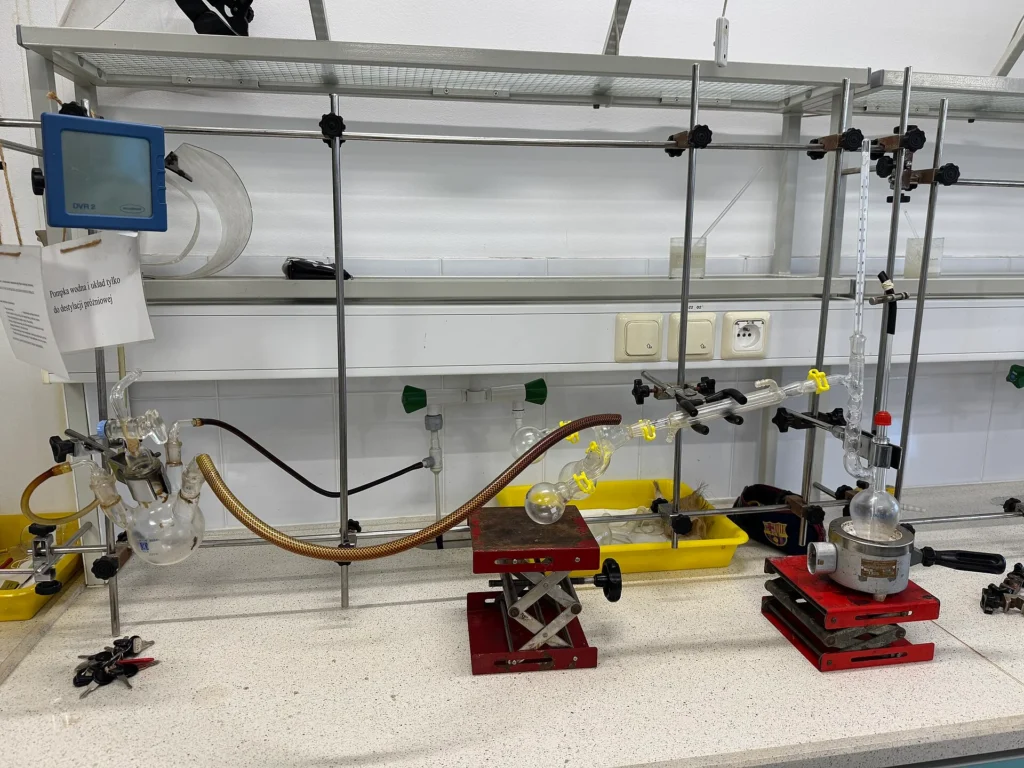
HHC, THC-P, Spice and a long list of substances with abbreviations nobody has time to learn. Synthetic and semi-synthetic cannabinoids are often sold as legal alternatives to cannabis, but they are made in a lab, poorly studied and have been linked to serious poisonings. Here we look at what they are, how they are made, what the known risks are and what the law says.
At a glance
- Synthetic cannabinoids, such as Spice, are entirely lab-made substances that mimic THC and are often far stronger.
- Semi-synthetic cannabinoids, such as HHC, are made by chemically converting CBD from hemp.
- By the end of 2025, the EU drugs agency EUDA was monitoring 304 cannabinoids, 40 of them semi-synthetic.
- HHC has been under international drug control since 2025.
- How these substances affect people has barely been studied.
Synthetic and semi-synthetic cannabinoids
Synthetic cannabinoids are substances developed in a lab to mimic the effects of THC, but they do not occur in the cannabis plant. They appeared in Europe in the mid-2000s and were sold as legal smoking blends under names such as Spice. Many of them bind far more strongly to the body’s cannabinoid receptors than THC, which makes them hard to dose and more dangerous in an overdose.
Semi-synthetic cannabinoids are a newer phenomenon. According to EUDA, they are chemically modified versions of substances found in the cannabis plant, and most are made from CBD extracted from hemp. Well-known examples are HHC, HHC-O, HHC-P, THC-P and H4-CBD. The first ones were mainly imported from the United States, but today they are also produced in Europe.

How HHC is made
HHC is a good example of how semi-synthetic cannabinoids are produced. According to the EU drugs agency, CBD is first converted into THC using acid and heat, which also produces a range of byproducts. The THC is then hydrogenated with a platinum or palladium catalyst. The result is a mixture of two forms of HHC, one of which accounts for most of the effect. The ratio between them can vary from batch to batch, and so can the strength of the substance.
This is chemical synthesis, not extraction. A CBD extract draws out compounds that are already in the plant. A semi-synthetic cannabinoid is a new molecule created in a reactor.
The risks of synthetic cannabinoids
- Almost no research. When the EU drugs agency reviewed HHC in 2023, it noted that the pharmacology and toxicology of the substance in humans had not been studied. Even less is known about newer variants.
- Unknown strength. Both fully synthetic and semi-synthetic cannabinoids vary in strength between batches, and the label rarely tells you how much a product actually contains.
- Residues from production. Chemical conversion can leave byproducts and residues behind. When American researchers analysed semi-synthetic vape products with delta-8-THC, they found both unknown byproducts and heavy metals that were not listed on the packaging.
- New variants all the time. When one substance is banned, another appears. In 2025 alone, 27 new cannabinoids were reported to the EU Early Warning System.
EUDA reports poisonings ranging from mild cases to severe ones that needed hospital treatment. In June 2024, Hungary reported 30 poisonings after people ate gummies containing potent semi-synthetic cannabinoids. The Swedish government has also linked several newer variants, including 10-OH-HHC, to serious poisonings with prolonged loss of consciousness and a risk of respiratory arrest.
The fully synthetic substances are even more dangerous. The EU risk assessment of the synthetic cannabinoid MDMB-4en-PINACA linked it to twelve deaths between January 2019 and August 2020.
When hemp and CBD are mixed with synthetic substances
A growing problem is that ordinary hemp or CBD products are sprayed with synthetic cannabinoids and sold as something else. According to EUDA, such cases have been reported by at least 13 European countries since 2020, with most reports coming from Germany and Sweden. When drug checking services in eight countries analysed 1,142 samples sold as cannabis, roughly one in four contained MDMB-4en-PINACA.
If you buy CBD, this means it matters where the product comes from. Buy from sellers who publish independent lab reports for their products and can answer questions about their origin.
What the law says
In March 2025, the UN Commission on Narcotic Drugs decided to add HHC to Schedule II of the 1971 Convention on Psychotropic Substances, following a recommendation from the WHO. Several European countries had already banned HHC on their own. Sweden, for example, classified HHC and HHC-P as narcotics in July 2023 and added HHC-O, THC-O and THC-P in January 2024.
The problem is that legislation is always one step behind. By the time one substance is banned, a new variant is often already on the market. That is why it is safer to avoid the whole category than to rely on a product being legal for the moment.
THCV, THC-P and other natural cannabinoids
Not every cannabinoid with an unfamiliar name is synthetic. THCV occurs naturally in the cannabis plant, and researchers have also found THC-P and THC-B in the plant, but only in trace amounts. This means that products containing larger amounts of them are in practice almost always made in a lab. The fact that a substance also exists in nature says little about how a particular product was made.
Why we do not sell synthetic cannabinoids
We do not sell synthetic cannabinoids or semi-synthetic substances such as HHC or THC-P. We believe in what is in the hemp to begin with, where cannabinoids and terpenes can work together in what is known as the entourage effect. All our CBD oils are tested by an independent lab, and you will find the lab reports collected in one place.
If you want to know more about the cannabinoids in hemp, read our guide to cannabinoids or our comparison of CBD and THC. We also have an older article on HHC, HHC-O and H4-CBD.
What is the difference between synthetic and semi-synthetic cannabinoids?
Synthetic cannabinoids, such as Spice, are entirely lab-made substances that mimic THC. Semi-synthetic cannabinoids, such as HHC, are made by chemically converting a compound from hemp, usually CBD, into a new molecule.
Is HHC legal?
HHC has been under international control since the UN Commission on Narcotic Drugs added it to the 1971 Convention in 2025, and many European countries had banned it before that. Newer variants are being added to national drug lists all the time.
Is THCV synthetic?
No, THCV occurs naturally in the cannabis plant. But products marketed with high levels of unusual cannabinoids are often made in a lab, so the origin tells you more than the name.
Can CBD products contain synthetic cannabinoids?
It happens. EUDA has received reports from at least 13 European countries of hemp sprayed with synthetic cannabinoids. Buy from sellers who publish independent lab reports.
Sources
- EUDA (2026). European Drug Report 2026: New psychoactive substances.
- EUDA (2025). European Drug Report 2025: New psychoactive substances.
- EUDA. EU Drug Market: Synthetic cannabinoids.
- EMCDDA (2023). Hexahydrocannabinol (HHC) and related substances.
- EMCDDA (2020). Risk assessment report on MDMB-4en-PINACA.
- Oomen PE et al. (2022). Cannabis adulterated with the synthetic cannabinoid receptor agonist MDMB-4en-PINACA and the role of European drug checking services. International Journal of Drug Policy.
- Russo F et al. (2023). Synthesis and pharmacological activity of the epimers of hexahydrocannabinol (HHC). Scientific Reports.
- Meehan-Atrash J, Rahman I (2021). Novel Δ8-Tetrahydrocannabinol Vaporizers Contain Unlabeled Adulterants, Unintended Byproducts of Chemical Synthesis, and Heavy Metals. Chemical Research in Toxicology.
- WHO (2025). UN Commission approves WHO recommendations to place psychoactive substances under international control.
- Swedish Government (2023). Nio nya substanser blir narkotikaklassade.
- Swedish Government (2023). Beslut om narkotikaklassning och förbud mot flera nya substanser.
- Swedish Government (2025). Regeringen narkotikaklassar nya substanser.
- Citti C et al. (2019). A novel phytocannabinoid isolated from Cannabis sativa L. with an in vivo cannabimimetic activity higher than Δ9-tetrahydrocannabinol: Δ9-Tetrahydrocannabiphorol. Scientific Reports.
- Linciano P et al. (2020). Isolation of a High-Affinity Cannabinoid for the Human CB1 Receptor from a Medicinal Cannabis sativa Variety: Δ9-Tetrahydrocannabutol, the Butyl Homologue of Δ9-Tetrahydrocannabinol. Journal of Natural Products.
- Header image: KiveVictor, Wikimedia Commons. Laboratory vacuum distillation apparatus on a benchtop (CC BY 4.0).