Hash is one of the oldest cannabis products there is. Long before CBD became a product category of its own, growers in Morocco, Afghanistan, Lebanon and India were pressing the resin of the cannabis plant into blocks, slabs and balls. Those methods are still in use today, and they explain why two pieces of hash can look, feel and smell completely different.
CBD hash is made the same way, but from industrial hemp bred for a high CBD content and very little THC. Same craft, different plant. This guide covers the most common types of hash, where they come from and what to look for when you choose.
At a glance
- All hash is made from trichomes, the tiny glandular hairs on hemp flowers where cannabinoids and terpenes are formed.
- What separates the types is how the trichomes are removed from the plant: dry, with ice water or by hand.
- Pollen hash (dry sift) is the most common type on the European CBD market.
- Bubble hash is made with ice water, and charas is rubbed by hand from living plants.
- A lab report is the only reliable way to know what a hash contains.
What hash is
Hash is made from trichomes. These are the small, glittering glandular hairs that cover the female flowers of the hemp plant, and they are where almost all cannabinoids and terpenes are produced. Research has shown that the contents of the trichomes change as the flower matures, which is one reason harvest timing matters for hash too.
The principle is the same today as it was hundreds of years ago: collect the trichomes and press them together. What has changed is the precision. Finer screens, ice water and better control of heat and pressure make it possible to produce anything from a coarse, spicy pollen hash to almost pure resin.
Where hash comes from
Three regions have shaped the styles you find today.
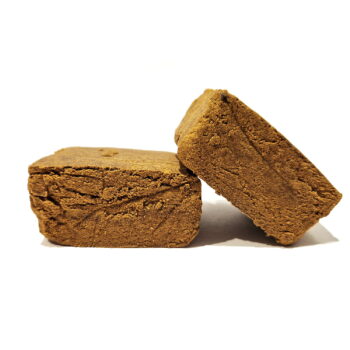
- Morocco, mainly the Rif Mountains in the north, has been the largest source of hash for Europe for generations. Traditional Moroccan hash is made by sieving dried plants over fine screens. The powder, known locally as kif, is then pressed into slabs. The result is golden brown to dark brown with a spicy, earthy aroma, and most of the pollen hash sold in Europe follows this tradition. Read more in our article on Moroccan hash.
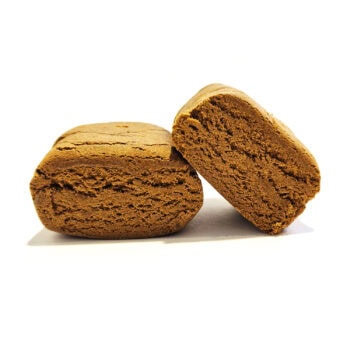
- Afghanistan and Pakistan are known for a darker, denser style. Sieved resin is often pressed with more heat and pressure, giving a softer, more pliable hash with a deeper, earthier aroma.
- Lebanon is known for a golden, slightly sticky hash with a mild, sweet character. Production has risen and fallen with the political situation in the country.
In all three regions, growers have preferred short, dense, resinous plants of the type usually called indica. How indica and sativa differ botanically is explained in our guide to sativa vs indica.
Types of hash
Pollen hash (dry sift)
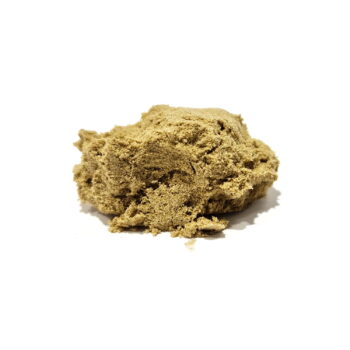
This is the most common type on the European CBD market. Dried plant material is sieved over screens so that the trichomes break off and fall through. The powder is the same as the kief that collects at the bottom of a grinder, and it is then pressed into blocks or slabs.
Quality depends on the screens and on how many times the material is sieved. A single pass gives a coarser product with more plant matter. Several passes through progressively finer screens give a cleaner, more concentrated hash. What kief is and how it collects in a grinder is explained in our guide what is a cannabis grinder.
Bubble hash (ice water hash)
Bubble hash is made with ice water. Plant material is stirred in ice-cold water, the cold makes the trichomes brittle, and they break off and sink. The mixture is then filtered through a series of bags with progressively finer mesh, the bubble bags that give the method its name, and the resin is dried.
The finest fractions are usually collected in bags of around 73 to 120 microns and can consist almost entirely of trichome heads. Coarser fractions contain more plant material and are darker. Well-made bubble hash has a sandy, slightly waxy texture, and the purest grades are sometimes called full melt.
Charas
Charas is the oldest method still in use. The maker rubs living, flowering plants between the palms so that the resin sticks to the hands. The resin is then rolled into balls or sticks.
Because charas is made from fresh plants rather than dried material, it has a different terpene profile from pressed pollen hash, often with a fresher, more floral note on top of the earthy base. The best-known charas comes from the Parvati Valley in India and other parts of the Himalayas. It is labour-intensive and rare on the European CBD market.
Pressed kief
If you have collected kief in the bottom of your grinder, you already have the raw material for a simple pollen hash. The principle is the same as in commercial production, just on a much smaller scale.
CBD hash and CBD flower
Hash and flower come from the same plant but are different products. Hash is more concentrated, because the trichomes are separated from the plant material before pressing. A gram of hash therefore often contains more cannabinoids and terpenes than a gram of flower.
The aroma differs as well. Pressing, and in some cases gentle heat, changes the terpene profile slightly, and hash tends towards deeper, earthier notes than flower of the same strain. We look at the differences in more detail in our article on hash vs flower.
What to look for when choosing CBD hash
Lab report
A lab report (COA) is the only way to know what a hash actually contains. Look for:
- The CBD content, meaning the measured content rather than a marketing claim.
- The THC content, which should be within the limits that apply to industrial hemp.
- The terpene profile if it is listed, since it says more about the character than the strain name.
How to read a lab report is explained in our guide on how to read a CBD lab report.
Aroma
Hash made from good raw material has a clear, complex aroma. If it smells flat, dusty or of almost nothing, the terpenes have broken down, usually because of poor storage or old stock.
Colour and texture
Good pollen hash has an even colour all the way through, from golden brown to olive green depending on strain and method. Hash that is almost black, hard and brittle has often been pressed with too much heat, which speeds up the breakdown of terpenes. Bubble hash should feel slightly waxy and can be a little sticky.
THC content
CBD hash made from hemp contains small amounts of THC within the legal limits. In other words, it is not completely THC-free, unlike CBD isolate and THC-free distillates. If you are looking for a product with no THC at all, hash is not the right choice.
How to store CBD hash
Hash is affected by the same things as flower: light, oxygen, heat and moisture. A study of stored cannabis resin showed that its contents change over time, and that terpenes and cannabinoids break down faster when storage is poor.
Keep your hash in an airtight container, ideally a small glass jar with a tight lid, somewhere dark and cool. Avoid ordinary plastic bags for longer periods, as they let air through and can give an off aroma. That is why we ship our hash in airtight, light-protective pouches, which you can read about in our article on our packaging.
What is CBD hash?
CBD hash is pressed resin from the trichomes of industrial hemp bred for a high CBD content. It is made with the same methods as traditional hash, but from a different plant with very little THC.
What are the main types of hash?
The main types are pollen hash (dry sifted and pressed, Moroccan style), bubble hash (made with ice water) and charas (rubbed by hand from living plants). Pollen hash is the most common type on the European CBD market.
What is the difference between CBD hash and CBD flower?
Hash consists of trichomes separated from the plant material and pressed, which makes it more concentrated per gram. Flower is the dried buds as they grew. Hash often has a deeper, earthier aroma.
Does CBD hash contain THC?
Yes, in small amounts within the legal limits for industrial hemp. It is not completely THC-free. If you want a product with no THC at all, CBD isolate or THC-free distillates are a better fit.
What does CBD hash smell like?
It depends on the strain and the method. Moroccan-style pollen hash often smells dry and spicy, while darker Afghan-style hash is richer and earthier. The terpene profile can vary a lot between strains and batches.
How should I store CBD hash?
In an airtight glass jar, somewhere dark and cool. Avoid plastic bags for longer periods. Light, oxygen and heat break down terpenes and cannabinoids.
Sources
- Livingston, S. J. et al. (2020). Cannabis glandular trichomes alter morphology and metabolite content during flower maturation. The Plant Journal, 101, 37–56.
- UNODC (2022). Recommended Methods for the Identification and Analysis of Cannabis and Cannabis Products.
- EUDA (2025). European Drug Report 2025: Cannabis.
- Chouvy, P.-A. and Afsahi, K. (2014). Hashish revival in Morocco. International Journal of Drug Policy, 25, 416–423.
- Grafström, K. et al. (2019). Effects of long term storage on secondary metabolite profiles of cannabis resin. Forensic Science International, 301, 331–340.