Indica and sativa are the two words you come across most often when reading about cannabis, CBD flowers or hash. Almost every strain description starts with them. According to the usual explanation, indica is relaxing and sativa is uplifting. Research paints a more nuanced picture. Here we look at where the names come from, what they tell you about a plant, what studies show and why terpenes say more than the label.
Key facts
- The names come from botany: Carl Linnaeus described Cannabis sativa in 1753 and Jean-Baptiste Lamarck described Cannabis indica in 1785.
- Today indica and sativa are mostly used to describe growth habit, leaf shape and aroma.
- Most strains available today are hybrids with genetics from both.
- Genetic studies show that the labels often do not reflect a plant’s actual ancestry or chemistry.
- Cannabinoids and terpenes say more about a strain than whether it is called indica or sativa.
What is the difference between indica and sativa?
In short, indica and sativa describe two types of growth habit. Indica is associated with short, compact plants with broad leaves, and sativa with tall, airy plants with narrow leaves. Over time, different aroma profiles and experiences have been linked to them. The table shows the traditional differences as they are usually described by growers and in strain descriptions.
| Indica | Sativa | Hybrid | |
|---|---|---|---|
| Growth habit | Short, compact and bushy | Tall, airy and open | Varies |
| Leaves | Broad, dark green | Narrow, light green | Varies |
| Flowering time | Shorter | Longer | Varies |
| Traditional origin | Afghanistan, Pakistan and the Hindu Kush | Warmer regions closer to the equator | Bred cross |
| Typical aroma | Earthy, sweet, musky | Citrus, pine, herbs | A mix of both |
| Often associated with | Evening and relaxation | Daytime and activity | Depends on the strain |
The table is a simplification. Growth habit and leaf shape are the parts that hold up best, because you can see them with the naked eye. The link to experience is the weakest, and it is the part research has questioned most.
Where do the names come from?
The Swedish botanist Carl Linnaeus described Cannabis sativa in 1753. This was the hemp grown in Europe for fibre and seeds. Just over thirty years later, in 1785, the French naturalist Jean-Baptiste Lamarck described Cannabis indica based on plants from India, which were shorter, more resinous and used for their intoxicating properties. A third type, Cannabis ruderalis, was described by the Russian botanist Dmitrii Janischewsky in 1924. It is small and flowers according to age rather than day length, which is used today in so-called autoflower strains.
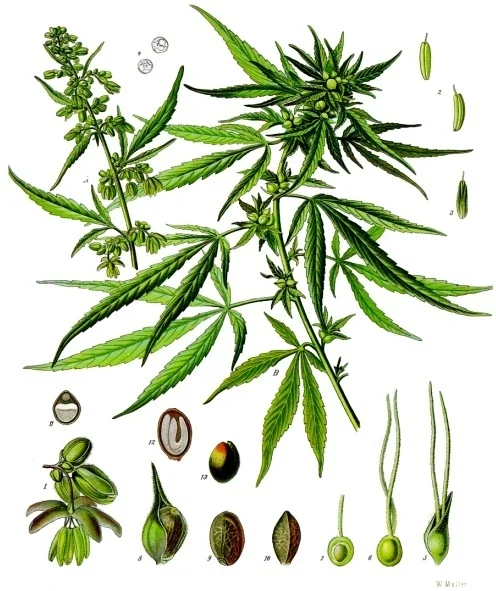
Botanists still disagree on whether these are separate species or varieties of one and the same species. The botanist John McPartland has shown that everyday usage has also drifted away from the original descriptions. What a shop calls sativa today does not correspond to Linnaeus’s fibre hemp, and what is called indica is not the same as Lamarck’s Indian plants.
| Name | Botanical meaning | Everyday meaning today |
|---|---|---|
| Cannabis sativa | Linnaeus’s hemp from 1753, grown for fibre and seeds | Tall plant with narrow leaves and an uplifting reputation |
| Cannabis indica | Lamarck’s resinous plants from India, 1785 | Short plant with broad leaves and a relaxing reputation |
| Cannabis ruderalis | Janischewsky’s wild-growing type from 1924 | Used for autoflower strains |
| Hybrid | Not a botanical category | Cross with genetics from both indica and sativa |
What does research say?
Over the past ten years, several studies have tested whether the labels hold up. A Canadian study from 2015 analysed the DNA of 124 samples of cannabis and hemp. The researchers found only a moderate link between a strain’s genetics and whether it was called indica or sativa, and that strain names often did not correspond to a clear genetic identity. They also found that industrial hemp was genetically closer to indica types than to sativa types.
A study in Nature Plants from 2021 went a step further. More than a hundred samples were analysed both genetically and chemically. Samples labelled sativa and indica could not be told apart across the genome as a whole. Instead, the label was linked to a small number of terpenes whose levels are controlled by a small group of genes. An American study from 2022 reached a similar conclusion: labels on the market did not consistently match the chemical content of the samples, although some labels were more often linked to certain chemical profiles.
The neurologist and cannabis researcher Ethan Russo has put it plainly. He calls the everyday division into sativa and indica “total nonsense” and says that it is impossible to guess a plant’s chemical content from its height, branching or leaf shape. In his view, only a laboratory analysis can show what a plant actually contains.
Terpenes say more than the label
Terpenes are the aroma compounds in cannabis, the same type of compounds that give citrus, lavender and pine trees their scent. They determine how a strain smells and, according to several researchers, are what best explains why strains are experienced differently. Russo, for example, argues that the heavy feeling usually linked to indica is more likely connected to the terpene myrcene than to the strain type itself. The interplay between terpenes and cannabinoids is called the entourage effect, and it is one of the reasons why whole flowers and full-spectrum products are so interesting.
Terpenes have also been studied individually. Most of that research has been done on animals or in the laboratory, so the results cannot be transferred directly to humans. But they give a hint as to why two strains with the same amount of CBD can be experienced quite differently. The table shows what the most common terpenes are associated with.
| Terpene | Aroma | Also found in | Associated with |
|---|---|---|---|
| Myrcene | Earthy, musky, fruity | Mango, hops, thyme | Relaxation and a heavier body feel |
| Limonene | Citrus | Lemon and orange peel | Positive mood and energy |
| Pinene | Pine, resin | Pine, rosemary | Clarity and focus |
| Terpinolene | Fruity, floral, herbal | Apple, lilac, tea tree | Calming in a mouse study, despite its uplifting reputation |
| Linalool | Floral | Lavender | Calm and relaxation |
| Beta-caryophyllene | Peppery, spicy | Black pepper, cloves | Binds to the body’s CB2 receptors |
If you want to know more about the individual terpenes, we have written about them in
What are terpenes? The most common terpenes in cannabis.
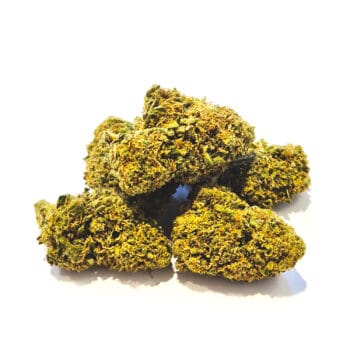
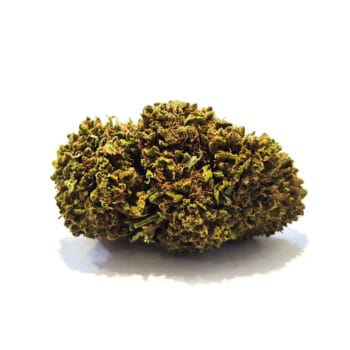
Indica and sativa in CBD flowers
CBD flowers from EU-certified industrial hemp are also often described as indica, sativa or hybrid. The label comes from the grower and says something about growth habit, aroma and the strain’s background. It does not, however, tell you how much CBD, CBG or other cannabinoids the flower contains. Only a lab report shows that, with the full cannabinoid profile. Here is how to read one:
How to read a CBD lab report (COA), step by step.
When choosing CBD flowers, it is therefore a good idea to treat indica and sativa as a clue to aroma and character, and to look at the terpenes and the cannabinoid profile for the rest. You can read more about cannabinoids and how they differ in
What are cannabinoids? CBD, THC, CBG, CBN and the endocannabinoid system.
Does it apply to hash too?
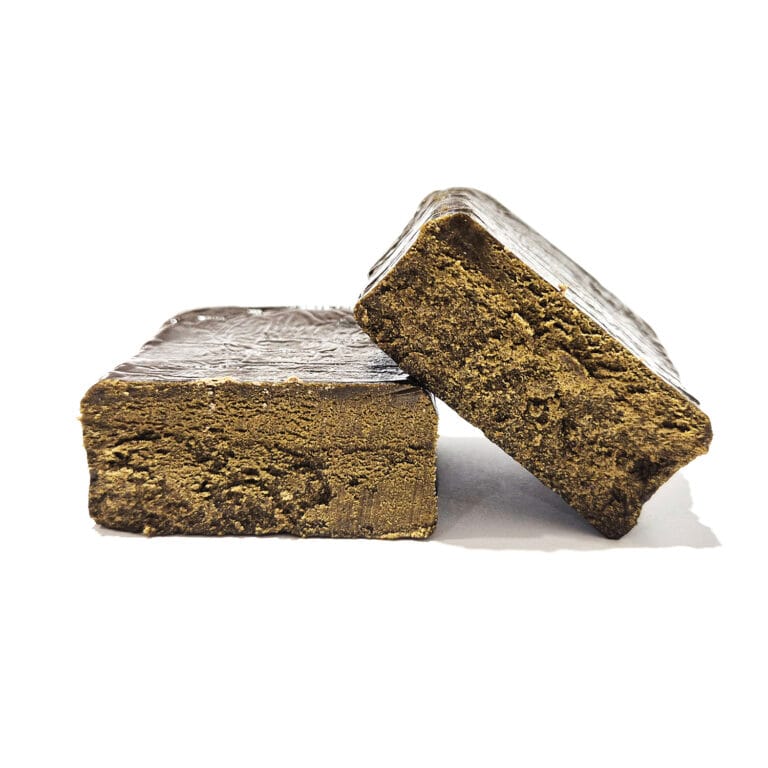
Hash is made from the trichomes, the small resin glands on the flower, so the plant’s terpenes carry over. Hash from an indica-dominant strain often has a heavier, earthier aroma. At the same time, the production method affects the result at least as much as the strain. Read more in
CBD hash: what it is, how it is made and how to choose.
Further down the page you can see a selection of our CBD flowers.
What is the difference between indica and sativa?
Indica describes short, compact plants with broad leaves and sativa tall plants with narrow leaves. Different aromas and experiences are often linked to them, but research shows that the labels do not always reflect a plant’s genetics or chemistry.
Is indica relaxing and sativa uplifting?
That is the usual description, but studies show that the label often does not match the plant’s chemical content. Terpenes and cannabinoids say more about a strain than whether it is called indica or sativa.
What is a hybrid?
A hybrid is a cross with genetics from both indica and sativa. Most strains available today are hybrids.
Who named indica and sativa?
Carl Linnaeus described Cannabis sativa in 1753 and Jean-Baptiste Lamarck described Cannabis indica in 1785.
Do indica and sativa matter for CBD flowers?
The label says something about growth habit and aroma. How much CBD and other cannabinoids a flower contains is shown in the lab report.
Sources
- Sawler, J. et al. (2015). The Genetic Structure of Marijuana and Hemp. PLOS ONE, 10(8), e0133292.
- Watts, S. et al. (2021). Cannabis labelling is associated with genetic variation in terpene synthase genes. Nature Plants, 7, 1330–1334.
- Smith, C. J. et al. (2022). The phytochemical diversity of commercial Cannabis in the United States. PLOS ONE, 17(5), e0267498.
- Piomelli, D. and Russo, E. B. (2016). The Cannabis sativa Versus Cannabis indica Debate: An Interview with Ethan Russo, MD. Cannabis and Cannabinoid Research, 1(1), 44–46.
- McPartland, J. M. (2018). Cannabis Systematics at the Levels of Family, Genus, and Species. Cannabis and Cannabinoid Research, 3(1), 203–212.
- Russo, E. B. (2011). Taming THC: potential cannabis synergy and phytocannabinoid-terpenoid entourage effects. British Journal of Pharmacology, 163(7), 1344–1364.
- Gertsch, J. et al. (2008). Beta-caryophyllene is a dietary cannabinoid. PNAS, 105(26), 9099–9104.
- Ito, K. and Ito, M. (2013). The sedative effect of inhaled terpinolene in mice and its structure-activity relationships. Journal of Natural Medicines, 67, 833–837.