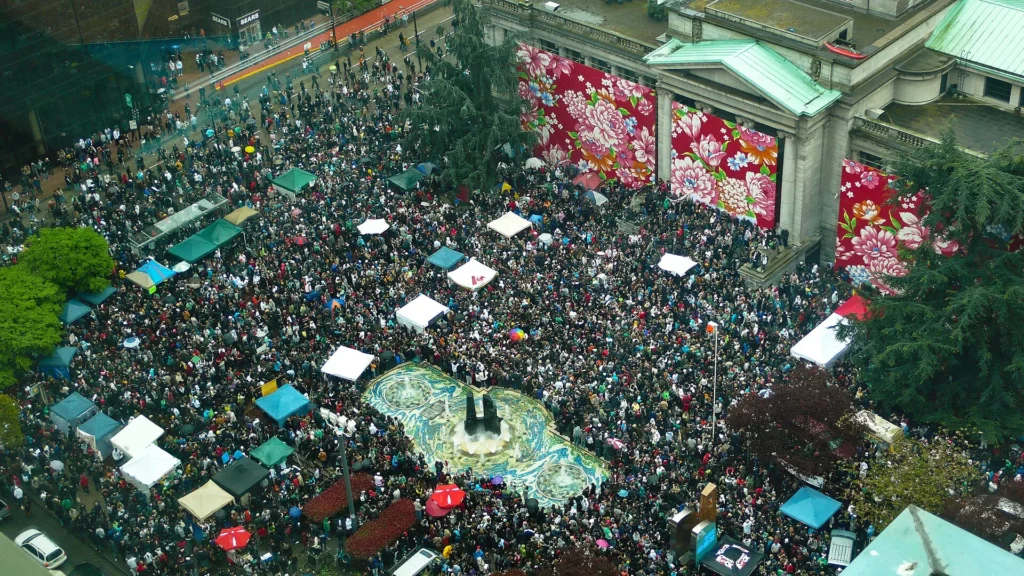
420 is the best-known number code in cannabis culture. It turns up in song lyrics, on T-shirts and in personal ads, and every year on 20 April thousands of people gather in parks around the world. But why 420? The answer is neither a police code nor a secret chemical number, but five teenagers in California, a hand-drawn treasure map and a band called the Grateful Dead. Here we look at where 420 comes from, how the code spread and which myths are not true.
Key facts
- 420 is a code for cannabis and refers to the time 4:20 pm and the date 20 April, which is written 4/20 in the US.
- The code was created in 1971 by five students at San Rafael High School in California who called themselves the Waldos.
- It spread through the Grateful Dead and reached a global audience when High Times magazine wrote about it in 1991.
- The Oxford English Dictionary added 420 in March 2017 and credits the Waldos as its origin.
- Explanations involving police codes, Hitler’s birthday or the date of Bob Marley’s death are not true.
What does 420 mean?
420, also written 4:20 or 4/20, is slang for cannabis. Originally it simply meant 4:20 in the afternoon, a time to meet up and smoke. Over time the numbers took on more meanings. In the US, dates are written with the month first, so 20 April becomes 4/20, and that day has become an unofficial holiday for cannabis culture. The phrase 420 friendly is used to show that someone has a positive attitude towards cannabis.
The origin: the Waldos and the treasure map
The story begins in the autumn of 1971 at San Rafael High School, north of San Francisco. Five students, Steve Capper, Dave Reddix, Jeffrey Noel, Larry Schwartz and Mark Gravich, used to hang out by a wall on the school grounds and were therefore known as the Waldos. One day an acquaintance gave them a hand-drawn map. The map was supposed to show where a cannabis crop was hidden in the forest at Point Reyes, a peninsula on the coast. According to the story, the crop belonged to a man serving with the Coast Guard there, who no longer dared to look after it.
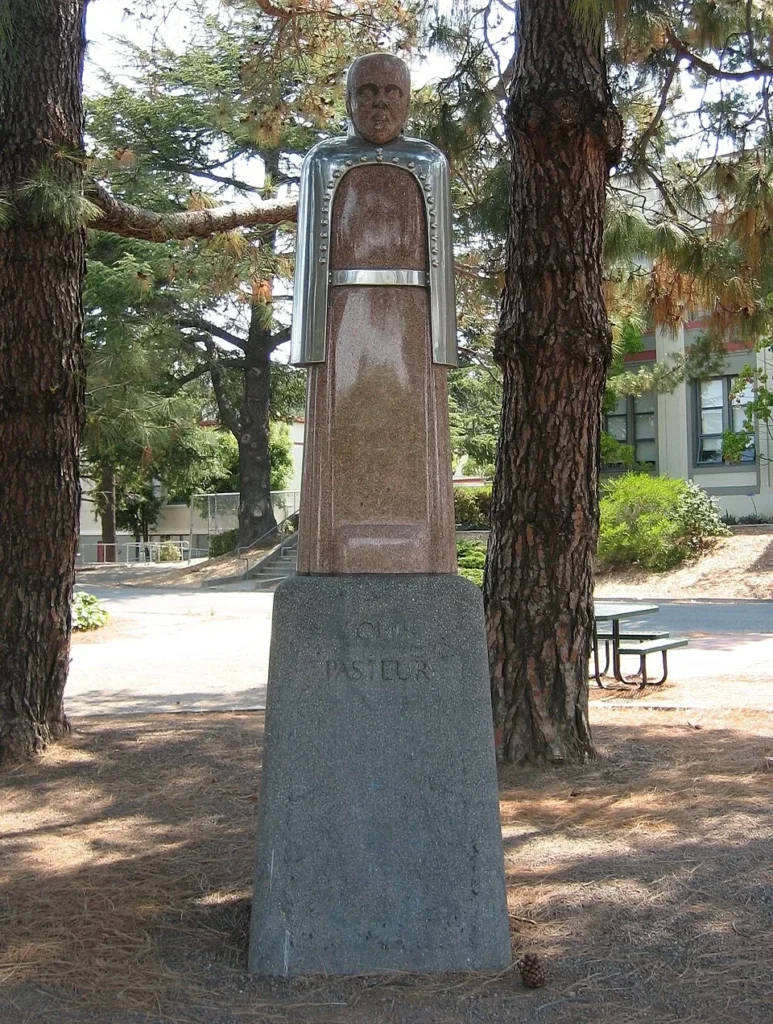
The group agreed to meet at the school’s statue of Louis Pasteur at 4:20 pm, when two of them had finished football practice. In the corridors they reminded each other with the words 420 Louis, which was soon shortened to just 420. They drove out to Point Reyes several times but never found the crop. The code, however, lived on. 420 became a way of talking about cannabis without parents and teachers understanding what it was about.
The Waldos have collected evidence for their version, including letters postmarked in the 1970s in which the code is used. The documents are kept in a safe deposit box in San Francisco. When the Oxford English Dictionary added 420 in March 2017, it credited the Waldos as the origin of the term.
A competing version
Not everyone agrees. Another group from San Rafael, led by Brad Bann, known as the Bebe, claims they started using 420 as early as 1970. According to their version, they simply looked at the clock one afternoon and decided to do the same thing every day. Bann has, however, acknowledged that it was the Waldos who spread the term. That version does not have the same documentation, and it is the Waldos’ story that most sources rely on.
How 420 spread around the world
That a local school code became known around the world is largely down to the Grateful Dead. The band was based in the San Rafael area, and the Waldos had contacts in the circle around it. Dave Reddix’s older brother knew bassist Phil Lesh, and Reddix himself worked for a time as a roadie for him. The code spread among the band’s crew and on to the devoted fans, the so-called Deadheads, who followed the band from concert to concert.
On 28 December 1990, Deadheads handed out flyers in Oakland urging people to smoke 420 on 20 April at 4:20 pm. One of the flyers ended up with Steve Bloom, a reporter at the cannabis magazine High Times. The magazine published it in May 1991 but wrongly explained that 420 was a police code. High Times kept using the term, and in 1998 the magazine wrote about the Waldos as its originators. By then 420 had already become part of cannabis culture far beyond California.
Myths about 420 that are not true
Because nobody knew where the code came from, many explanations appeared. Most are easy to dismiss:
- Police code: There is no police radio code 420 for cannabis offences in California. The myth took off when High Times itself printed it in 1991.
- Hitler’s birthday: Adolf Hitler was born on 20 April 1889, but this is pure coincidence and has nothing to do with the code.
- Bob Marley’s death: Bob Marley died on 11 May 1981, not on 20 April.
- Bob Dylan: The song Rainy Day Women #12 & 35 has sometimes been linked to 420 because 12 times 35 makes 420. It is an explanation invented after the fact.
420 in laws, road signs and popular culture
The numbers have become so well known that they turn up in unexpected places. When California passed a law regulating medical cannabis in 2003, it was numbered, by coincidence or not, 420 in the state senate: Senate Bill 420.
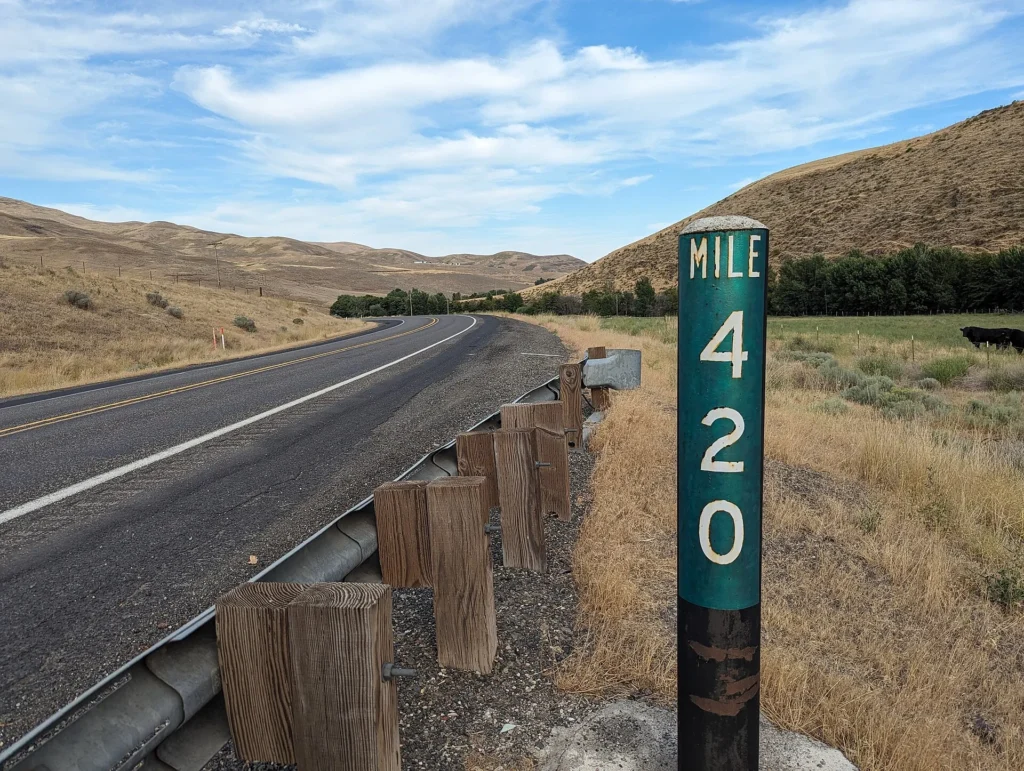
Road signs have been affected too. Mile markers showing the number 420 were stolen so often in several US states that the authorities eventually replaced them. On the I-70 motorway near Stratton in Colorado, the sign was replaced with one reading 419.99, and similar changes have been made in Idaho and Washington.
How 420 day is celebrated around the world
On 20 April people gather in many places to celebrate cannabis culture, and in some places also to demonstrate for changes to the law. Some of the best-known gatherings have taken place in Vancouver, in Denver, on Hippie Hill in San Francisco’s Golden Gate Park and in Hyde Park in London. 4:20 pm is often the high point of the day.
Where cannabis is legal, 420 has also become a big day for retail. In Washington State, cannabis worth 3.7 million dollars was sold on 20 April 2016, compared with 1.4 million dollars on the same day the year before.
The day has also grown in importance in Europe. On 20 April 2024, less than three weeks after Germany legalised cannabis for adults, thousands of people gathered in front of the Brandenburg Gate in Berlin. The police estimated the crowd at around 4,000. You can read how things have gone in Germany since then in
Germany’s Cannabis Law Two Years On.
420 and CBD
420 is about cannabis with THC, and the rules for it differ greatly between countries. CBD products made from EU-certified industrial hemp are a different matter. If you want to know more about the difference between THC, CBD and the plant’s other compounds, we have written about it in
What are cannabinoids? CBD, THC, CBG, CBN and the endocannabinoid system.
Further down the page you can see a selection of our CBD flowers.
What does 420 mean?
420 is a code for cannabis. It refers to the time 4:20 pm and to 20 April, which is written 4/20 in the US.
Where does 420 come from?
The code was created in 1971 by five students at San Rafael High School in California, the Waldos, who met at 4:20 pm to search for a hidden cannabis crop.
Is 420 a police code?
No. That is a myth that spread when High Times magazine wrongly printed it in 1991.
Why is 420 celebrated on 20 April?
In the US, dates are written with the month first, so 20 April becomes 4/20. That is why the day has become a holiday for cannabis culture.
Who spread 420 around the world?
The code spread through the Grateful Dead and their fans and reached a wide audience when High Times magazine wrote about it from 1991 onwards.
Sources
- Waxman, O. B. (2016, updated 2025). Here’s the Real Reason We Associate 420 With Weed. Time.
- CBS News Bay Area (2018). 4/20’s founding fathers recall long, strange trip to pot holiday.
- Chen, S. (2025). 420’s origins: A treasure hunt, secret code and dueling legends. Axios San Francisco.
- Hill, K. (2017). ‘420’ becomes part of the dictionary as Spokane embraces counterculture, pot holiday. The Spokesman-Review.
- California Legislature (2003). SB-420 Medical marijuana.
- CBS News Colorado (2014). Mile Marker 420 Becomes 419.99 To Thwart Thieves.
- Tagesspiegel (2024). Erster „420 Day“ nach Legalisierung: Tausende Cannabis-Enthusiasten kiffen vor dem Brandenburger Tor in Berlin.
- Featured image: 420 celebration outside the Vancouver Art Gallery on 20 April 2010. Photo: unicellular, Wikimedia Commons, CC BY-SA 2.0.