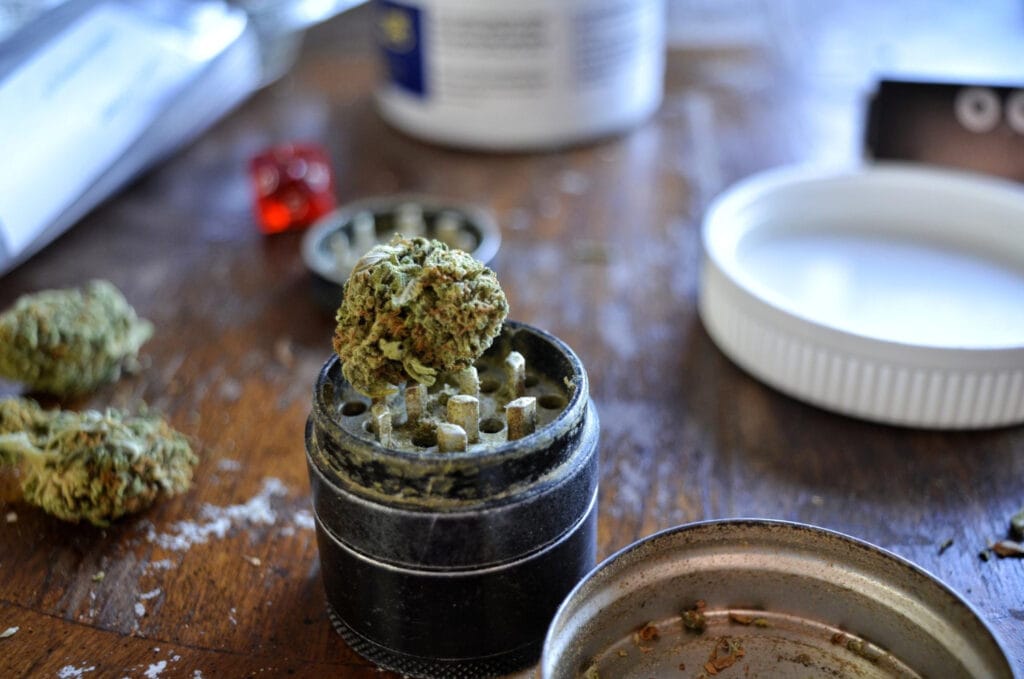
On 1 April 2024, Germany became the largest EU country to legalise cannabis for adults. Two years later, the first results are in, and they make uncomfortable reading for anyone who predicted disaster. So is cannabis legal in Germany, and how has it gone? Here is what the data shows.
The second interim report from EKOCAN, the research project evaluating the cannabis law, shows that the main warnings from opponents have not come true. Youth use has not risen, and the police spend less time on cannabis. At the same time, a large illegal market remains, and the part of the law meant to build up legal sales has never got off the ground.
At a glance
- Since 1 April 2024, adults in Germany may carry up to 25 grams of cannabis, keep 50 grams at home and grow three plants.
- EKOCAN’s second interim report was published on 1 April 2026 and runs to 222 pages.
- Consumption-related cannabis offences fell from 173,945 cases in 2023 to 61,670 cases in 2024.
- Youth use is stable or has fallen slightly.
- Regulated retail sales still do not exist.
What EKOCAN measured
EKOCAN is led by the UKE university hospital in Hamburg, together with researchers in Tübingen and Düsseldorf, and has followed the effects of the law since it came into force. The second interim report was published on the law’s second anniversary and draws on a much broader evidence base than the first.
One of the methods was wastewater analysis. Data from 15 German cities showed no significant short-term change in cannabis use after the reform. That is not a political statement, it is wastewater data.
Consumption-related cannabis offences, mainly possession, fell from 173,945 cases in 2023 to 61,670 cases in 2024, a drop of about 65 percent. In Berlin, recorded cannabis offences fell by around 70 percent in the first months. Police and court resources that used to go on small-scale cannabis cases can now be used elsewhere.
EKOCAN also found no clear increase in cannabis-related health problems.
Use among young people and adults
Among adults, a long-term rise in use has levelled off, and there is no break in the trend linked to the 2024 law. Among young people, use is stable or has fallen slightly, and awareness of the risks has, if anything, increased since the law came into force.
Finn Hänsel, founder and CEO of Sanity Group, summed it up when the report came out: the reform deserves a serious, scientifically based evaluation, not a rushed political change of course.
Where the cannabis comes from
This is where the picture gets more complicated. Total demand in Germany is estimated at between 670 and 823 tonnes a year, and the legal channels cover only part of it:
- Medical cannabis: covers about 9 to 13 percent of demand. Imports rose from 71 tonnes in 2024 to 201 tonnes in 2025, plus 2.6 tonnes of domestic production.
- Cultivation associations: 366 associations had been licensed by October 2025. They account for a very small share of supply, and only 3.5 percent of consumers got their cannabis from an association in 2025.
- Home growing: has risen sharply, from 5.4 percent of consumers in the first half of 2024 to 21.4 percent in the second half of 2025.
- Sharing between private individuals: was the source for 35.2 percent of consumers in the second half of 2025.
According to EKOCAN, the illegal market is only slowly being pushed back. At the same time, a separate survey by Frankfurt University of Applied Sciences of around 11,500 regular users found that 88.4 percent had obtained cannabis from legal sources in the previous six months.
The industry association BvCW therefore does not argue that the black market is standing still, but that it cannot be pushed back all the way without regulated sales. Home growing and associations are not enough on their own.
What is still missing
The law was designed with two pillars. The first, home growing and member-based cultivation associations, is now in place. The second, regional pilot projects with regulated retail sales, was planned from the start but has not got off the ground. In July 2026, the responsible authority BLE approved four research projects, but none of them involve sales to consumers.
BvCW president Dirk Heitepriem and CEO Michael Greif have long argued that regulated sales are needed to complete what the law started. Georg Wurth, head of the German Hemp Association (DHV), shares that view.
The EKOCAN report also identifies several areas that need improvement, including the rules for cultivation associations, early intervention for young people, funding for addiction counselling and action against organised crime.
The political situation
Not everyone is happy. When the report came out, Interior Minister Alexander Dobrindt (CSU) called the law “completely ineffective”, and Health Minister Nina Warken (CDU) said legalisation had been a mistake. These descriptions fit poorly with the data, but they show that the political pressure is real.
Despite the criticism, the government has not tabled any bill to change the cannabis law, and the SPD opposes tightening it. The final evaluation is due on 1 April 2028. A separate bill to tighten the rules on medical cannabis, requiring an in-person doctor visit and banning mail-order flower, had still not passed the Bundestag in September 2026.
What does it mean for the rest of Europe?
Germany is the largest legal cannabis market in the EU, and what happens there sets a precedent. Two years of data give other governments something concrete to point to: offences fell, youth use did not rise and no health crisis emerged.
The Netherlands is running its own regulated supply trial, and the results from its first year point in the same direction. Read more in our article on the Dutch wietexperiment.
The Czech Republic is also moving towards legalisation, and you can read about it in our article on Cannafest and legalisation in the Czech Republic.
The question is no longer whether regulated cannabis can work in Europe. The German data suggests it can. The question is how quickly governments are willing to build it out properly.
Is cannabis legal in Germany?
Yes, for adults since 1 April 2024. You may carry up to 25 grams, keep 50 grams at home and grow three plants. Retail sales are still not allowed.
What is EKOCAN?
A research project led by UKE in Hamburg that evaluates the cannabis law on behalf of the German government. The second interim report was published on 1 April 2026.
Has youth cannabis use increased in Germany?
No. According to EKOCAN, youth use is stable or has fallen slightly since the law came into force.
How many cultivation associations are there in Germany?
By October 2025, 366 cultivation associations had been licensed.
Can you buy cannabis in a shop in Germany?
No, not for recreational use. The planned retail pilot projects have not got off the ground. Medical cannabis, however, is sold in pharmacies on prescription.
Sources
- Bundesministerium für Gesundheit (2026). Zweite Evaluation zur Cannabis-Teillegalisierung.
- Science Media Center Germany (2026). EKOCAN: zweiter Zwischenbericht zur Cannabis-Teillegalisierung.
- UKE Hamburg. EKOCAN: project description.
- Business of Cannabis (2026). Germany’s cannabis reform shows no signs of harm its critics predicted, government-mandated data shows.
- Deutscher Hanfverband (2025). PKS 2024: drastischer Rückgang der Cannabis-Verfahren.
- ZDFheute (2025). Cannabis-Straftaten in Berlin.
- ZDFheute (2026). Zweiter Zwischenbericht zur Cannabis-Teillegalisierung.
- LTO (2026). Evaluierung der Cannabis-Teillegalisierung.
- Hanf Magazin (2026). CanG-Zwischenbericht April 2026: was die Legalisierung wirklich mit dem Schwarzmarkt macht.
- Krautinvest (2026). Cannabis-Importe belaufen sich 2025 auf 201,1 Tonnen.
- Krautinvest (2026). BLE hat vier Cannabis-Forschungsprojekte bewilligt.
- Sanity Group (2026). Evaluation report on second anniversary of German Cannabis Act.
- Frankfurt University of Applied Sciences, ISFF. KonCanG study (2025).