

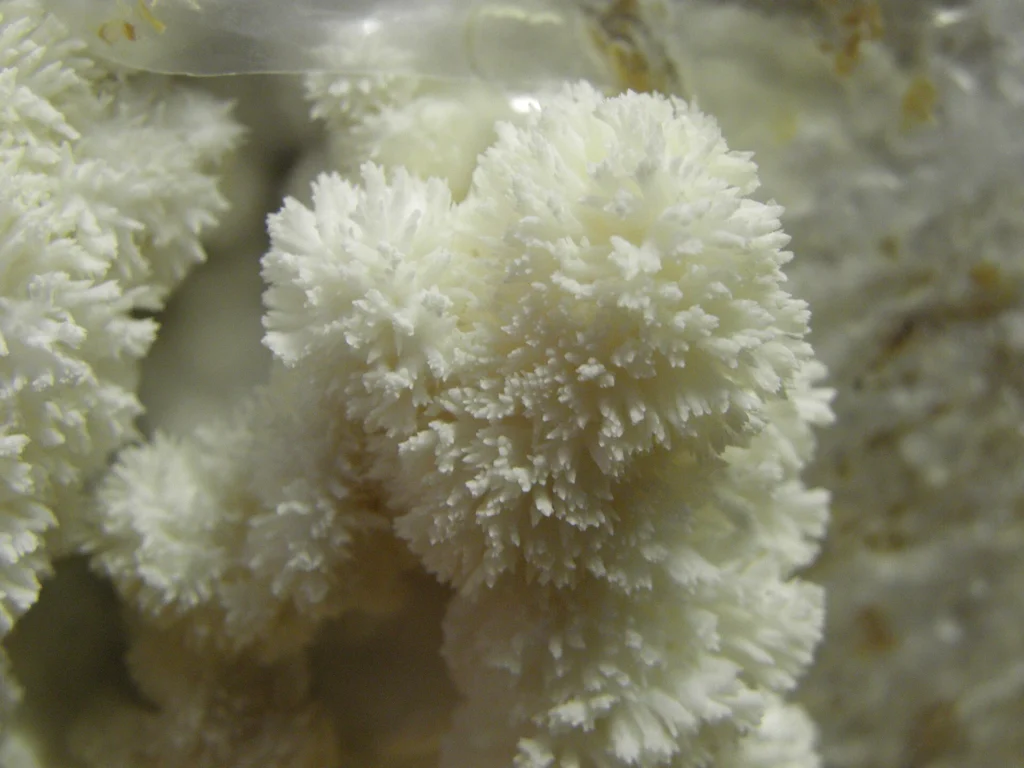
Lion’s Mane is one of the most talked-about mushrooms right now. It looks like a white, shaggy ball of icicles, it is eaten as a delicacy in Asia and it has become the subject of research on the brain and nervous system. Here we go through what Lion’s Mane is, what it contains and what the studies have actually shown, including the parts that are often left out.
At a glance
- Lion’s Mane is known in Latin as Hericium erinaceus, and in English also as bearded tooth or hedgehog mushroom.
- In Sweden it is so rare that it is protected by law. Everything sold is cultivated.
- The mushroom contains hericenones and erinacines, compounds studied in laboratories and animals for their effect on the nerve growth factor NGF.
- Studies in humans are few and small. The results are interesting but not clear-cut.
- The mushroom is edible and used in cooking, where its taste is often compared to seafood.
What is Lion’s Mane?
Lion’s Mane is a tooth fungus that grows on dead or damaged broadleaf trees, mainly beech and oak. Instead of a cap and gills, it has long, hanging spines that make it look like a lion’s mane or a hedgehog’s coat. In Japan it is called yamabushitake, after the yamabushi mountain monks whose robes have tassels resembling the mushroom.
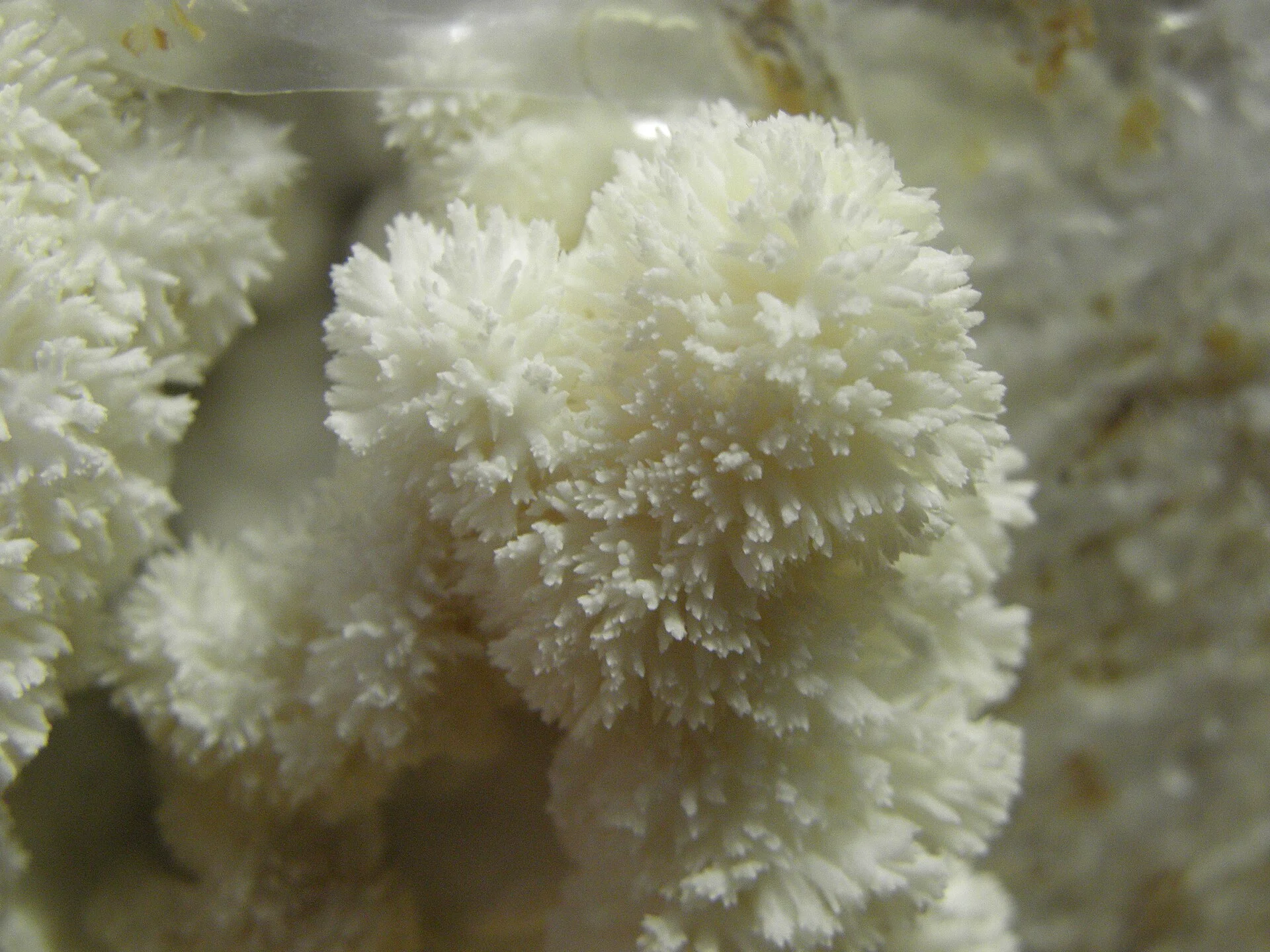
In the wild, the species is rare in many European countries. In Sweden it has only been found in a handful of provinces and is one of five fungi protected by law, which means it may not be picked. The Lion’s Mane sold as food or food supplements is therefore cultivated, usually on sawdust or other plant material.
What does Lion’s Mane contain?
Like other mushrooms, Lion’s Mane contains beta-glucans. What makes the species especially interesting to researchers are two groups of compounds that are unusual in the fungal world:
- Hericenones. Found mainly in the fruiting body, the visible mushroom.
- Erinacines. Found mainly in the mycelium, the mushroom’s network of threads.
In laboratory experiments, both groups have been shown to influence the production of NGF, nerve growth factor, a protein that is important for nerve cells to grow and function. However, a 2018 research review notes that of all the compounds in the mushroom, only erinacine A has confirmed effects in the central nervous system, and then in rats. The authors also point out that it is difficult to translate the animal studies to humans.
The difference between fruiting body and mycelium means that two Lion’s Mane products can contain different compounds. You can read more about this, and about how mushroom extracts are made, in our guide to functional mushrooms.
What does research in humans say?
There are only a handful of controlled studies in humans. Here are the most cited, with the results as they actually are:
Older adults with mild cognitive impairment (2009)
In a Japanese study, 30 people aged 50 to 80 with mild cognitive impairment received either tablets with Lion’s Mane powder or a placebo for 16 weeks. The group that received the mushroom gradually scored better on a cognitive test than the placebo group. But four weeks after they stopped, the scores had dropped again. The study was small and has not been repeated in the same form.
Healthy young adults (2023)
A British pilot study with 41 healthy people aged 18 to 45 looked at both a single dose and four weeks of use. After one dose, participants were faster on one of the tests. After four weeks there was a trend towards lower perceived stress, but it was not statistically certain. The researchers themselves write that the results should be interpreted with caution, as the study was small and several tests showed no difference.
Nordic-grown Lion’s Mane (2023)
An American study compared a single dose of Nordic-grown Lion’s Mane with guayusa, a caffeine-containing plant, and a placebo. Participants were tested one and two hours after intake. Lion’s Mane gave faster reaction times on some of the tests and participants rated themselves as somewhat happier, but on most measures there was no difference from placebo.
Overall, the research is promising but thin. The studies are small, use different products and measure different things. It is therefore not possible to say that Lion’s Mane has a reliable effect on memory or focus, even though this is often claimed.
Lion’s Mane in the kitchen
Fresh Lion’s Mane is a popular edible mushroom. It has a mild flavour and a meaty, stringy texture that is often compared to crab or lobster. In restaurant kitchens it is often fried in slices. As a food supplement, it is instead sold dried, as a powder, extract or tincture.
Good to know
Cultivated, not foraged. The species is rare in the wild and protected in several countries, including Sweden, so leave any wild specimens you find.
Fruiting body or mycelium. Check what a product is made from, since hericenones and erinacines are found in different parts of the mushroom.
Safety. In the 2009 study, no side effects were seen in laboratory tests. If you take medication, are pregnant or have a medical condition, it is still wise to talk to a healthcare professional before starting any food supplement.
If you want to read about other mushrooms, we have also written about chaga, reishi and cordyceps.
You will find our Lion’s Mane extract and tincture under functional mushrooms in our shop.
What is Lion’s Mane?
Lion’s Mane, or Hericium erinaceus, is an edible tooth fungus that grows on broadleaf trees. It has long white spines that resemble a lion’s mane and contains compounds such as hericenones and erinacines.
Is Lion’s Mane protected?
In Sweden, Lion’s Mane is one of five protected fungi and may not be picked. It is rare in the wild in many European countries. All Lion’s Mane sold as food or supplements is cultivated.
What does research say about Lion’s Mane?
Laboratory and animal studies show that certain compounds in the mushroom influence the nerve growth factor NGF. Studies in humans are few and small, and the results are mixed. It is not possible to say that the mushroom has a reliable effect.
What is the difference between hericenones and erinacines?
Both are compounds typical of Lion’s Mane. Hericenones are found mainly in the fruiting body, while erinacines have mainly been found in the mycelium.
What does Lion’s Mane taste like?
Fresh Lion’s Mane has a mild flavour and a stringy texture often compared to crab or lobster. As a powder or extract it tastes more earthy.
Sources
- Mori, K. et al. (2009). Improving effects of the mushroom Yamabushitake (Hericium erinaceus) on mild cognitive impairment. Phytotherapy Research, 23, 367–372.
- Docherty, S. et al. (2023). The Acute and Chronic Effects of Lion’s Mane Mushroom Supplementation on Cognitive Function, Stress and Mood in Young Adults. Nutrients, 15, 4842.
- La Monica, M. B. et al. (2023). Acute Effects of Naturally Occurring Guayusa Tea and Nordic Lion’s Mane Extracts on Cognitive Performance. Nutrients, 15, 5018.
- Li, I.-C. et al. (2018). Neurohealth Properties of Hericium erinaceus Mycelia Enriched with Erinacines. Behavioural Neurology, 2018, 5802634.
- Svampkonsulenternas Riksförbund. Fridlysta svampar (Protected fungi in Sweden).


