

Moroccan Hash - Rif Mountains, Dry Sift and Quality
Moroccan-style hash has supplied European markets for longer than most people have been paying attention to cannabis. Walk into any coffee shop in Amsterdam, pick up any pollen hash in a European CBD shop, and the chances are good it follows the same tradition: dry-sifted, pressed, earthy, golden.
Morocco’s Rif Mountains produce conditions that are hard to replicate, and the sieving method – simple in principle, variable in execution – creates a product that ranges from mediocre to exceptional depending on how carefully it’s done.

The Rif Mountains
Moroccan cannabis cultivation is concentrated in the Rif mountain range in the north of the country – a rugged, high-altitude region centred around towns like Ketama and Bab Berred. The combination of altitude, sun exposure, dry summers and cool nights creates growing conditions well-suited to resin-heavy cannabis plants.
Cannabis has been cultivated in this region for centuries, and the local farming families who grow it have had generations to optimise their varieties and methods. The plants are short, dense, and bred specifically for resin production – indica-dominant genetics that prioritise flower density and trichome coverage over height or yield.
The crop is harvested in late summer to early autumn, once the trichomes have reached full maturity. Harvest timing matters here: too early and the trichomes are underdeveloped, too late and degradation begins.
The farming families
The people who grow and process the cannabis are predominantly Amazigh – the indigenous Berber people who have farmed the Rif for centuries. For most of them, cannabis isn’t a business decision so much as a practical one. The terrain is steep and rocky, rainfall is unreliable, and the altitude rules out most alternatives. Cannabis is the one crop that grows reliably and fetches enough money to carry a household through the year.
The villages most associated with production sit at altitude, reached by narrow mountain roads – places like Ketama, Bab Berred, and smaller settlements scattered across the valleys between them. Ketama in particular has become almost synonymous with Moroccan hash; ask anyone who travelled through Morocco in the 1980s or 90s and the name comes up.
A typical family operation runs a few hectares of plants. The harvest comes once a year, in late summer, and is followed by weeks of manual work. The whole family is involved – men and women, older and younger. Sieving in particular is often done together: a communal rhythm of beating dried plants over stretched fabric or fine screens, collecting what falls through. The knowledge of when to harvest, how long to dry, which screens to use at which stage passes from parents to children and has done for generations.
At the end of the season, buyers – middlemen who travel up from the cities – come to collect. The price is set by the buyers, not the farmers. What a family earns from a full year of work rarely exceeds a few thousand euros. Morocco supplies an estimated 40% of Europe’s cannabis resin. The families who grow it see almost none of the money that moves through the distribution chain above them.
For decades the Moroccan government maintained an ambiguous relationship with the Rif cannabis trade – technically illegal, periodically cracked down upon, but never seriously dismantled because too many families depended on it. The 2016 Hirak Rif protests, which began after the death of a fishmonger in Al Hoceima and grew into a broader movement against marginalisation and poverty in the region, brought renewed attention to how little infrastructure and economic opportunity existed for people outside cannabis farming.
Morocco passed a law in 2021 allowing limited cannabis cultivation for medical and industrial use. For some Rif farmers it represents a path toward working legally, with registered crops and formal income. In practice, most still operate the same way they always have – the legal framework has moved faster than the economic reality on the ground.
How Moroccan-style hash is made
Drying
After harvest, the whole plants are hung or laid flat to dry. Thorough drying is essential. The sieving process only works well on dry material – moisture causes trichomes to clump and stick rather than fall freely through the screens.
Good airflow, shade drying and moderate temperature preserve the terpene profile. Rushed drying with heat strips aroma before the sieving starts.
Sieving
Once dry, the plants are beaten or rubbed over fine screens. The physical agitation breaks the brittle trichomes free from the stalks and leaves, and they fall through the mesh as a fine powder. The plant material stays on top.
Mesh size is the first quality variable. Coarser screens let through more plant material – more green chlorophyll, more roughness in the final product. Finer screens allow only the smallest trichome heads through, giving a purer, more resin-rich result.
The number of sieving passes is the second variable. A single pass over one screen produces what is sometimes called first-pass or single-sift hash. Multiple passes through progressively finer screens – 150 micron, then 100, then 75 – give progressively cleaner grades.
The collected powder at this stage is kif: the loose, granular resin Moroccan farmers have always called by that name. Left unpressed, it’s the same loose powder that collects in the bottom chamber of a grinder.
Pressing
Kif is pressed into blocks or slabs. The pressing method – hand or machine, temperature, and duration – shapes the final texture and appearance.
Hand-pressing at low temperature is the more traditional approach. It produces a slightly crumbly, lighter-coloured product where the trichomes are preserved rather than fused. Machine pressing with heat is faster but can affect the terpene profile if the temperature is too high.
Colour is the easiest thing to read. Good Moroccan-style hash runs from light gold to olive green when the pressure and temperature are kept moderate. Dark brown or near-black hash has typically been pressed hard with heat – the trichomes have partially fused and the terpenes have begun to degrade.
What the grades mean
You’ll often see Moroccan hash labelled with zero ratings: 0, 00, or 000 (triple zero). The idea is that each additional zero represents a finer sieve pass and a purer product.
In practice, these labels are not standardised. There’s no regulated system that guarantees what 000 actually means from one producer to the next. A 000 from one supplier might be a double-sift with fine screens; the same label from another might just be a marketing choice.
Treat them as background knowledge, not a quality guarantee. A lab report and your own assessment of the colour, smell and texture tell you far more than the label does.
- €36,13 – €61,68Prisintervall: €36,13 till €61,68Betygsatt 4.63 av 5(8)
-
- 5 g
- 10 g
-
- €36,13 – €110,45Prisintervall: €36,13 till €110,45Betygsatt 5.00 av 5(6)
-
- 5 g
- 10 g
- 20 g
-
- €36,13 – €104,50Prisintervall: €36,13 till €104,50Betygsatt 4.50 av 5(4)
-
- 5 g
- 10 g
- 20 g
-
- €36,13 – €104,50Prisintervall: €36,13 till €104,50
-
- 5 g
- 10 g
- 20 g
-

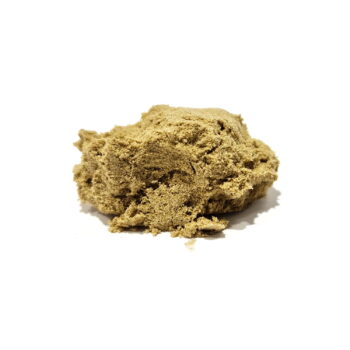

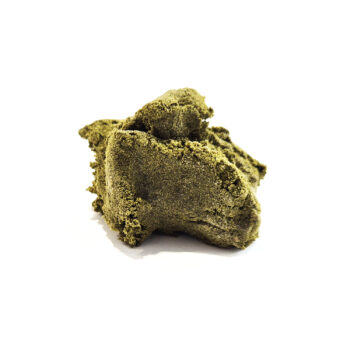
What good Moroccan-style hash looks and smells like
- Colour: Light to medium gold, or olive green. The lighter end suggests lower pressing temperature and better terpene preservation. Very dark brown or black hash has usually been over-pressed.
- Texture: Should crumble or break rather than bend without cracking. A small piece warmed briefly between the fingers should become pliable without becoming sticky or oily. Dry and powdery throughout suggests it’s old or was stored poorly
- Aroma: Spicy, earthy, faintly floral. Flat, dusty or absent aroma is a sign of terpene degradation – either from age, heat during pressing, or poor storage.
CBD Moroccan-style pollen hash
CBD pollen hash follows the same process with hemp plants bred for high CBD and trace THC: dry the plant, sieve the trichomes, press the kif.
The main differences come from the source plant. Hemp varieties grown for CBD have different terpene profiles than the landrace-adjacent indica varieties grown in the Rif. The aroma is often spicier and more herbal than the earthier traditional strains.
Quality still comes down to the same indicators: sieving method, pressing temperature, and how the material was stored before it reached you. For more on the different types and how to choose between them, see our CBD hash overview.
FAQ
What is Moroccan hash made from?
Traditional Moroccan hash is made by dry-sifting dried cannabis plants over fine screens to collect the trichome powder (kif), which is then pressed into blocks. CBD versions use the same method with hemp plants bred for high CBD and trace THC.
What does 000 (triple zero) mean on hash?
The zero rating is meant to indicate sieve quality – more zeros suggesting finer screens and more passes. The labelling is not standardised, so it’s not a reliable quality guarantee on its own. Colour, smell, texture, and lab results are better indicators.
Why is good Moroccan hash golden or blonde rather than black?
Colour comes from pressing temperature and pressure. Golden hash has been pressed at lower temperatures, preserving more terpenes. Dark or black hash has been pressed hard with heat, which fuses trichomes and speeds up terpene degradation.
How do I know if CBD pollen hash is good quality?
Start with the lab report to confirm CBD and THC content. Then check colour (golden to olive), smell (complex, spicy, earthy) and texture (crumbles with a little warmth). Flat smell and black colour are both signs of lower quality or poor storage.


