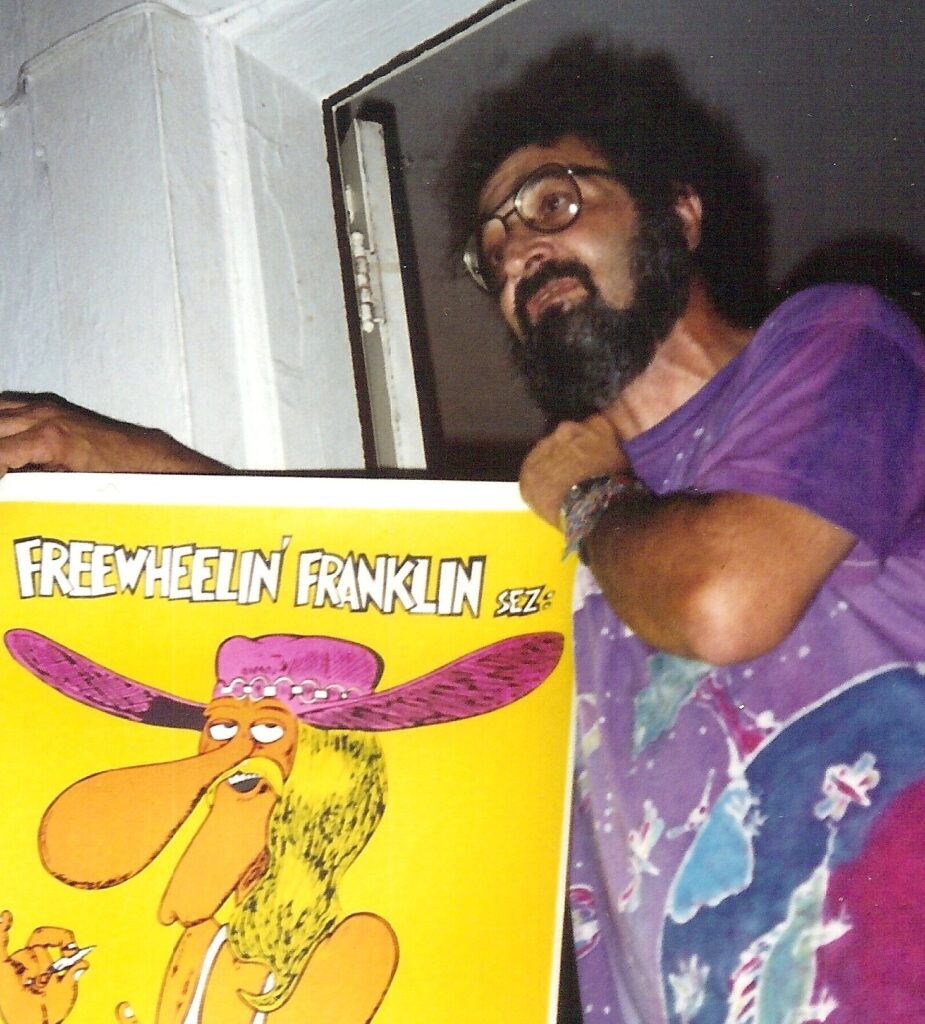
Jack Herer was called the Hemperor, the emperor of hemp, and few people have changed the way we see the plant as much as he did. He served as a military policeman in Korea and voted Republican well into adulthood. Then he became the man who, more than anyone else, reminded the world that hemp once gave us rope, sails, paper and cloth. His book The Emperor Wears No Clothes has sold hundreds of thousands of copies, a famous cannabis strain carries his name and he ran for president twice. This is the story of the man behind the hemp bible.
At a glance
- Jack Herer was born on 18 June 1939 in New York State and died on 15 April 2010 in Eugene, Oregon.
- He served as a military policeman in the US Army in Korea and was a conservative Republican until the age of thirty.
- In 1985 he published The Emperor Wears No Clothes, one of the most widely read books about hemp ever written.
- He helped bring the 1942 government film Hemp for Victory back to light after officials had long said it did not exist.
- He ran for president in 1988 and 1992 for the Grassroots Party.
- In 1994 Sensi Seeds in Amsterdam named a sativa dominant strain after him: Jack Herer.
Military police, neon signs and a Republican in Los Angeles
Jack Herer was born on 18 June 1939, the youngest of three children, and grew up in Buffalo, New York. He dropped out of school to join the army and served as a military policeman in Korea. When he came home he was a committed conservative, a so called Goldwater Republican, with little time for the hippie movement that was growing around him.
In 1967 he moved to Los Angeles with his wife and three sons and found work at a company that made neon signs. When his first wife tried cannabis in the early sixties, he reportedly threatened to leave her. It is a detail that says a lot about how far he still was from the man he would become.
Summer 1969: thirty years old and a new perspective
In the summer of 1969, the year he turned thirty, Jack Herer tried cannabis for the first time. It became a turning point, though not mainly because of the experience itself. He began to question everything he had been taught about the plant. If what he had heard about cannabis was not true, what else was wrong?
His marriage ended shortly afterwards and Herer left the safe life behind. He started reading everything he could find about cannabis and hemp, and what he found would become his life’s work.
Head shops in Venice Beach and the pact with Captain Ed
In the early seventies Herer became a part owner of head shops in Venice Beach, stores that sold pipes, rolling papers and other smoking supplies. In 1973 he and Al Emmanuel published G.R.A.S.S., a tongue in cheek guide that rated cannabis on a scale from one to ten. The same year he met Ed Adair, a fellow shop owner everyone called Captain Ed.
Captain Ed became his friend and mentor, and it was he who made Herer understand how big a role hemp had played in history. The two made a promise to each other: they would work to make cannabis legal and to free those imprisoned for it, until they succeeded or turned 84. Captain Ed died of leukaemia in the nineties. Herer carried on for both of them.
Two weeks in prison over a five dollar fine
In the early eighties Herer collected signatures to put cannabis on the ballot in California. He also registered voters, and that is what got him arrested. He had set up on federal property in Los Angeles after dark and was given a five dollar fine. He refused to pay on principle.
In 1983 he served two weeks in a federal prison instead. The time was not wasted. It was in his cell that he began sketching the book that would make him known around the world.
The Emperor Wears No Clothes
In 1985 Jack Herer self published The Emperor Wears No Clothes. The title is borrowed from Hans Christian Andersen’s tale of the emperor’s new clothes, and the point is the same: everyone can see what is going on, but nobody says it out loud. The book draws on more than a decade of collected material on the history of hemp, from rope and sails in the age of sailing ships to paper, cloth and lamp oil.
Herer’s central argument was that hemp could give the world paper, textiles, building materials, food and fuel, and that the plant had been pushed aside by economic interests rather than for good reasons. He pointed to newspaper magnate William Randolph Hearst, chemical giant DuPont and financier Andrew Mellon, and linked them to the American ban of 1937. You can read more about that history in our article on the history of cannabis.
The book went through many editions, some of them printed on hemp paper. It has sold more than 600,000 copies according to NORML, and other sources give even higher figures. Behind the book there is also a legendary wager: Herer and his backers promised 100,000 dollars to anyone who could disprove its claims about the history of hemp. Nobody has collected the money.
Hemp for Victory: the film that was not supposed to exist
One of the best known chapters in Herer’s story is about a film. In 1942 the US Department of Agriculture made the propaganda film Hemp for Victory, urging farmers to grow hemp for the war effort. Hemp was needed for rope, parachute webbing and cloth after imports from Asia had been cut off.
After the war the film was forgotten, and for many years anyone who asked was told that no such film had ever been made. Herer received a copy in 1984, and on 19 May 1989 he, Maria Farrow and Carl Packard handed VHS copies to the Library of Congress in Washington. The following year a copy was also found in the US National Archives. Today the film is in the public domain and one of the most quoted documents in the modern history of hemp.
What held up and what did not?
Not every part of the book has stood the test of time. Researchers such as Hayo van der Werf and Ivan Bócsa, who both worked with hemp as a crop, criticised Herer’s figures for hemp yields per hectare and its cellulose content. Many historians also see the theory that Hearst, DuPont and Mellon were behind the ban as an oversimplification. The ban had several causes, and Harry Anslinger and the political climate of the thirties played at least as large a role.
That does not change the importance of the book. Herer was not an academic but an activist who gathered what he found and asked questions nobody else was asking. He got millions of people to see hemp as a crop with a long history, not just as a drug. Much of today’s hemp industry, from textiles to building materials, rests on a debate he helped start.
Presidential candidate, colonial costumes and 1,949 votes
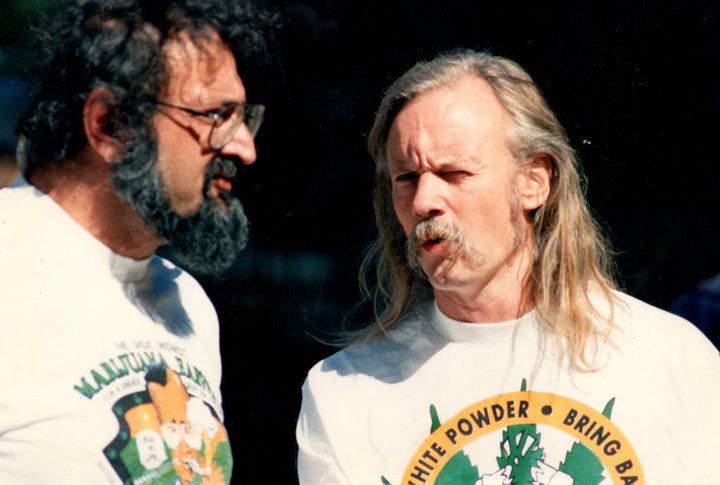
After the book Herer was constantly on the road. He gave thousands of speeches, signed books and turned up at demonstrations in Washington, sometimes dressed in colonial clothing to remind people that the country’s founders grew hemp themselves. He founded the organisation HEMP, Help End Marijuana Prohibition, and became known as a speaker who could hold an audience for hours.
In 1988 and 1992 he ran for president of the United States for the small Grassroots Party. He received 1,949 votes the first time and 3,875 the second. The results were modest, but the campaigns gave him a stage. In 1996 he was part of the effort behind Proposition 215 in California, the ballot measure that made the state the first in the US to allow medical cannabis. You can read how American policy has changed since then in our article on cannabis rescheduling in the USA.
Amsterdam and the strain that bears his name

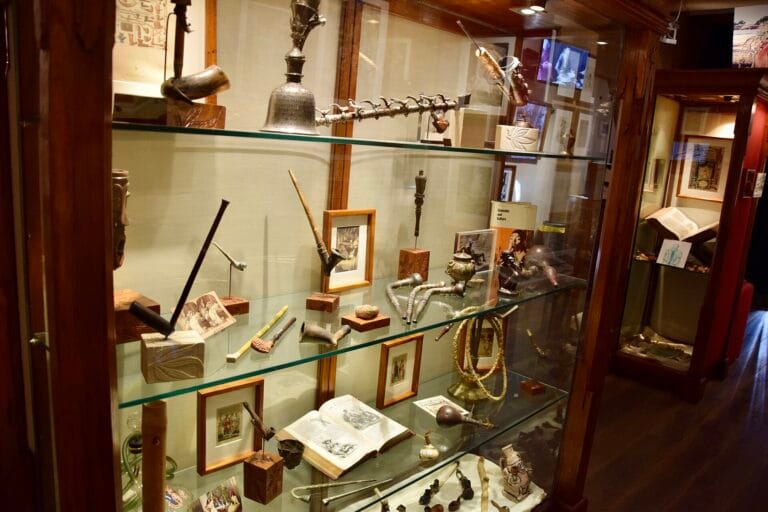
Herer’s reputation quickly reached Europe, and Amsterdam in particular. There he found Ben Dronkers, founder of Sensi Seeds and the Hash Marihuana & Hemp Museum, who had travelled to Pakistan in the early seventies and brought seeds home. We tell that story in The Legacy of the Hippie Trail. Dronkers’ museum was also one of the backers of Herer’s 100,000 dollar wager.
For several years Sensi Seeds had been working on a new sativa dominant strain, bred by Ben Dronkers’ son Alan. When it was finished in 1994 it was named Jack Herer and officially dedicated to him at the High Times Cannabis Cup in Amsterdam that same year. The strain went on to win the Cannabis Cup itself and has become one of the best known in the world. Today many people know the name Jack Herer without realising it once belonged to a person.
The name has also found its way into our own range. The terpene profile of the strain is available from us as Jack Herer terpenes from the Swedish company Nordic Terpenes and as a Jack Herer vape.
The return of hemp in Germany
Few countries show Herer’s influence as clearly as Germany. In 1993 the book was published in German as Die Wiederentdeckung der Nutzpflanze Hanf, translated and adapted by the journalist Mathias Bröckers. It became a bestseller, has been printed in more than forty editions and has sold over 100,000 copies.
The book arrived just as interest in hemp was waking up across Europe. In 1994 Bröckers became a partner in the hemp wholesaler Hanfhaus, and in 1996 German farmers were allowed to grow industrial hemp again after a ban dating back to the early eighties. For many German hemp farmers and activists, Herer’s book was the starting signal.
Hempstalk 2009 and the final years
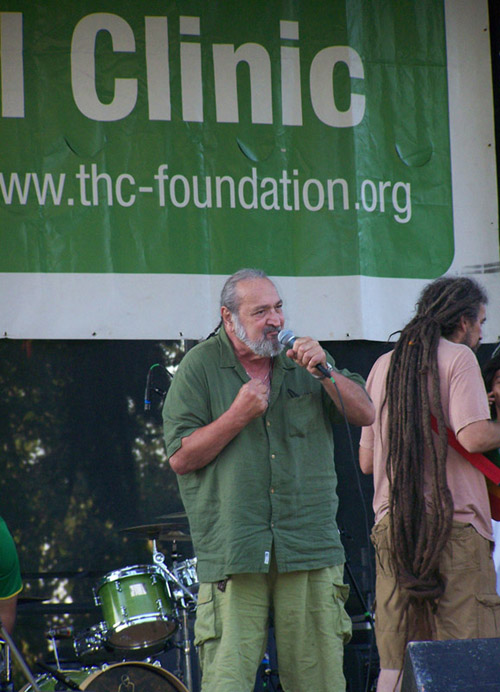
In the summer of 2000 Herer suffered a heart attack and a severe stroke that affected both his speech and his mobility. He worked his way back over several years and was soon out speaking again. He had long had ties to Oregon, where in 1987 he had opened the store The Third Eye Shoppe in Portland. His son Mark ran the shop until 2017.
On 12 September 2009 Herer spoke at the Hempstalk festival in Portland. He urged the crowd to keep fighting and never give up. Shortly after leaving the stage he suffered another heart attack backstage. He never fully recovered and died on 15 April 2010 at his home in Eugene, aged 70. He is buried at Eden Memorial Park in Los Angeles.
Why he is called the Hemperor
Jack Herer was not a scientist, a politician or a businessman. He was a former military policeman who read, asked questions and refused to keep quiet. His book brought hemp back into the conversation, not as a threat but as a crop with thousands of years of history. Much of what we take for granted today, from hemp textiles to CBD products in ordinary shops, would have been hard to imagine when he sat in his cell in 1983 and started writing.
He is one of the people who shaped the culture that has grown up around the plant, just like those we write about in our series on the hippie trail, the craft behind hash and in our portrait of Frenchy Cannoli. The Hemperor is gone, but the question he asked lives on: why did we ban one of the most useful plants there is?
Who was Jack Herer?
Jack Herer (1939 to 2010) was an American hemp activist and author. He is best known for the 1985 book The Emperor Wears No Clothes and was nicknamed the Hemperor, the emperor of hemp.
What is The Emperor Wears No Clothes about?
The book describes the history and uses of hemp, from paper and textiles to fuel and building materials. Herer argued that the plant had been banned for economic reasons rather than good arguments.
Why is Jack Herer called the Hemperor?
The nickname is a play on the words hemp and emperor. It refers both to his book and to his role as the best known voice for hemp for several decades.
Why is a cannabis strain called Jack Herer?
Sensi Seeds in Amsterdam named a sativa dominant strain after him in 1994 and dedicated it to him at the Cannabis Cup that year. The strain later became one of the best known in the world.
When did Jack Herer die?
Jack Herer died on 15 April 2010 in Eugene, Oregon, aged 70. He had suffered a heart attack after giving a speech at the Hempstalk festival in Portland in September 2009.
What is Hemp for Victory?
A 1942 film in which the US Department of Agriculture urged farmers to grow hemp for the war effort. Jack Herer helped hand copies to the Library of Congress in 1989.
Sources
- Wikipedia. Jack Herer.
- Wikipedia. The Emperor Wears No Clothes.
- Wikipedia. Hemp for Victory.
- NORML (2010). NORML Remembers The Hemperor Jack Herer.
- Willamette Week (2017). The Story of One of the Greatest Cannabis Advocates Who Ever Lived and the Strain That Bears His Name.
- Ganjapreneur. Profile: Jack Herer, The Hemperor.
- Ed Rosenthal (2018). Long Live the Hemperor, Jack Herer.
- Texas NORML (2010). Jack Herer 1939 to 2010.
- Hanf Magazin (2018). Die Wiederentdeckung der Nutzpflanze Hanf: 25 Jahre später.
- Wikipedia. Mathias Bröckers.