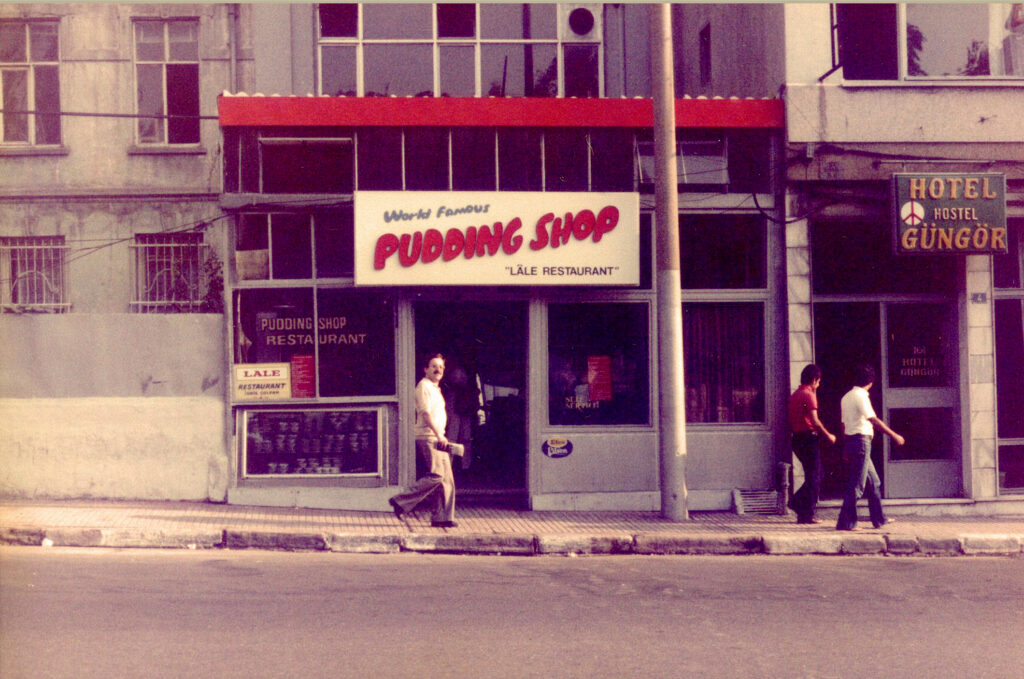
Istanbul in the early 1970s. In a small café a stone’s throw from the Hagia Sophia hangs a notice board full of handwritten notes. Someone has a free seat in a car heading east, someone else leaves a message for friends who are a week behind. The café is really called Lale, but everyone calls it the Pudding Shop. For thousands of young Westerners, this is where the journey really begins.
This is the first part of our series on the hippie trail: the overland route from Europe to Afghanistan, India and Nepal that young people travelled from the late 1950s until 1979. Along the way they met a cannabis culture far older than themselves, and a good deal of what we see in Europe today can be traced back to this road.
At a glance
- The hippie trail was the overland route from Western Europe via Istanbul, Iran, Afghanistan and Pakistan to India and Nepal, roughly 1957-1979.
- People travelled by bus, in their own vans, by train and by hitchhiking. As early as 1957 a bus ticket from London to India cost £85.
- The Pudding Shop in Istanbul became the meeting point of the trail and is still open today.
- Lonely Planet grew out of these journeys, and much of the knowledge of traditional hash reached Europe along the same road.
- The road closed in 1979, with the revolution in Iran and the Soviet invasion of Afghanistan.
What was the hippie trail?
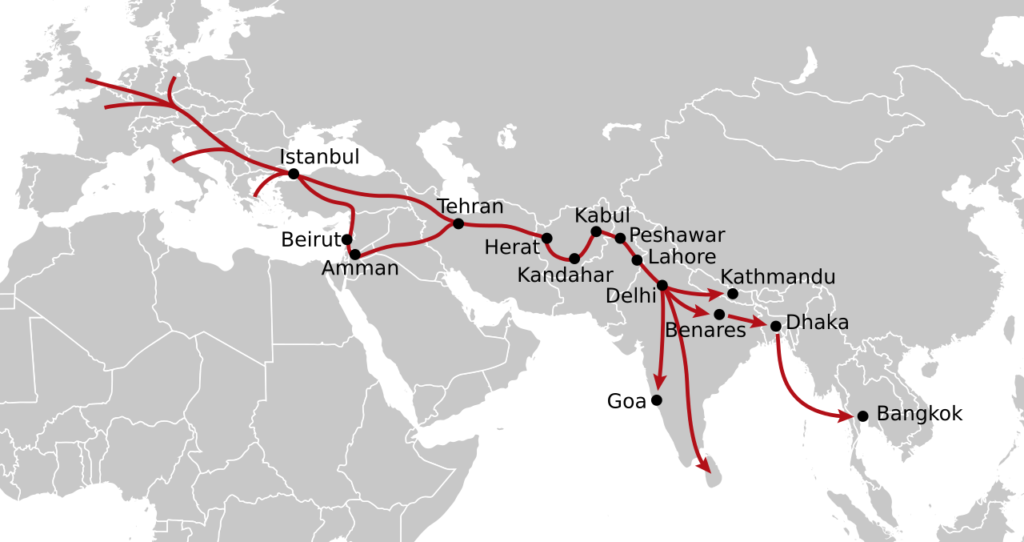
The hippie trail was not a road on a map but a route shaped by the people who travelled it. It usually started in London, Amsterdam, Copenhagen, West Berlin or Paris and ran through Germany, Austria, Yugoslavia and Bulgaria to Istanbul. From there it continued through Turkey and Iran to Herat, Kandahar and Kabul in Afghanistan, over the Khyber Pass to Peshawar and Lahore in Pakistan and on into India. The final destinations were Delhi, Varanasi, Goa and Kathmandu.
The travellers rarely called themselves hippies. They said travellers or freaks, and the trip itself was simply the Asia overland trip, according to CNN’s history of the trail.
The first scheduled bus ran in 1957, long before anyone talked about hippies. The company was called Indiaman and drove from London to Calcutta and Bombay. The first trip lasted from mid-April to early August and cost £85 one way. Through the 1960s and early 1970s the stream of travellers grew. According to Afghanistan’s Ministry of Foreign Affairs, as cited by National Geographic, the country received around 90,000 tourists a year at its peak in the 1970s.
The Pudding Shop: where the journey began
The brothers İdris and Namık Çolpan opened the Lale Restaurant in Sultanahmet in 1957, close to the Hagia Sophia. Travellers renamed it after the puddings, and the Pudding Shop soon became the obvious meeting point for anyone heading east or on their way home.
The brothers put up a notice board where travellers could leave messages and find rides. It was the internet of the trail. There you found someone with a free seat in a car, left word for friends you had lost track of and picked up tips about the road ahead.
The café also appears in one of the best-known stories of the era. Billy Hayes, whose arrest at Istanbul airport in 1970 became the book and film Midnight Express, met the contact for his hash deal there. He has since called the place “the mecca for all the tourists and hippies”.
The Pudding Shop is still on Divan Yolu today, as a simple self-service restaurant. The old notice board is still on display.
By bus, by van and by thumb
Those with a little money took the bus. In the 1960s and 70s at least thirty companies ran the route. The best known was the double-decker Albert from London, which made 15 round trips to Calcutta between 1968 and 1975. A trip took about 20 days each way and cost £85 at first, later £125.
Magic Bus started as the name of a booking agency in Amsterdam but soon became a catch-all name for every bus heading east. Around 100 dollars and three weeks from Amsterdam to Kathmandu are the figures usually quoted.
Others bought a second-hand van and drove themselves, and some sold the vehicle along the way once it had served its purpose. Many hitchhiked. The Swede Christian Jutvik was 21 when he hitchhiked to India and Nepal in 1969. His diaries from the trip lay forgotten until he found them in 2015, and later became the book Vägen till Indien (The road to India, 2018).
Through Iran and Afghanistan
After Turkey came Iran, with Tehran as the last big city before Afghanistan. Herat, the first town after the Iranian border, was for most travellers their first encounter with Afghanistan.
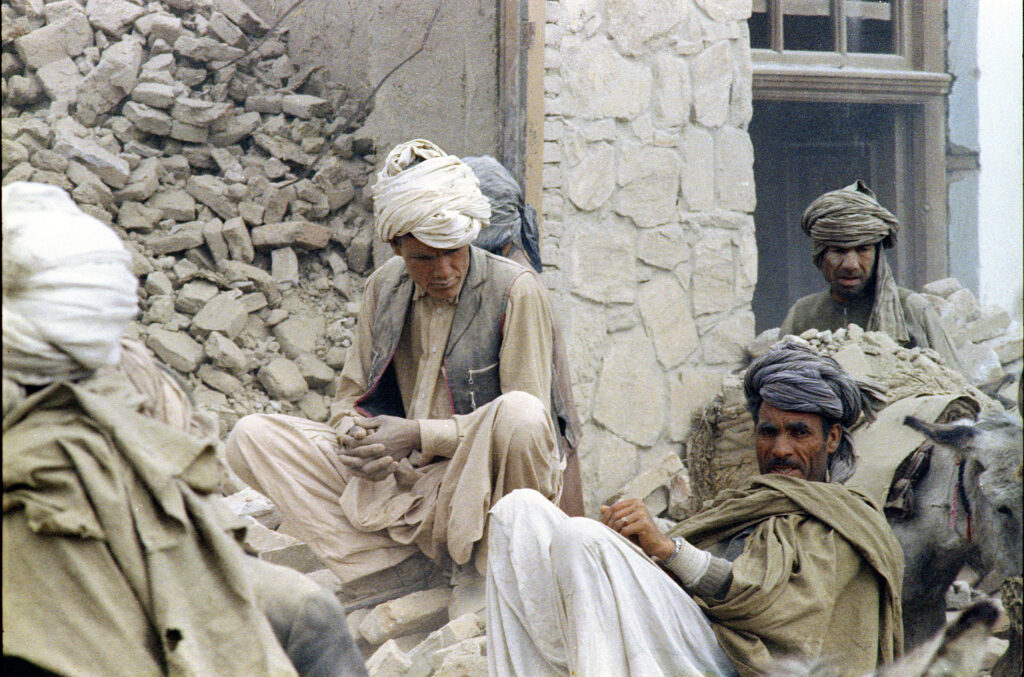
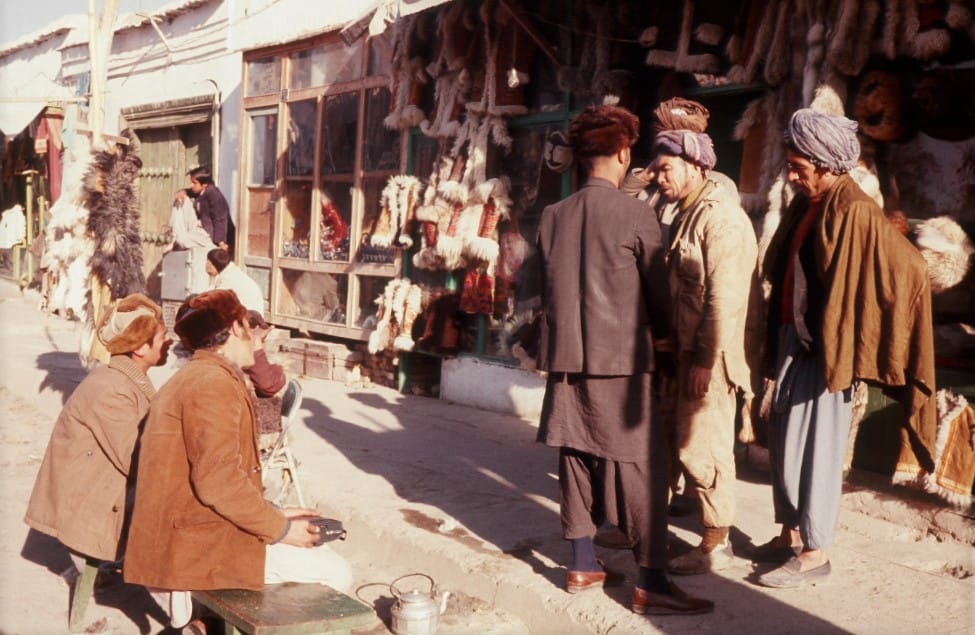
Afghanistan was the heart of the trail. Kabul had hotels, restaurants and cafés that lived off the travellers, and Chicken Street in the city centre was the street where you found everything: Afghan sheepskin coats, jewellery and plenty of hash.
Hash had been made in Afghanistan for generations. It became formally illegal in 1957, but the ban was barely enforced. Only in 1973 did a ban arrive that was taken seriously, backed according to historian Martin Booth by 47 million dollars from the United States. What the hash culture looked like, and how Afghan seeds and techniques ended up in Europe and the US, is the subject of the next part.
Over the Khyber Pass to India and Nepal
From Kabul the road ran via Jalalabad to the border and up over the Khyber Pass, the old mountain pass between Afghanistan and Pakistan. Rick Steves, today one of America’s best-known travel writers, crossed the pass by bus on 4 August 1978. In his diary he noted that physically it was a mountain pass like any other, but that a place you have dreamed of for years becomes something special.
Steves was 23 and travelled in the summer of 1978 with his friend Gene Openshaw, from Istanbul to Kathmandu. His diary of around 60,000 words lay untouched for more than 40 years before it became the book On the Hippie Trail (2025). He was among the last to make the trip.
In Pakistan came Peshawar and Lahore, and then India. There the travellers scattered: to Delhi and Varanasi, south towards the beaches of Goa or north to Kathmandu. In Kathmandu hash was sold openly in licensed shops on Freak Street until 1973. Nepal, India and Goa are the subject of part three.
The couple who wrote the road down
On 4 July 1972 Tony and Maureen Wheeler left London in an old minivan they had bought for £65. They brought food, cooking gear, spare parts, sleeping bags and an old tent. The van took them to Afghanistan, where they sold it in Kabul and carried on with whatever came along. Just after Christmas that year they arrived in Sydney with 27 cents left.
In Sydney they wrote down what they had learned. Across Asia on the Cheap came out in 1973, 94 stapled pages with pale blue covers. It was written for those who, in the couple’s own words, had “dropped out of the nine to five rat race”. It became the start of Lonely Planet, one of the world’s largest travel guide publishers.
1979: the year the road closed
The road did not close in a day but in several steps. In April 1978 the communists took power in Afghanistan in a coup. On 16 January 1979 the Shah left Iran, and on 11 February the monarchy fell. After the revolution it became hard for Western travellers to get through the country.
In late December 1979 Soviet troops entered Afghanistan, and in September 1980 war broke out between Iran and Iraq. At the same time flights had become cheaper. Anyone who wanted to go to India could fly, and the overland route was never the same again.
From the Pudding Shop to today’s backpackers
The hippie trail lasted around twenty years, but its traces are still visible. Backpacker culture, hostels and guidebooks lead straight back to the minivan that left London in 1972. And on Divan Yolu in Istanbul, they still serve pudding.
What made its way home along the road was more than memories. The travellers met a cannabis culture far older than themselves: how hash was made by hand in the Himalayas, how the Afghan hash makers worked, and seeds from the mountains of Afghanistan and Pakistan. Some stayed for years and learned the craft on the spot. The Dutchwoman Mila Jansen drove east in 1968 and stayed for fourteen years. The Frenchman Frenchy Cannoli worked eight seasons in the Parvati Valley in India. Both brought the knowledge home and helped shape the hash culture we have today. Their stories get their own articles in the series.
Timeline
- 1957: The Pudding Shop opens in Istanbul. Indiaman runs its first bus from London to India. Hash becomes formally illegal in Afghanistan.
- 1968: The double-decker Albert starts running London-Calcutta. Mila Jansen drives east.
- 1969: The Swede Christian Jutvik hitchhikes to India and Nepal.
- 1972: Tony and Maureen Wheeler travel from London to Sydney.
- 1973: Across Asia on the Cheap is published. Afghanistan bans cannabis and Nepal revokes the licences of its hash shops.
- 1978: Coup in Afghanistan in April. Rick Steves travels the trail in the summer.
- 1979: Revolution in Iran in February. Soviet troops enter Afghanistan in December.
More in the series
Our series on the hippie trail has five parts:
- The Hippie Trail: The Overland Road to Kabul and Kathmandu
- Afghan Hash and the Hippie Trail: Kandahar, Kabul and Chicken Street
- Freak Street, the Himalayas and Goa: The End of the Hippie Trail
- The Craft Behind Hash: From Hand-Rubbed Charas to Sieving and Ice Water
- The Legacy of the Hippie Trail: Seed Banks, Smugglers and the Fight for Hemp
Also read our portrait of Frenchy Cannoli, who learned to make charas in the Himalayas.
What was the hippie trail?
The hippie trail was the overland route from Western Europe via Istanbul, Iran, Afghanistan and Pakistan to India and Nepal. Young travellers followed it from the late 1950s until 1979, by bus, in their own vans, by train and by hitchhiking.
When did the hippie trail close?
The road closed in 1979. The revolution in Iran in February and the Soviet invasion of Afghanistan in December made it impossible to travel as before. The war between Iran and Iraq in 1980 and cheaper flights did the rest.
What is the Pudding Shop?
The Pudding Shop is a café and restaurant in Sultanahmet, Istanbul, that opened in 1957. With its notice board for messages and shared rides it became the best-known meeting point of the hippie trail. It is still open today.
Sources
- Wikipedia. Hippie trail.
- Neild, B. CNN. The Hippie Trail: An interactive history of the road trip that inspired Lonely Planet.
- Wikipedia. India-United Kingdom bus routes.
- Museum of Travel. Magic buses and the hippie trail.
- Hürriyet Daily News (2020). Hippies revisit iconic Istanbul Pudding Shop.
- Atlas Obscura. Pudding Shop (Lale Restaurant).
- John Henderson. The Pudding Shop.
- National Geographic. Afghan tour guides look for new ways to share their culture.
- Afghanistan Analysts Network. The Myth of Afghan Black: A cultural history of cannabis cultivation and hashish production in Afghanistan.
- Steves, R. My 1978 Hippie Trail Journal: The fabled Khyber Pass from Kabul to Pakistan.
- Steves, R. (2025). On the Hippie Trail: Istanbul to Kathmandu and the Making of a Travel Writer. Hachette.
- Forbes (2025). Travel expert Rick Steves’ coming-of-age memoir On the Hippie Trail.
- Literary Hub. How Lonely Planet founders Tony and Maureen Wheeler revolutionized the way we travel.
- Wheeler, T. Across Asia on the Cheap.
- Jutvik, C. (2018). Vägen till Indien: och den sköna konsten att lifta. Books on Demand.
- Wikipedia. Iranian revolution.
- Wikipedia. Soviet-Afghan War.
- Britannica. Iran-Iraq War.
Header image: The Pudding Shop in Istanbul in 1982. Photo: Mike McBey, CC BY 2.0, via Wikimedia Commons.