Kathmandu, 27 June 1973. The photographer Roger McLassus stands in front of a brick facade in the old town and takes a picture. Above the door hangs a sign: Eden Hashish Centre. It is a legal shop, licensed by the state, and it sells hash and ganja openly to anyone who walks in from the street. Three weeks later, every licence has been revoked.
This is the third part of our series on the hippie trail. Here we reach the end of the road, in Nepal and India: Freak Street in Kathmandu, the mountain villages of the Himalayas where charas is rubbed by hand, and the beaches of Goa. This is where many of the travellers had been heading all along, and where some of them stayed.
At a glance
- In Kathmandu, hash and ganja were sold in state-licensed shops until 16 July 1973.
- Freak Street in old Kathmandu was the end of the hippie trail from the mid-1960s.
- Cannabis has a place in Hindu tradition through the god Shiva, and during the Shivaratri festival it is still tolerated at the Pashupatinath temple.
- In the Himalayas, charas is rubbed by hand from living plants, a technique travellers like Mila Jansen and Frenchy Cannoli learned on the spot.
- Goa became the beach end of the trail, with Anjuna and its flea market at the centre.
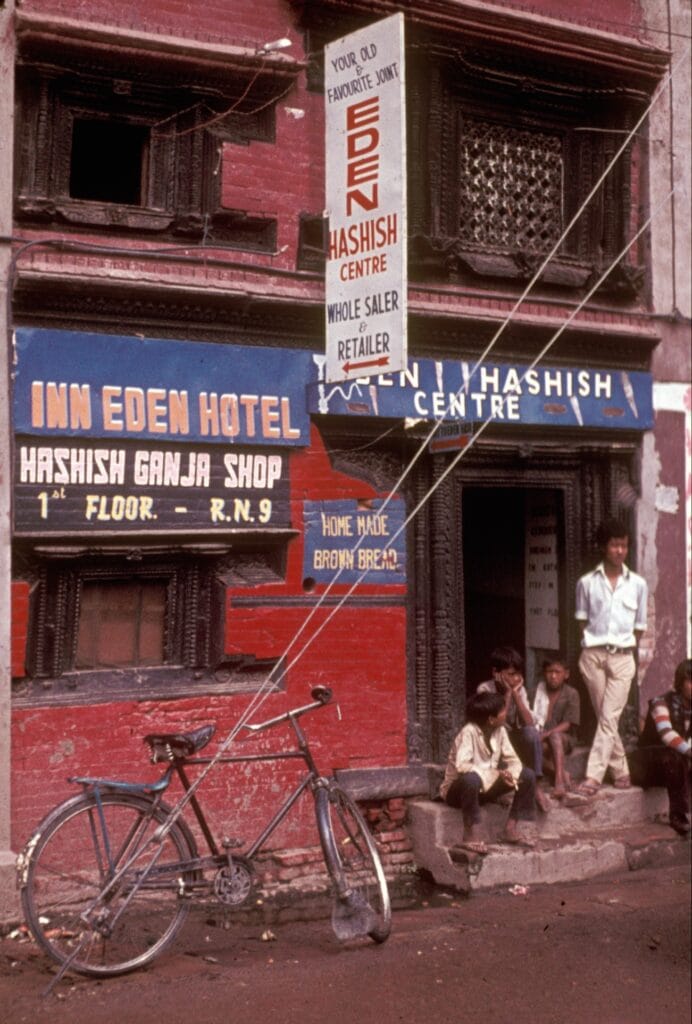
Freak Street: where the road ended
The street is really called Jhochhen Tole and lies right next to Durbar Square in old Kathmandu. From the mid-1960s it filled up with travellers from the West, and it soon got the name it is still known by. There were cheap lodges, like the City Lodge where a night cost six rupees, and small cafés and pie shops that also sold hash cookies.
One of the cafés, the Snowman Café, opened in 1965 and is still there today. Its founder, Ram Prasad Manandhar, described the travellers he met in three short sentences: “They were everywhere. Always high. Sometimes naked.”
Licensed hash shops
It was no accident that hash could be sold openly. Nepal had its own licensing system, regulated by an intoxicants act from 1961. The shops paid for their licences, and according to later accounts the system brought the state around 100,000 dollars a year.
On 16 July 1973 an ordinance revoked every licence to grow and sell cannabis. The decision followed pressure from the United States, where President Nixon had called drug abuse “public enemy number one”. On 22 September 1976 came the narcotic drugs act that banned cannabis completely, and which is still in force.
The ban was only one of several changes. Ahead of King Birendra’s coronation in February 1975 the city was cleaned up, visas were shortened and some travellers were deported. “All of a sudden the hippies were gone,” recalls Raju Manandhar of the Snowman Café. When the overland route closed in 1979, they did not come back either.
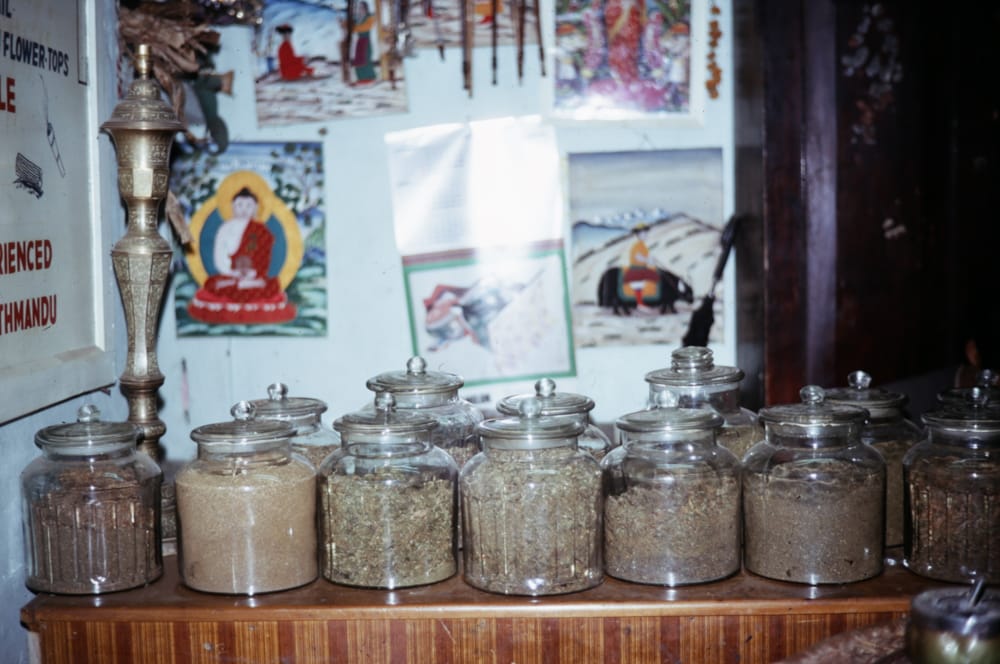
Shiva, the sadhus and Shivaratri
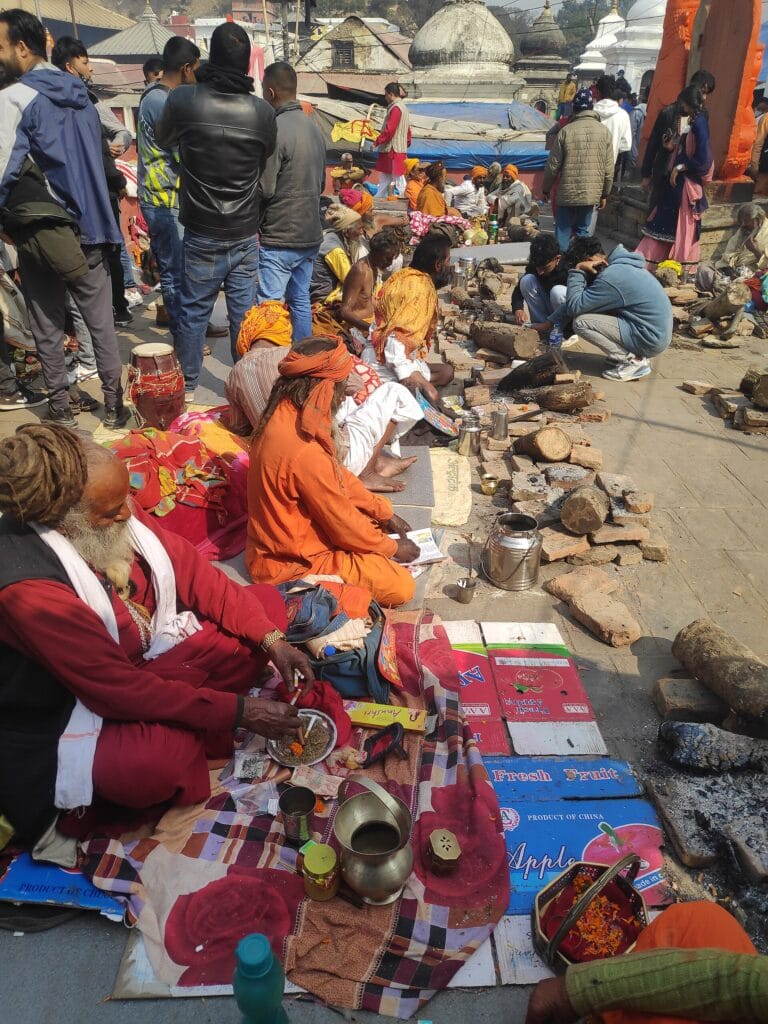
The travellers did not arrive in a country without a cannabis culture. In Hindu tradition the plant is associated with the god Shiva, and the wandering ascetics, the sadhus, have long smoked charas in a chillum, a straight clay pipe, as part of their spiritual practice.
It is most visible during the Maha Shivaratri festival at the Pashupatinath temple in Kathmandu. Police still allow limited cannabis use among the sadhus then, as Euronews put it: “For one day at least, tradition takes priority over the law.” Until 1995 the temple trust even handed out confiscated cannabis to the sadhus, until King Birendra put a stop to it. In India, bhang, a drink made from cannabis leaves, is also drunk during the Holi and Shivaratri festivals.
Charas from the Himalayas
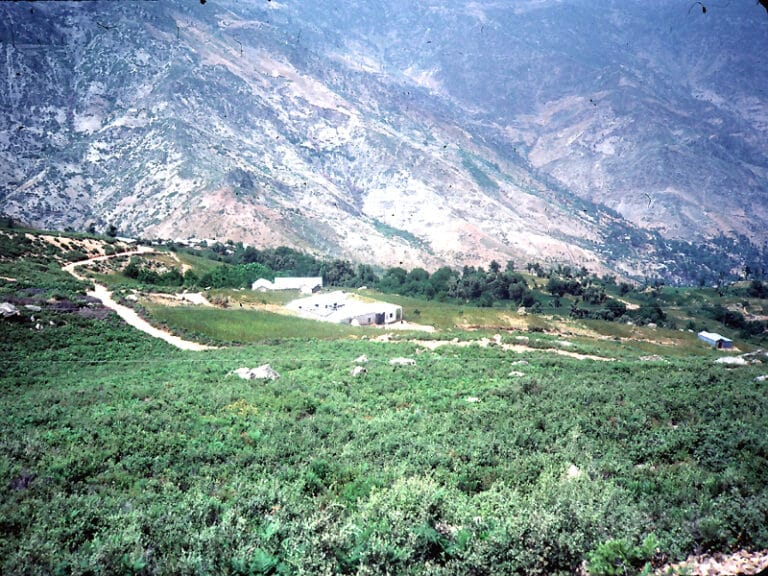
Further west, in the Indian state of Himachal Pradesh, hash is made differently from in Afghanistan. No dried plants are sieved there. Instead, the flowering tops of living plants are rubbed between the palms until the resin sticks to the hands and can be rolled into charas.
The Parvati Valley and the mountain village of Malana became famous for their charas. Malana is still governed by a village council in the name of the god Jamlu Devta, and outsiders may not touch villagers or temples. When Western travellers began arriving in the 1970s, the valley became a small end point of the trail in its own right. According to the author Harley Rustad, it was an Italian known as Glenu who started making charas on a larger scale in the valley in the late 1970s.
It was here and in Nepal that some of the travellers really learned the craft. The Dutchwoman Mila Jansen learned to rub charas during her years in the Himalayas. The Frenchman Frenchy Cannoli worked eight seasons in the Parvati Valley and sometimes lived in caves. Both took the knowledge home, and their stories get their own articles in the series.
The law that came to India
India had been given an unusual exception when the UN narcotics convention was adopted in 1961. Because cannabis was part of the country’s religious and social life, India and some of its neighbours were given 25 years to phase out non-medical use.
On 14 November 1985 India’s NDPS narcotics act came into force, and charas and ganja became illegal. The law covers resin and flowering tops, but not leaves and seeds. That is why bhang is still legal, and in several states there are government-licensed bhang shops to this day.
Goa: the beach end of the trail
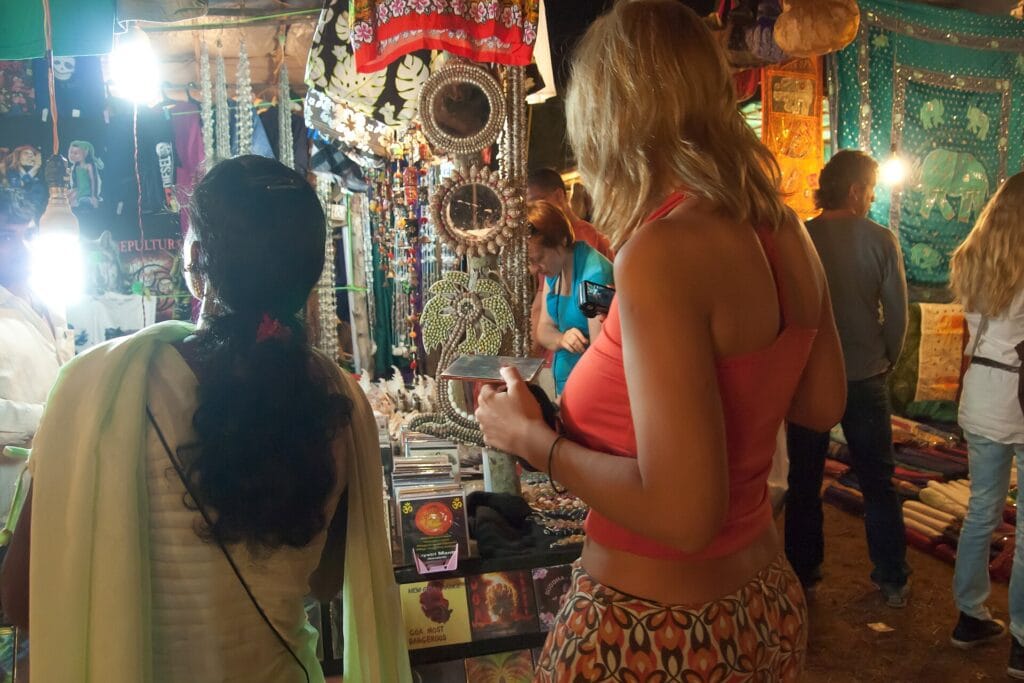
For many travellers the goal was not the mountains but the sea. In the mid-1960s the American Yertward Mazamanian, known as Eight Finger Eddie, came to Goa and eventually settled in Anjuna. He liked to call himself “the first freak in Goa”. Others followed, and Anjuna became one of the best-known end points of the trail.
In 1975 Eddie started the flea market in Anjuna, where travellers sold and swapped things with each other so they could afford to stay. The market is still there today. Towards the end of the 1960s Gilbert Levey, better known as Goa Gil, also came from San Francisco. In the early 1980s he began holding all-night parties with electronic music on the beaches, and out of them grew the genre Goa trance.
Kathmandu in popular culture
The image of Kathmandu as the destination spread far beyond the trail. In 1969 came the French writer René Barjavel’s novel Les Chemins de Katmandou and the film of the same name, with Jane Birkin in one of the lead roles. The film was seen by 1.6 million people in French cinemas. The following year Cat Stevens sang “Katmandu”, and in 1975 came Bob Seger’s song of the same name.
The poet and photographer Ira Cohen also lived in Kathmandu, where in the 1970s he published poems by Gregory Corso and Paul Bowles, among others, on his imprint Bardo Matrix. In Sweden, the travel writer Tomas Löfström wrote about the road there in his 1975 book Vägen till Kathmandu (The road to Kathmandu).
Nepal today
Freak Street today is a quiet street of guesthouses and souvenir shops, in the shadow of the tourist district of Thamel. But the cannabis question has returned. Since 2020 several legalisation proposals have been put forward in Nepal’s parliament, and in May 2024 the finance minister announced that medical cannabis would be legalised.
In July 2026 Gandaki Province unanimously passed a law allowing licensed cultivation for medical and industrial purposes, with a 0.3% THC limit for industrial hemp. The 1976 law still applies nationally, and non-medical use remains illegal. But for the first time in more than fifty years, Nepal is moving back towards the country the travellers once met.
A culture that outlived the travellers
Freak Street, the sadhus at Pashupatinath, charas from the Parvati Valley and the flea market in Anjuna. At the end of the road there was a cannabis culture older than the travellers, and it has outlived them. Hand-rubbed charas became one of the models for the hash culture that later grew up in Europe, and that is where the next part begins: the craft, from hand-rubbed charas to sieving and ice water.
More in the series
This is part three of five in our series on the hippie trail:
- The Hippie Trail: The Overland Road to Kabul and Kathmandu
- Afghan Hash and the Hippie Trail: Kandahar, Kabul and Chicken Street
- Freak Street, the Himalayas and Goa: The End of the Hippie Trail
- The Craft Behind Hash: From Hand-Rubbed Charas to Sieving and Ice Water
- The Legacy of the Hippie Trail: Seed Banks, Smugglers and the Fight for Hemp
Also read our portrait of Frenchy Cannoli, who learned to make charas in the Himalayas.
What was Freak Street?
Freak Street, really Jhochhen Tole, is a street in old Kathmandu that from the mid-1960s became the gathering place for travellers on the hippie trail. It had cheap lodges, cafés and shops that sold hash under state licence until 1973.
When was cannabis banned in Nepal?
The licences to grow and sell cannabis were revoked on 16 July 1973, after pressure from the United States. A total ban followed with a new law on 22 September 1976, which still applies nationally.
What is charas?
Charas is hash made by rubbing the flowering tops of living cannabis plants between the palms until the resin sticks. The technique is used above all in the Himalayas, for example in the Parvati Valley and Malana in India.
Sources
- Liechty, M. (2017). Far Out: Countercultural Seekers and the Tourist Encounter in Nepal. University of Chicago Press.
- Choegyal, L. Nepali Times. Hippie Trail nostalgia in Kathmandu.
- The Kathmandu Post (2014). Still around.
- The Kathmandu Post (2019). From mellow to high: how the movement to legalise marijuana is lighting up Nepal.
- OnlineKhabar. Six things to know about cannabis legalisation in Nepal.
- The Kathmandu Post (2018). Police to arrest cannabis users at Pashupati this Mahashivaratri festival.
- Euronews (2026). Nepal: Watch cannabis rituals unfold during Shivaratri in Kathmandu.
- Himal Press (2026). Gandaki’s new law allows cannabis cultivation for medicinal, industrial uses.
- Nepali Times (2026). Nepal is moving to decriminalising cannabis.
- Transnational Institute. A house of cards.
- Wikipedia. Narcotic Drugs and Psychotropic Substances Act, 1985.
- Wikipedia. Malana, Himachal Pradesh.
- Rustad, H. (2022). Literary Hub. Life and death among the vanished in the Himalayas’ Parvati Valley.
- Wikipedia. Eight Finger Eddie.
- DNA India (2010). Hippie who discovered Anjuna beach dies in Goa.
- Wikipedia. Goa Gil.
- Wikipedia. Les Chemins de Katmandou.
- Wikipedia. Ira Cohen.
- 48 hills (2021). Puff: A farewell to Frenchy Cannoli, master of hashish.
Header image: The Parvati Valley in Himachal Pradesh. Photo: Methemfetamine, CC BY 3.0, via Wikimedia Commons.