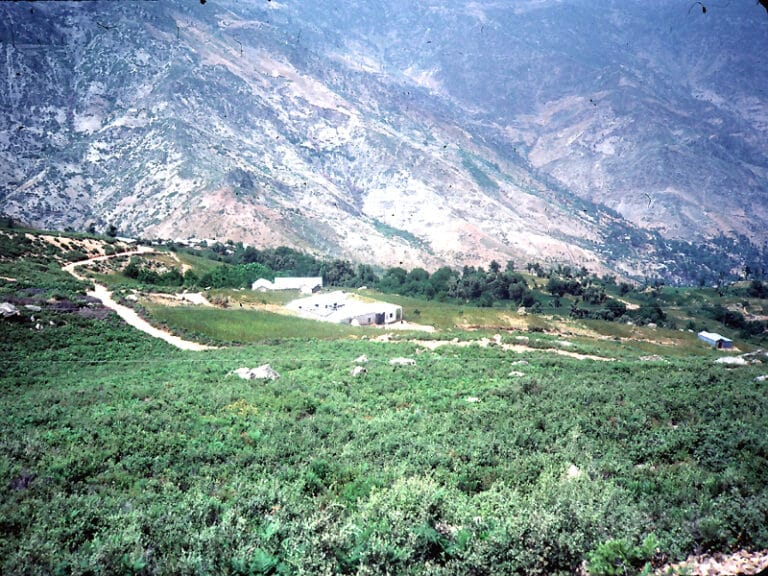
Kandahar, winter 1967. Two young Americans, Travis Ashbrook and Ricky Bevans, are walking around the fruit market when a man named Nazrullah Tokhi comes up and asks if they want to buy hash. He takes them to his brother Hayatullah’s clothing shop. By the time the deal is done, the Americans have traded their broken-down Ford Taunus for around 50 kilos of hash.
The meeting became the start of one of the best-known smuggling stories of the hippie trail. But the hash Ashbrook and Bevans bought was not something the hippies had invented. It was the product of a craft that existed in Afghanistan long before the first buses arrived. This second part of our series on the hippie trail is about the country where the trail was at its busiest, and about the hash culture there.
At a glance
- Afghanistan was the heart of the hippie trail, and Afghan hash already had a strong reputation among travellers in the early 1970s.
- Hash was made in winter: dried plants were beaten and sieved through cloth into a powder called garda, which was then pressed and kneaded by hand.
- The name Afghan Black became famous in the West thanks to the hippies, but the tradition behind it is older.
- Afghan seeds reached North America and Europe from the late 1970s and are found today in much of the cannabis grown in the West.
- A ban in 1973 and the war that followed in 1979 changed the trade for good.
A craft older than the hippies
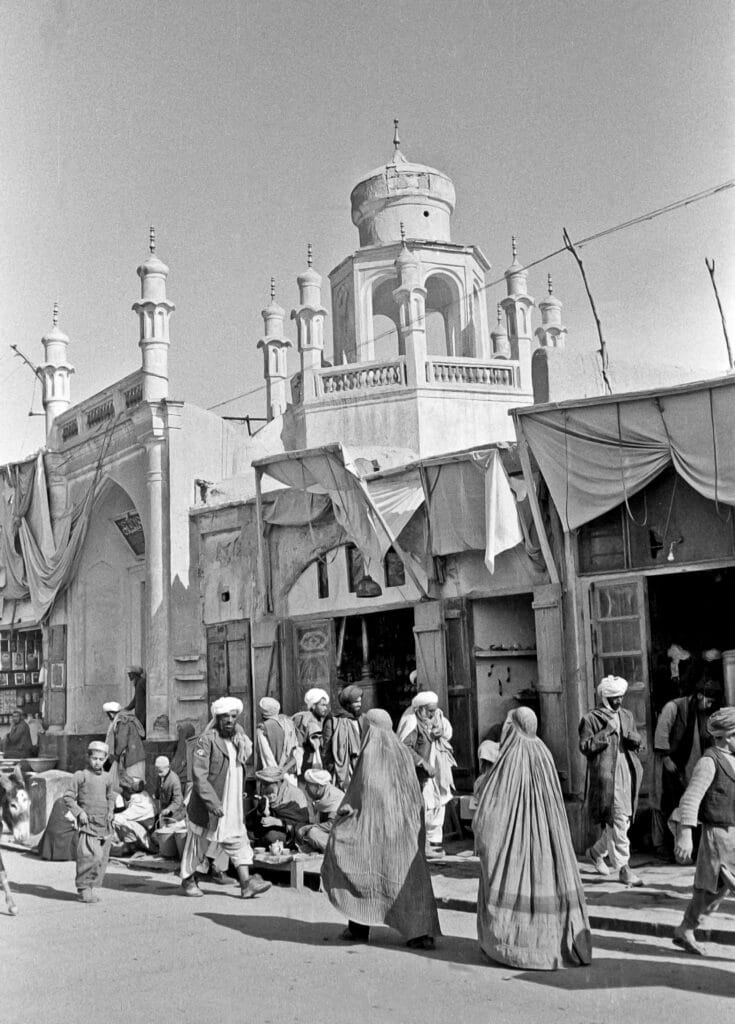
Sieving cannabis in Afghanistan probably goes back to the 19th century, according to a review by the Afghanistan Analysts Network, an independent research organisation in Kabul. In the early 1800s the country was mainly a transit route. Hash from Bukhara in Central Asia was carried south via Mazar-e Sharif to Kabul and on to Peshawar.
When China banned hemp in 1934, Afghans began making hash in larger quantities for export themselves. The quality was uneven at first. Indian reports from the 1940s described Afghan charas as adulterated. Only in the 1970s did production move from small-scale cottage industry to large-scale export to Europe and North America.
Hash also had a place in Afghan society, even if a contested one. In Balkh in the north, the Sufi holy man Baba Qu-ye Mastan set up a smoking house at his tomb in the early 1900s. At the same time, anyone who smoked regularly was labelled a charsi, a word with a bad ring to it. An old saying goes roughly: smoke, smoke, so that you forget your sorrow.
How Afghan hash was made
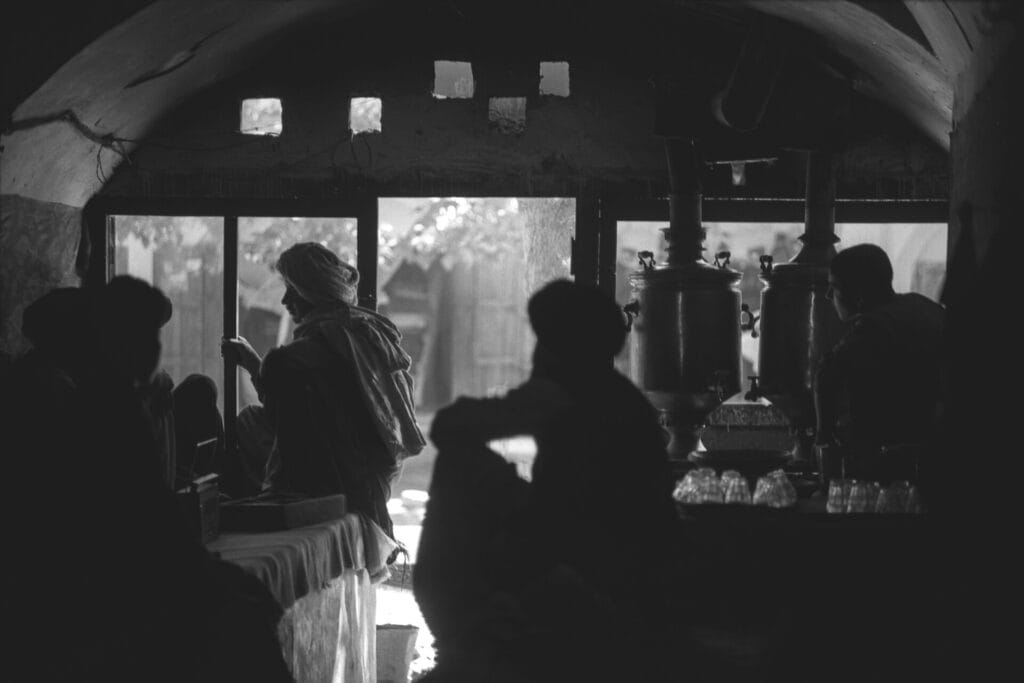
Afghan hash was a winter craft. The plants were harvested between October and January, and the resin was extracted in late December and January, when it was cold. That is how the UN Office on Drugs and Crime, UNODC, describes the method in its large survey of cannabis in Afghanistan from 2009.
The dried plants were beaten, and the powder was sieved through cloth stretched over a sloping wooden frame. What fell through was called garda. The sieving was repeated, and each round gave a lower grade: the first garda was the best, followed by the second and third. In the north, around Balkh and Badakhshan, growers often kept the first garda separate, which gave less but better hash. In the south and east the rounds were more often mixed.
Then the powder had to become hash. In the south the garda was pressed and rubbed by hand, and poorer powder could be moistened with a little water and warmed over a low flame until it could be shaped. In the north there was a method called jooshi, in which high-quality garda was warmed and pressed by hand into a greenish-brown product. How this craft developed and reached Europe is the subject of part four of the series.
The myth of Afghan Black
In the West, Afghan Black became a name everyone knew. Its origin is unclear. The Russian botanist Nikolai Vavilov described a blackish hemp from Afghanistan in 1924, and whether the name comes from there is, as the Afghanistan Analysts Network puts it, a matter of historical speculation. What is certain is that the hippies turned Afghan Black into a brand.
Its reputation was already established in the early 1970s. In a 1971 cable from the US embassy in Kabul, diplomats noted that Afghan hashish enjoyed “an especially high reputation among world travellers”.
Kabul and Chicken Street
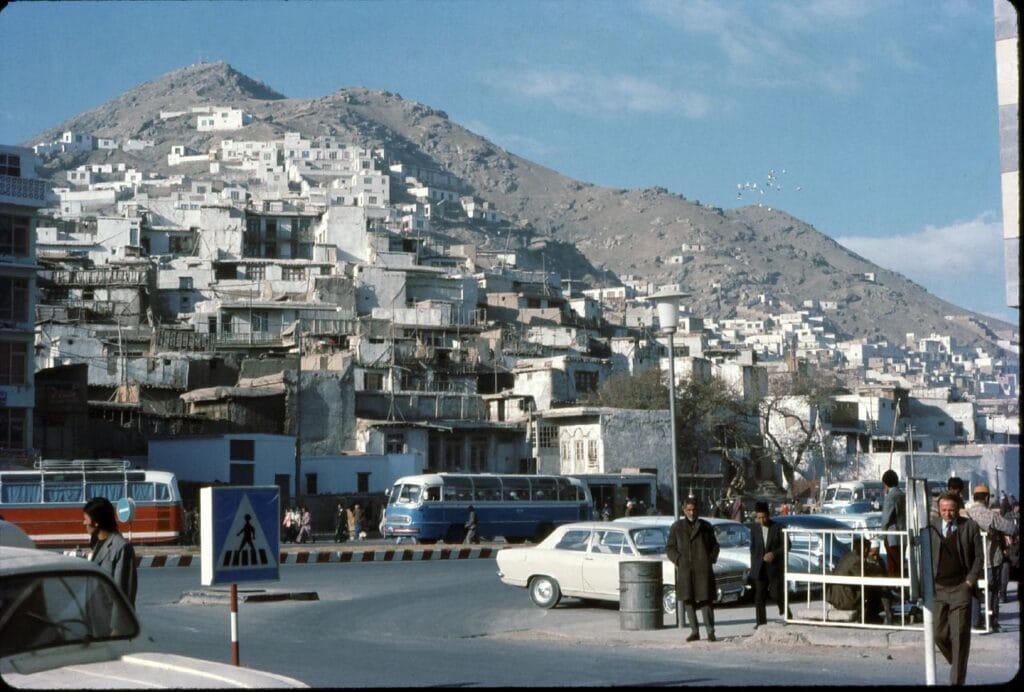
For travellers on the hippie trail, Kabul was the goal of a long stage and a place to rest. Tens of thousands of Westerners came every year in the 1970s. There were cheap hotels, restaurants and tea houses, and the parties at the Green Hotel became well known.
Chicken Street in central Kabul was the street everyone knew. Shops, simple hotels and restaurants stood side by side, and you could buy Afghan sheepskin coats, bracelets and, as a British newspaper later put it, plenty of hash. At Sigi’s on Chicken Street, travellers swapped information about the road ahead. Gul Agha Karimi, who ran a campsite in Kabul, recalled much later: “All the hippies knew me.”
The Brotherhood of Eternal Love: from Kandahar to California
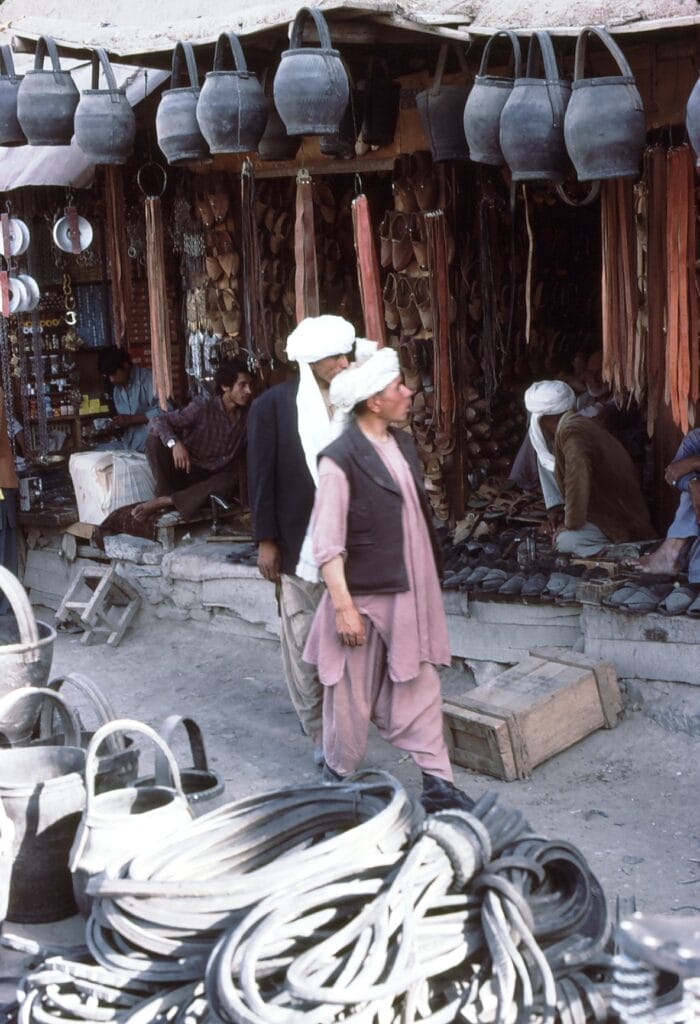
Ashbrook and Bevans belonged to the Brotherhood of Eternal Love, a group founded by John Griggs in the mid-1960s and based in Laguna Beach, California, from 1967. After the meeting in Kandahar, the Tokhi brothers became their suppliers.
According to journalist Nicholas Schou’s book Orange Sunshine, the hash was hidden among other things in Volkswagen buses shipped to California, and later also in hollowed-out surfboards. These details rest largely on interviews with Ashbrook himself. The Brotherhood became one of the first to bring Afghan hash to the United States on a large scale.
The group was known for other things too. In 1970 it paid to have Timothy Leary broken out of prison. On 5 August 1972 police raided the Brotherhood in California, Oregon and Hawaii, seized around 2.5 tonnes of hash and arrested dozens of people. The Brotherhood gets its own portrait in the series.
The seeds that stayed
What came from Afghanistan was not only hash. According to the researchers Robert C. Clarke and Mark Merlin, Afghan seeds reached North America and Europe several times from the late 1970s and through the 1980s. The plants had broader leaves than the varieties grown in the West, and this is when growers began calling the older varieties sativa and the Afghan ones indica.
The impact was huge. By the mid-1980s, according to Clarke and Merlin, the vast majority of the seedless cannabis grown in North America had some Afghan ancestry. At the same time the first seed companies in the Netherlands began selling selected varieties. The Dutchman Ben Dronkers, who later founded the Hash Marihuana & Hemp Museum in Amsterdam, has said that in the early 1970s he brought seeds home from Pakistan.
The ban and the war
Formally, cannabis had been banned in Afghanistan since 1957, but the ban was barely enforced. In 1973 King Zahir Shah banned both cannabis and opium, according to several sources with 47 million dollars of support from the United States. That same summer, on 17 July 1973, the king was deposed in a coup while he was in Italy.
The ban did not stop production. The Afghanistan Analysts Network estimates that the country produced between 150 and 400 tonnes of hash a year in the second half of the 1970s. Part of the trade moved to Pakistan. In April 1978 the communists took power in a coup, which the Swedish photographer Sten-Åke Sändh witnessed in Kabul. In December 1979 Soviet troops entered the country, and the hippie trail’s time in Afghanistan was over.
Afghanistan’s mark on today’s cannabis
Today’s Kabul is a very different city from the one the travellers met. But the traces of Afghan hash are still visible: in the name Afghan Black, in the genetics found in much of today’s cannabis, and in the craft of sieving and hand pressing that is still in use. People like Mila Jansen and Frenchy Cannoli carried that knowledge further, and their stories get their own articles in the series.
In the next part we continue east, over the Khyber Pass, to Nepal and India: Freak Street in Kathmandu, charas from the Himalayas and the beaches of Goa.
Timeline
- 19th century: Hash from Bukhara is carried via Mazar-e Sharif and Kabul to Peshawar. Sieving in Afghanistan probably takes shape.
- 1924: Nikolai Vavilov describes a blackish Afghan hemp.
- 1934: China bans hemp, and Afghans begin making hash for export.
- 1957: Cannabis becomes formally banned in Afghanistan.
- 1967: The Brotherhood of Eternal Love makes its first deal with the Tokhi brothers in Kandahar.
- 1972: Police raid the Brotherhood on 5 August.
- 1973: Zahir Shah bans cannabis and opium. The king is deposed in a coup on 17 July.
- 1978: The communists take power in April.
- 1979: Soviet troops enter Afghanistan in December.
- Late 1970s and 1980s: Afghan seeds reach North America and Europe.
More in the series
This is part two of five in our series on the hippie trail:
- The Hippie Trail: The Overland Road to Kabul and Kathmandu
- Afghan Hash and the Hippie Trail: Kandahar, Kabul and Chicken Street
- Freak Street, the Himalayas and Goa: The End of the Hippie Trail
- The Craft Behind Hash: From Hand-Rubbed Charas to Sieving and Ice Water
- The Legacy of the Hippie Trail: Seed Banks, Smugglers and the Fight for Hemp
Also read our portrait of Frenchy Cannoli, who learned to make charas in the Himalayas.
What is Afghan Black?
Afghan Black is a name Western travellers gave to the dark, hand-pressed hash from Afghanistan in the 1960s and 70s. Where the name comes from is unclear, but it was the hippies who made it famous.
How was Afghan hash made?
Dried cannabis plants were beaten and sieved through cloth into a powder called garda. The powder was then pressed and kneaded by hand, sometimes with a little heat or water, into hash. The work was done in winter.
What was the Brotherhood of Eternal Love?
The Brotherhood of Eternal Love was a group based in Laguna Beach, California. From 1967 they bought hash in Kandahar and became one of the first to bring Afghan hash to the United States on a large scale. Police raided the group in 1972.
Sources
- Bjelica, J. and Foschini, F. (2019). Afghanistan Analysts Network. The Myth of Afghan Black (1): A cultural history of cannabis cultivation and hashish production in Afghanistan.
- Foschini, F., Bjelica, J. and Ali, O. (2019). Afghanistan Analysts Network. The Myth of Afghan Black (2): The cultural history of hashish consumption in Afghanistan.
- UNODC (2010). Afghanistan Cannabis Survey 2009.
- Clarke, R. C. and Merlin, M. D. (2016). Cannabis Domestication, Breeding History, Present-day Genetic Diversity, and Future Prospects. Critical Reviews in Plant Sciences, 35. doi:10.1080/07352689.2016.1267498.
- U.S. Department of State, Office of the Historian. Foreign Relations of the United States, 1969-1976, Vol. E-7, document 355.
- Obert, M. (2010). The Caravan. Camping in Kabul.
- Caryl, C. (2013). HuffPost. Strange Rebels (excerpt).
- Wikipedia. Chicken Street.
- Wikipedia. Brotherhood of Eternal Love.
- Bradford, J. (2024). World Religions and Spirituality Project. Brotherhood of Eternal Love.
- Laguna Beach Indy. Drugs and debauchery.
- Schou, N. (2010). Orange Sunshine: The Brotherhood of Eternal Love and Its Quest to Spread Peace, Love, and Acid to the World. Thomas Dunne Books.
- Wikipedia. Cannabis in Afghanistan.
- Wikipedia. 1973 Afghan coup d’état.
- Sändh, S.-Å. Fotosidan. Afghanistan 1978: Saur-revolutionen.
- Hash Marihuana & Hemp Museum. About us.
Header image: Kabul in 1974. Photo: Wendy Tanner, CC BY 2.0, via Wikimedia Commons.